
Choosing among the best welding machines for automotive work means balancing control, portability, power, and the types of metal you expect to repair. Thin body panels, brackets, exhaust components, and shop-fabrication projects can each favor a different welding process.
This roundup compares 10 compact welders and specialty tools, including gasless MIG, stick, lift TIG, multiprocess, handheld, and plastic-welding options. Use the guide below to match the machine’s capabilities with your garage, vehicle projects, and experience level.
Best 10 Welding Machines for Automotive Work Picks for 2026
Best Budget MIG Pick
Portable 135A Flux-Core Welder

- Gasless MIG, stick, and lift TIG capability
- Synergic control for thin metal
- Lightweight design with included wire
Best For: Thin automotive panels and portable general repairs
Best Simple ARC Option

- 160A IGBT stick-welding output
- Hot start and anti-stick functions
- Compact design for transport and storage
Best For: General automotive metal repairs using stick electrodes
Best Versatile Upgrade
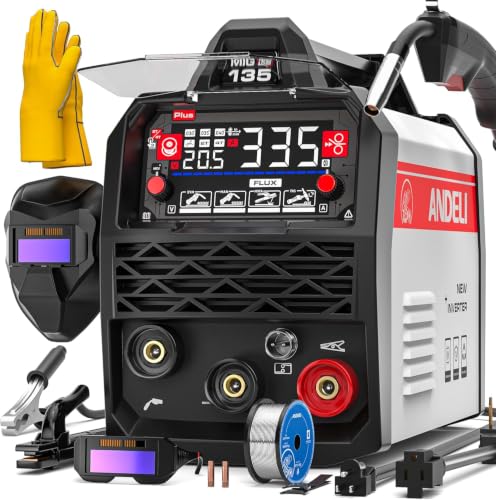
- Pulse MIG, gasless MIG, MMA, and lift TIG
- 110V/220V dual-voltage operation
- Includes helmet, gloves, wire, and accessories
Best For: Multi-process automotive work at home or in the field
Best for Bumper Repairs

- Repairs bumpers and other plastic parts
- Heats staples in about 1-2 seconds
- Includes six staple styles and carrying case
Best For: Automotive plastic and bumper repair
Best Digital-Control Pick

- Digital display with current and voltage information
- 20–120A range with five adjustment settings
- Hot-start, anti-stick, and cooling protections
Best For: DIY automotive repairs and compact stick-welding tasks
Best Ultraportable Value

- Lightweight 3.7-pound portable design
- Adjustable 20–200A output at 110V
- Includes rods, gloves, and chip hammers
Best For: Mobile repairs and DIY stick welding
Best Multiprocess Option
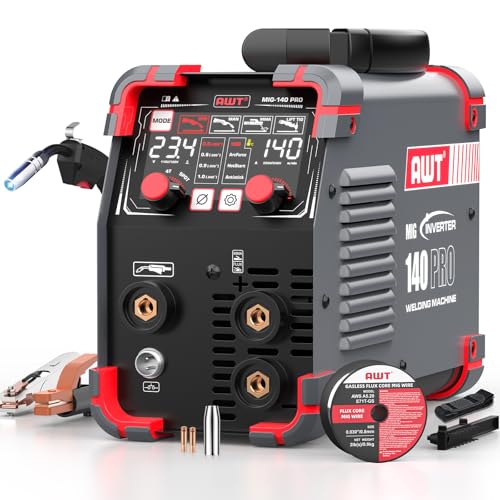
- Flux-core MIG, MMA/stick, and lift TIG modes
- Synergic control for .030- and .035-inch wire
- LED display with programmable memory settings
Best For: Automotive repairs and varied home or farm projects
Flexible Garage Power

- 110V/220V input with 250A output
- Supports 2.5–3.2mm welding electrodes
- Portable design with LED display and arc aids
Best For: Garage repairs, maintenance, and mobile stick-welding projects
Trunk-Friendly Repair Tool
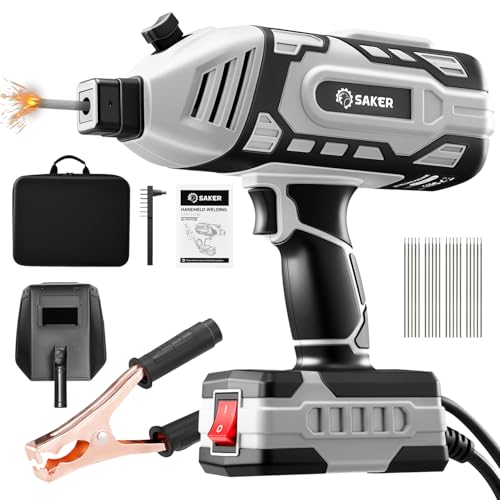
- 20–120A output with five current settings
- Weighs 3.3 pounds for easy transport
- Hot start, IGBT inverter, and overheat protection
Best For: Portable DIY automotive repairs and light metalwork
Best Budget MIG Pick – Portable 135A Flux-Core Welder
For shoppers comparing welding machines for automotive work, the YESWELDER 135A is a practical, portable option for thin steel and general repairs. Its gasless flux-core setup avoids the need for a shielding-gas cylinder, while synergic control helps simplify setup for beginners.
Best For: Automotive hobbyists working on thin mild-steel panels, outdoor repairs, and general-purpose projects.
Pros:
- Supports gasless flux-core MIG, stick, and lift TIG with an additional TIG torch.
- Synergic control and ±3V micro-adjustment help manage thin material and reduce burn-through risk.
- Lightweight 11.4-pound design with a carrying handle and clear LED display.
- Includes .030- and .035-inch flux-core wire, torch, electrode holder, and ground clamp.
Cons:
- Its 135A output is intended for mild steel up to 3/32 inch, limiting heavier automotive fabrication.
- Lift TIG requires a separately purchased torch.
This is a strong value choice when portability, simple flux-core operation, and control over thin auto panels matter more than high-amperage capacity.
Best Simple ARC Option – DEKOPRO 160A MMA Welder
The DEKOPRO 160A is a compact stick welder for buyers who want a straightforward machine for welding machines for automotive work. Its IGBT inverter, digital display, hot start, anti-stick function, and arc-stability features support work on several common metals.
Best For: Automotive repair users who prefer MMA stick welding for steel, stainless steel, cast iron, and other metal projects.
Pros:
- 160A MMA output supports mild steel, stainless steel, cast iron, and other listed materials.
- Hot start, anti-stick, and arc-stability features make electrode welding easier to manage.
- Compact 11.11-pound design includes a carrying handle for transport and storage.
- ETL-certified design with closed-loop feedback for stable output voltage.
Cons:
- This is an MMA stick welder rather than a MIG machine, so it may be less convenient for clean, thin body-panel work.
- The supplied notes do not identify included welding electrodes.
Choose this model when durable stick-welding capability and portability are priorities, particularly for structural or general metal repairs rather than fine sheet-metal work.
Best Versatile Upgrade – Dual-Voltage Pulse MIG Welder
The ANDELI 135A gives automotive buyers a flexible option among welding machines for automotive work, combining pulse flux-core MIG, gasless MIG, MMA, and lift TIG modes. Dual-voltage operation supports both household 110V outlets and higher-output 220V connections.
Best For: Users who want one portable welder for automotive steel, thicker material, field work, and multiple welding processes.
Pros:
- Offers pulse flux-core MIG, gasless MIG, MMA, and lift TIG functions.
- 110V/220V operation and support for .030-, .035-, and .040-inch flux-core wire improve versatility.
- Pulse operation and adjustable inductance are designed to improve arc stability and reduce spatter.
- Includes wire, torch accessories, electrode holder, helmet, and leather gloves.
Cons:
- Lift TIG torch is sold separately.
- The listed 135A capacity may not suit demanding heavy-fabrication work despite the stated 5.0 mm material capability.
- Its accessory package and controls may be more than needed for basic repair jobs.
This is the most adaptable choice in the group for users who expect their automotive projects to vary from thin repairs to thicker steel and want dual-voltage flexibility.
Best for Bumper Repairs – ATOLS Plastic Welding Kit
For automotive projects involving plastic rather than metal, the ATOLS Plastic Welder is a specialized alternative to conventional welding machines for automotive work. It uses heated staples to reinforce cracked bumpers, dashboards, lamp holders, radiator components, and other plastic parts.
Best For: Repairing cracked or broken automotive plastic components, especially bumpers, dashboards, lights, and trim.
Pros:
- Designed to repair at least 98% of listed plastic types and common vehicle components.
- Rapidly heats staples in about 1-2 seconds for quick repairs.
- Includes six staple styles for flat, wavy, inside-corner, and outside-corner repairs.
- Lightweight 2.18-pound tool has an ergonomic rubber handle and carrying case.
Cons:
- This tool repairs plastic with hot staples and is not suitable for welding metal.
- It is corded, so use depends on access to an AC power source.
If your automotive repair needs center on cracked plastic parts, this focused kit is more appropriate than a metal MIG or stick welder and includes a broad selection of replacement staples.
Best Digital-Control Pick – PROTMEX Handheld Welder
For shoppers comparing welding machines for automotive work, the PROTMEX stands out for its digital readout and straightforward handheld format. Its 20–120A range, IGBT inverter technology, and support for 2.5–3.2 mm electrodes make it suited to smaller repair and fabrication tasks.
Best For: DIY automotive repairs, maintenance, and users who want visible settings in a compact stick welder.
Pros:
- Digital display shows welding current, voltage, and operating status.
- Five-position adjustment covers 20–120A for different electrodes and material thicknesses.
- Hot-start, anti-stick, cooling, overheating, and short-circuit protections support easier operation.
- Includes 20 welding rods and works with stainless steel, carbon steel, and iron.
Cons:
- Its 120A maximum output is lower than some alternatives in this roundup.
- It is a stick welder, so it does not offer MIG or TIG processes.
The PROTMEX is a practical choice when compact size, clear controls, and simple electrode welding matter more than multiprocess flexibility or higher output.
Best Ultraportable Value – Hpoouo 200A Mini Stick Welder
The Hpoouo is a lightweight option for welding machines for automotive work when portability is a priority. This 110V stick welder offers adjustable 20–200A output, weighs 3.7 pounds according to the product notes, and fits in a backpack or toolbox.
Best For: Mobile garage repairs, hobbyists, and users welding mild steel or cast iron with common stick electrodes.
Pros:
- Compact 7.8 × 3.9 × 5.3-inch design is easy to transport.
- 20–200A adjustment provides a broad working range for home repairs and DIY projects.
- Hot start, arc force, anti-stick, and multiple overload protections assist with stable operation.
- Includes 20 rods, two chip hammers, gloves, and instructions.
Cons:
- It uses stick welding only and does not provide MIG or TIG modes.
- The included acidic rods require attention to electrode-holder and ground-clamp polarity.
- Stainless steel use is specified with E308L-16 rods only.
With its high stated amperage range and very small footprint, the Hpoouo is appealing for occasional automotive repairs away from a full workshop, provided stick welding fits the job.
Best Multiprocess Option – AWT 140A 3-in-1 MIG Welder
Among welding machines for automotive work, the AWT offers the most process flexibility in this selection. Its 110V platform combines flux-core MIG, MMA/stick, and lift TIG, while synergic control can automatically optimize settings for .030- or .035-inch flux-core wire.
Best For: Automotive exhaust work, home repairs, farm maintenance, and users who need MIG, stick, and lift TIG capability in one machine.
Pros:
- Three welding processes provide more flexibility than a stick-only machine.
- Synergic and manual MIG controls accommodate beginners and experienced users.
- LED display and programmable memory settings make configurations easier to view and recall.
- Compact 10-pound body includes a handle and shoulder strap for mobile work.
Cons:
- Its maximum output is 140A, which may limit heavier work compared with higher-amperage machines.
- The listed MIG setup is flux-core/gasless rather than conventional gas-shielded MIG.
- Supplied notes do not specify the full accessory package.
The AWT is the strongest all-around choice here for shoppers who want one portable 110V unit to cover automotive, maintenance, and general fabrication tasks across several welding processes.
Flexible Garage Power – Dual-Voltage Stick Welder
For shoppers comparing welding machines for automotive work, the SOARFLY Stick Welder is a portable option built around straightforward stick welding. Its dual-voltage input, 250A output, and arc-assistance features make it suited to garage repairs, maintenance, and fabrication involving compatible metals and electrodes.
Best For: Garage and mobile repair jobs where portability, stick-welding capability, and 110V/220V flexibility matter.
Pros:
- Supports 110V and 220V input; a 220V adapter is required and not included.
- Provides up to 250A and supports 2.5–3.2mm electrodes, including E6013 and E7018.
- Includes a readable LED display plus hot start, arc force, and anti-stick functions.
- Compact 9.02-pound design with a built-in handle for transport.
Cons:
- It is a stick welder rather than a MIG-focused machine, so it may be less convenient for thin automotive sheet metal.
- The adapter needed for 220V operation is not included.
The SOARFLY makes the most sense for users who already prefer electrode welding or need a compact machine for heavier repair and maintenance tasks. Its voltage flexibility is useful, but buyers should plan around the included equipment and stick-welding process.
All-in-One Workshop Choice – 3-in-1 MIG/Stick/TIG Welder
Among welding machines for automotive work, this 145A multiprocess model stands out for covering flux-core MIG, lift TIG, and stick welding in one portable unit. Synergic controls can automatically adjust settings after selecting the process and wire diameter, while manual controls remain available for more experienced users.
Best For: DIYers and mobile workshop users who want multiple welding processes and a ready-to-use accessory package.
Pros:
- Combines stick, MIG, and lift TIG functions in one machine.
- Synergic control and LED readout simplify setup and monitoring.
- Includes a welding helmet, gloves, wire brush, rods, wire, torch, and cables.
- Compact 7.16-pound welder is easy to carry and store.
Cons:
- Its 145A output is more oriented toward DIY, maintenance, and light-duty work than demanding industrial jobs.
- The supplied notes identify the machine as DC-powered and do not specify dual-voltage input.
This is the most versatile choice of the three when process flexibility matters more than maximum output. The included accessories also reduce the number of initial purchases, although users should match the machine’s capabilities to their automotive material thickness and project demands.
Trunk-Friendly Repair Tool – Compact 110V Arc Welder
For welding machines for automotive work that prioritize portability, the Saker Portable Electric Welding Machine offers a small 110V arc-welding format with adjustable output from 20 to 120A. Its five-position current control, hot-start ignition, and thermal protection are aimed at home repairs, automotive maintenance, and other lighter metalwork.
Best For: Portable DIY and automotive repair tasks using compatible 3/32-inch rods.
Pros:
- Very lightweight at 3.3 pounds and sized for storage in a car trunk or small workshop.
- Five-position adjustment covers a 20–120A welding range.
- IGBT inverter technology and hot start help support stable arc starts.
- Built-in cooling and overheat protection support extended operation.
Cons:
- Its 120A maximum output is lower than the other two machines in this roundup.
- It is designed around 110V AC power and supports rods up to 3/32 inch, limiting some heavier applications.
- The supplied notes list the portable welder itself but do not indicate a larger accessory package.
The Saker is a practical pick when easy transport and simple arc welding are the priorities. Its compact size suits occasional automotive repairs and general metalwork, while buyers taking on thicker or more demanding jobs may need the higher output or broader process selection of the alternatives.
How We Picked the Best Welding Machines for Automotive Work
We focused on machines and kits that suit common automotive tasks while considering practical garage use. Key criteria included welding process, input-voltage flexibility, amperage range, portability, controls, included accessories, and the ability to handle repairs beyond a single material or project type.
Because automotive work can involve thin sheet metal, thicker brackets, mild-steel frames, and plastic components, the list includes several categories rather than treating one welder as ideal for every job. Product claims should still be checked against the manufacturer’s current specifications, duty cycle, and recommended material thickness.
Quick Comparison
- Most versatile: A 3-in-1 or multiprocess welder with MIG, stick, and lift TIG modes.
- Best for body-panel work: A controllable MIG machine, preferably with gas support when clean, low-spatter welds matter.
- Best for outdoor repairs: A flux-core MIG or stick welder, since these processes are less dependent on shielding gas.
- Best for portability: A compact handheld or mini stick welder, provided its output suits the material.
- Best for plastic parts: A dedicated hot-stapler or plastic-welding kit rather than a metal arc welder.
Key Buying Factors for Automotive Welding
Process and Material
MIG is usually the easiest starting point for automotive steel because it offers straightforward wire feeding and good control. Flux-core MIG is useful outdoors but can produce more smoke and cleanup. Stick welding is inexpensive and capable on thicker steel, though it is less convenient for thin sheet metal. Lift TIG offers cleaner, more controlled welds but generally requires more skill and patience.
Voltage, Amperage, and Duty Cycle
110V models are convenient for home garages, while dual-voltage machines provide more flexibility if a 220V circuit is available. Do not judge capability by peak amperage alone. Check the duty cycle, minimum output, wire-size compatibility, and the machine’s recommended thickness range. Low-current control is especially important for avoiding burn-through on body panels.
Controls, Setup, and Safety
Digital displays, synergic settings, hot start, and adjustable current can simplify setup, but they do not replace correct polarity, wire selection, and grounding. Confirm that the package includes a suitable torch or electrode holder, work clamp, and consumables. Use proper eye and skin protection, ventilation, fire prevention, and battery-disconnection procedures when welding on a vehicle.
Who Should Buy Which Welding Machines for Automotive Work?
Beginners and general DIY users should consider a simple MIG or multiprocess model with clear controls and 110V compatibility. Experienced fabricators may prefer dual-voltage equipment with broader process support and a higher duty cycle. Outdoor or roadside repair users should prioritize flux-core or stick capability and a compact design. Bodywork specialists need fine low-amperage control and should favor MIG equipment suited to thin steel. Users repairing bumpers, trim, or plastic panels should choose a dedicated plastic-welding kit, since metal-welding machines are not designed for those repairs.