
The right bench vise can make automotive repairs safer, steadier, and far less frustrating. Whether you are pressing bushings, holding brackets, cleaning parts, or fabricating small components, jaw capacity and mounting stability matter.
We selected 10 options ranging from compact mechanics vises to heavy-duty reversible and articulating models. Use the comparison and buying advice below to match your workspace, projects, and budget.
Best 10 Bench Vises for Automotive Work Picks for 2026
Heavy-Duty Classic

- 30,000 PSI cast iron construction
- 360° swivel base with double lockdowns
- Replaceable steel and pipe jaws
Best For: Dedicated automotive benches and rugged general repair
High-Capacity Workhorse

- 6-inch jaw opening and 9,900-lb clamping force
- 60,000 PSI ductile iron body
- Pipe jaws and reinforced anvil included
Best For: Large automotive parts and demanding shop operations
Extra-Large Reversible

- Up to 14-1/2-inch opening when reversed
- 360° swivel base with dual lockdowns
- Pipe jaws and two anvil surfaces
Best For: Oversized components and high-capacity fabrication work
Multi-Angle Specialist

- 360° ball-and-socket articulation
- Five-inch jaws with swap-in pads
- Eight lockable positions up to 130 ft-lbs
Best For: Detailed repairs and awkward-angle workpieces
Professional Heavy-Duty Pick
Wilton Mechanics Pro 8-Inch Bench Vise
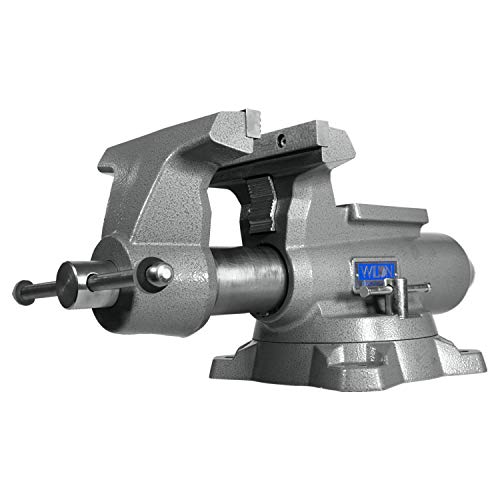
- 8-inch jaws with an 8-1/2-inch opening
- 360-degree swivel base and large anvil
- Durable 60,000 psi ductile-iron construction
Best For: Serious automotive shops and demanding garage work
Versatile Shop Value
VEVOR 6.5-Inch Swivel Bench Vise

- 5,620-pound stated clamping force
- 360-degree vertical and horizontal rotation
- Pipe/V-jaws and magnetic pads included
Best For: Multi-purpose garages and mixed repair tasks
Best Portable Automotive Option
Yost RHV-6 Receiver Hitch Vise

- Fits standard 2-inch receivers
- Can also bolt to a workbench
- 5.90-inch jaws with 30 kN clamping force
Best For: Roadside, trailer, and mobile automotive repairs
Heavy-Duty Swivel Pick

- 60,000 PSI ductile-iron construction
- 360-degree swivel base with 4,496-pound clamping force
- Wide jaws and included mounting hardware
Best For: Larger automotive repairs and mixed flat-stock or pipe work
Lifetime-Warranty Choice
Wilton 550P Multi-Purpose Bench Vise
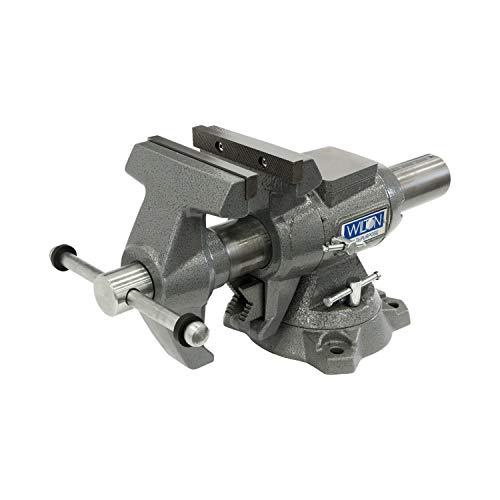
- 360-degree head with 30-degree indexing
- Replaceable hardened jaws and pipe jaws
- Large anvil with lifetime warranty
Best For: Mechanics prioritizing adjustable positioning and long-term support
Compact Heavy-Duty Pick

- 60,000 PSI ductile-iron body
- 360-degree swivel base and 4,496-pound clamping force
- Handles flat stock and pipe up to 2.9 inches
Best For: General automotive bench work in a moderately sized workshop
Heavy-Duty Classic – Wilton Mechanics 6-Inch Vise
Wilton Mechanics Bench Vise, 6" Jaw Width, 5-3/4" Jaw Opening, 4-1/8" Throat (Model 746)
Check Price On AmazonFor automotive work that calls for dependable clamping and a stable platform, the Wilton Model 746 is a substantial choice among bench vises for automotive work. Its 6-inch jaws open 5-3/4 inches, while the 360° swivel base helps position parts where you need them.
Best For: Mechanics who want a rugged, permanently mounted vise for gripping parts, pipe, and general shop work.
Pros:
- Heavy-duty 30,000 PSI gray cast iron construction
- 360° swivel base with double lockdowns
- Replaceable hardened steel top and pipe jaws
- Large anvil work surface and enclosed spindle
Cons:
- At 64 pounds, it is difficult to move once installed
- Its 5-3/4-inch opening is less suitable for unusually large parts
The Model 746 prioritizes durability, stability, and traditional mechanic-friendly features. It is a strong fit for a dedicated automotive bench where weight and a permanent installation are advantages.
High-Capacity Workhorse – Forward CR60A 6.5-Inch Vise
The Forward CR60A combines a 6.5-inch jaw width with a 6-inch opening, giving automotive users plenty of room for larger components. Its 210° swivel base and 9,900-pound clamping-force rating make it a capable option among bench vises for automotive work.
Best For: Professional-style shop tasks involving larger parts, pipe, grinding, cutting, or tapping.
Pros:
- 6.5-inch jaws with a 6-inch maximum opening
- 60,000 PSI ductile iron construction
- Replaceable flat and slot jaws plus integrated pipe jaws
- Reinforced anvil and 210° swivel base
Cons:
- Swivel range is narrower than a full 360° base
- Its large, heavy-duty design may be more vise than light-duty users need
With broad jaw capacity, multiple gripping surfaces, and a reinforced anvil, the CR60A is designed for demanding bench work. It suits buyers who value capacity and versatility over a compact footprint.
Extra-Large Reversible – Wilton 4800R 8-Inch Vise
The Wilton 4800R stands out among bench vises for automotive work when maximum jaw capacity is the priority. Its jaws open 9-1/4 inches normally and 14-1/2 inches when reversed, while the 360° swivel base supports flexible positioning.
Best For: Shops handling oversized automotive components, pipe, and forming or shaping work.
Pros:
- 8-inch jaw width with reversible 9-1/4- and 14-1/2-inch openings
- 360° swivel base with dual lockdowns
- Built-in pipe jaws and replaceable hardened steel jaws
- Two large anvil work surfaces and lifetime warranty
Cons:
- Its 74.5-pound weight and large dimensions require substantial bench space
- The oversized capacity may be unnecessary for smaller repair jobs
The 4800R is a specialized, high-capacity vise rather than a compact everyday model. Choose it when oversized workpieces and reversible jaw capacity justify its substantial footprint.
Multi-Angle Specialist – WORK IQ Articulating Vise
The WORK IQ TOOLS IQ Vise offers a different approach to bench vises for automotive work, using a 360° articulating ball-and-socket design to tilt and swivel a part into position. Its 5-inch jaws, interchangeable pads, and one-hand Quick Cam lever favor flexible repair and inspection tasks.
Best For: Mechanics, hobbyists, and repair users who need multi-angle access to smaller or irregular workpieces.
Pros:
- 360° articulation with eight fixed working positions
- Locks at up to 130 ft-lbs of torque
- Swap-in Flex-Fit jaw pads accommodate varied surfaces
- Integrated ports support optional work lights, magnifiers, and phone holders
Cons:
- Its 5-inch jaws are smaller than the heavy-duty vises in this roundup
- Optional accessories and alternate jaw types are sold separately
- At 10 pounds, it is lighter than traditional cast-iron shop vises
The IQ Vise emphasizes access and positioning rather than maximum mass or jaw capacity. It is a practical choice for detailed repairs, awkward angles, and multipurpose workbench setups.
Professional Heavy-Duty Pick – Wilton Mechanics Pro 8-Inch Bench Vise
Wilton Mechanics Pro Bench Vise, 8" Jaw Width, 8-1/2" Jaw Opening, 4-1/2" Throat (Model 880M), Grey
Check Price On AmazonFor demanding bench vises for automotive work, the Wilton Mechanics Pro 880M combines an 8-inch jaw width with an 8-1/2-inch opening and a 360-degree swivel base. Its ductile-iron construction, enclosed spindle, and bearing-assisted clamping are suited to serious shop use.
Best For: Automotive shops and home garages that need a substantial, durable vise for larger workpieces and frequent use.
Pros:
- 60,000 psi ductile-iron movable jaw and base provide a durable yet lighter-weight design.
- Precision-machined slide bar helps eliminate front-jaw movement.
- Needle roller thrust bearing supports strong clamping with less operator effort.
- 360-degree swivel base, large anvil, and lifetime manufacturing-defect warranty add shop-friendly versatility.
Cons:
- At 83.1 pounds, it is a substantial, less-portable installation.
- Its industrial size may be more vise than occasional users need.
The 880M is a premium, fixed-shop choice when stability, jaw capacity, and long-term durability matter more than portability or a compact footprint.
Versatile Shop Value – VEVOR 6.5-Inch Swivel Bench Vise
The VEVOR 6.5-inch vise is a versatile option among bench vises for automotive work, with a 5-inch maximum opening, pipe and V-jaws, and a rotating head and base. Its ductile cast-iron body also includes magnetic jaw pads for protecting delicate materials.
Best For: Multi-purpose garages and workshops handling automotive parts, pipe, metalworking, and occasional shaping tasks.
Pros:
- Up to 5,620 pounds of stated clamping force supports demanding work.
- 360-degree vertical and horizontal rotation helps position workpieces for cutting or welding.
- Pipe jaws and V-jaws accommodate round pipe from 0.59 to 2.56 inches in diameter.
- Included magnetic jaw pads help protect delicate surfaces from scratches.
Cons:
- At 38.9 pounds, it is lighter than the heavier industrial vise options.
- The 6.5-inch jaw width and 5-inch opening provide less capacity than larger shop vises.
With broad positioning adjustment and useful pipe-handling features, this VEVOR model is a practical all-around vise for users who want flexibility without moving to an 8-inch class design.
Best Portable Automotive Option – Yost RHV-6 Receiver Hitch Vise
For mobile bench vises for automotive work, the Yost RHV-6 mounts directly to a standard 2-inch receiver using the included hitch pin. It can also be bolted to a workbench, giving mechanics a portable roadside setup or a fixed workshop alternative.
Best For: Mobile automotive repairs, trailer work, and users who need a vise that can move between a vehicle receiver and a workbench.
Pros:
- Mounts to 2-inch receivers and includes a 5/8-inch pin for portable use.
- Set screws help tighten the fit in the receiver tube.
- 5.90-inch jaws open to 5.81 inches and provide a 4.96-inch throat depth.
- 60,000 psi ductile iron, replaceable jaws, and 30 kN maximum clamping force support durable use.
Cons:
- Its receiver-mounted design requires a compatible 2-inch hitch for mobile use.
- At 29.9 pounds, it has less mass than a large fixed industrial vise.
- Proper setup and use are important because vise misuse can cause injury.
The RHV-6 stands out for mobility rather than maximum bench mass. It is especially useful for mechanics who need secure clamping at the vehicle, trailer, or a temporary outdoor work location.
Heavy-Duty Swivel Pick – VEVOR 6.5-Inch Bench Vise
For automotive work that involves drilling, grinding, cutting, or securing larger parts, this VEVOR model gives you a broad 6.57-inch jaw width and a full 360-degree swivel base. Its ductile-iron construction and included mounting hardware make it a practical choice for a fixed workshop bench.
Best For: Automotive DIYers who need strong clamping force, wide jaws, and flexible positioning for both flat stock and pipe.
Pros:
- 60,000 PSI ductile-iron body with a powder-coated finish.
- 6.57-inch jaws, up to 6.5-inch forward opening, and 3.5-inch throat depth.
- 360-degree locking base and serrated, replaceable jaw plates.
- Includes M10 bolts, nuts, and magnetic nylon jaw pads.
Cons:
- At 27 pounds, it is a substantial vise that needs a sturdy workbench.
- The larger footprint may be more than needed for small repair tasks.
This is a versatile option among bench vises for automotive work, especially when you regularly switch between awkward angles, flat materials, and pipe or tubing. The large anvil and stated 4,496-pound clamping force add useful capacity for demanding shop projects.
Lifetime-Warranty Choice – Wilton 550P Multi-Purpose Bench Vise
Wilton Multi-Purpose Bench Vise, 5-1/2" Jaw Width, 5" Max Jaw Opening, 2-3/4" Throat (Model 550P)
Check Price On AmazonThe Wilton 550P is a solid choice for automotive work when angle adjustment and long-term support matter. Its 360-degree rotating head, indexed positioning, replaceable jaws, and built-in anvil give it useful flexibility for workshop repairs and fabrication.
Best For: Home mechanics and shop users who want a versatile 5.5-inch vise backed by a lifetime warranty against manufacturing defects.
Pros:
- Rotating head turns 360 degrees and indexes at 30-degree increments.
- Replaceable hardened steel jaws provide serrated grip.
- Replaceable steel pipe jaws and V-jaws support round stock.
- Large built-in anvil and lifetime manufacturing-defect warranty.
Cons:
- Its 5-inch maximum jaw opening is smaller than the VEVOR alternatives here.
- At 40 pounds, it is heavy for a compact bench setup.
For buyers comparing bench vises for automotive work, the 550P stands out for its indexed rotation and specialized pipe-holding features. It is a particularly appealing fit when repeatable positioning and warranty coverage are higher priorities than maximum jaw opening.
Compact Heavy-Duty Pick – VEVOR 6-Inch Bench Vise
This 6-inch VEVOR vise balances heavy-duty construction with a slightly more compact capacity than the larger model. For automotive work, its 360-degree locking base, pipe-capable jaws, and included hardware make it ready for general bench repairs and fabrication.
Best For: Automotive DIYers who want a strong, adaptable vise for parts, tubing, sharpening, cutting, and general workshop tasks.
Pros:
- 60,000 PSI ductile-iron construction with a powder-coated finish.
- 6-inch jaw width, 5.9-inch opening, and 3.5-inch throat depth.
- 360-degree swivel base with stated clamping force up to 4,496 pounds.
- Includes M10 bolts, nuts, manual, and magnetic nylon jaw pads.
Cons:
- Its 5.9-inch opening is less than the larger VEVOR model’s forward opening.
- The 25-pound body still requires a securely mounted bench.
This model is a sensible middle ground for bench vises for automotive work: it offers substantial clamping strength and broad positioning flexibility without moving to the largest jaw size in the group. The multi-jaw design also accommodates pipe and tubing up to 2.9 inches in diameter.
How We Picked the Best Bench Vises for Automotive Work
We compared these vises on the specifications that matter most in a garage or professional shop: jaw width and opening, throat depth, swivel or articulation, construction, mounting practicality, and versatility. We also considered whether each design suits routine repair work, fabrication, larger components, or limited workspace.
A wider jaw is not automatically better. The best choice depends on the parts you handle, the force you apply, and whether you need to reposition work frequently. A vise should be securely mounted to a rigid bench before heavy use.
Quick Comparison
| Best For | What to Prioritize | Most Suitable Types |
|---|---|---|
| General automotive repairs | 6-inch jaws, solid base, useful throat depth | Mechanics and multipurpose vises |
| Large or awkward parts | Wide opening, deeper throat, reversible jaws | 8-inch or reversible models |
| Flexible positioning | Swivel or multi-angle adjustment | Swivel and articulating vises |
| Mobile or temporary work | Portable receiver mounting and manageable weight | Portable trailer-receiver vise |
| Budget-conscious shops | Ductile-iron construction and locking swivel base | Multipurpose bench vises |
Key Buying Factors for Bench Vises for Automotive Work
Jaw Width and Opening
Six-inch jaws are a practical middle ground for brake, suspension, exhaust, and general repair tasks. Choose an 8-inch vise when you regularly hold larger brackets, tubing, or fabricated assemblies. Check maximum jaw opening as well as width; the opening determines whether a part actually fits.
Throat Depth and Working Clearance
Throat depth is the distance from the jaws to the rear body of the vise. More depth helps support larger workpieces and gives better access around a component, but it usually increases size and weight. Compact models can be preferable on crowded workbenches.
Construction and Mounting
Look for robust cast or ductile-iron bodies, hardened or replaceable jaw plates, a smooth lead screw, and a base that can be bolted down securely. An anvil is useful for light shaping, but it is not a substitute for a dedicated forging surface. Avoid striking the vise excessively, regardless of its advertised capacity.
Swivel Range and Versatility
A 360-degree swivel base lets you turn work toward you without remounting it. Limited-angle swivel bases can still be useful, while articulating designs offer more positioning flexibility for irregular automotive parts. Locking mechanisms should hold firmly under load.
Portability and Workspace
For shared garages or outdoor work, a portable vise may be more practical than a permanently bolted model. Portable designs generally trade some rigidity for convenience, so match them to the force and precision your jobs require.
Who Should Buy Which Bench Vises for Automotive Work?
- Most home mechanics: Choose a sturdy 6-inch mechanics or multipurpose vise with a swivel base.
- Fabricators and serious DIY users: An 8-inch or reversible vise offers greater capacity for larger assemblies.
- Users who reposition parts often: Pick a 360-degree swivel or multi-angle articulating model.
- Small garages: Favor compact dimensions, sensible throat depth, and a manageable mounting footprint.
- Mobile technicians: Consider a portable receiver-mounted vise, provided its lower rigidity fits your work.
Before buying, measure your bench, confirm mounting-hole locations, and verify that the vise’s opening and clearance match your largest routine jobs. Proper mounting is as important as the vise itself.