
Choosing the right battery tester can save time, prevent no-start surprises, and help you decide whether a battery, charging system, or alternator is actually the problem.
This roundup focuses on practical, easy-to-use options for home mechanics, from simple household battery checkers to more advanced automotive testers with cranking and charging diagnostics.
Best 10 Battery Testers for Home Mechanics Picks for 2026
Best for DIY Diagnostics
TOPDON BT100 12V Battery Tester

- Checks battery health, cranking, and charging-system output
- Compatible with 100–2000 CCA 12V lead-acid batteries
- Compact, spark-proof clamps make garage use simple
Best For: Home mechanics who want a straightforward tester for fast 12V battery and alternator checks.
Best for Mixed Battery Types
Dlyfull Universal Battery Tester

- Supports AA, AAA, C, D, 9V, and many specialty cells
- Fast LCD status readout for quick battery checks
- Small, pocket-friendly design for toolbox storage
Best For: Home mechanics who need a compact all-purpose tester for mixed battery sizes.
Best for Battery Health Readouts
MOTOPOWER MP0515A 12V Battery Tester

- Checks 12V lead-acid batteries from 100-2000 CCA
- Reads battery health, cranking, and charging status
- Color LCD with wave display for clearer diagnostics
Best For: DIY owners who want an easy-to-read tester for battery and alternator checks.
Best Value Dual-Pack
2 Pack Universal Battery Tester

- Covers AA, AAA, C, D, 9V, and button cells
- No battery required for operation
- Includes two compact testers for added value
Best For: Home mechanics who want a simple, affordable tester for everyday battery checks.
Best for 12V/24V Diagnostics
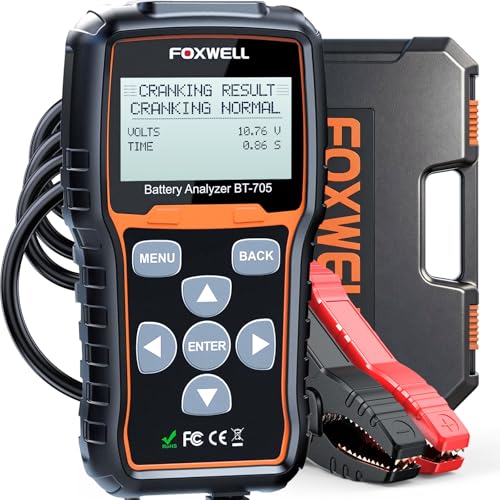
- Tests 12V and 24V systems with 100-2000 CCA support
- Shows battery health, cranking, and alternator output
- Large screen and long cable make one-person testing easy
Best For: DIYers who need a more complete battery and charging-system diagnostic tool.
Best for Simple Readouts
12V Car Battery & Alternator Tester

- Six LED indicators for fast, easy battery health checks
- Supports flooded, AGM, spiral AGM, and gel 12V batteries
- Reverse protection helps prevent damage from accidental misuse
Best For: DIYers who want a quick, easy-to-read tester for 12V battery and alternator checks.
Best 2-in-1 Pick
FOXWELL NT301 Plus OBD2 Scanner + Battery Tester

- Combines OBD2 code reading with 12V battery testing
- Large 2.8-inch color display for clearer results
- Useful for live data, readiness checks, and EVAP testing
Best For: DIY drivers and home mechanics who want one handheld tool for engine codes and battery health checks.
Best with Extra Features
TopDiag BT300 Battery Load Tester

- Checks battery, cranking, and alternator performance
- Supports 12V/24V systems and many battery standards
- Easy one-button use with backlit LCD
Best For: DIYers who need a versatile tester for multiple vehicle types and battery systems.
Best for Clear Readings
FOXWELL BT301 12V Battery Tester

- Color display makes results easier to read
- Long 6.5-foot cable adds testing flexibility
- Covers battery, starter, and alternator checks
Best For: DIY drivers who want a readable all-in-one tester for 12V battery and charging-system checks.
Best for 12V Basics
ANCEL BA101 Car Battery Tester

- Checks battery health, cranking, and charging systems
- Supports common 12V lead-acid battery types
- Clear display and simple one-handed operation
Best For: DIYers who want an easy 12V battery and alternator tester for garage use
Best for DIY Diagnostics – TOPDON BT100 12V Battery Tester
If you want battery testers for home mechanics that do more than just show voltage, the TOPDON BT100 is a practical pick. It checks battery health, cranking performance, and charging-system output, giving you a quick read on whether a battery needs replacement, a jump, or further diagnosis.
Best For: Home mechanics who want a compact, easy-to-use tester for quick 12V battery and alternator checks across multiple vehicles.
Pros:
- Tests SOH, SOC, voltage, cranking, and charging system status
- Works with 12V lead-acid batteries from 100 to 2000 CCA
- Supports cars, trucks, motorcycles, ATVs, boats, and more
- Compact design with spark-proof, reverse-polarity clamps
Cons:
- Limited to 12V lead-acid battery types
- Basic interface may not satisfy users wanting advanced app-based features
For battery testers for home mechanics, the BT100 stands out because it gives fast, useful results without a learning curve. It is a solid garage tool if you want dependable go/no-go diagnostics for everyday vehicles and small equipment.
Best for Mixed Battery Types – Dlyfull Universal Battery Tester
If you want one of the most practical battery testers for home mechanics, this Dlyfull unit is a simple way to check a wide range of everyday cells before you replace them. It works with AA, AAA, C, D, 9V, and many button-cell and specialty batteries, so it’s handy for garage remotes, tools, meters, and household gear.
Best For: Home mechanics who need a compact tester for checking everything from standard batteries to coin cells without a complicated setup.
Pros:
- Checks a broad mix of common and specialty battery types
- LCD screen gives quick good/weak/poor status readings
- Compact, lightweight design is easy to keep in a toolbox or drawer
- Includes an AAA battery to get started right away
Cons:
- Not meant for testing rechargeable batteries
- Basic display is useful, but not as detailed as advanced analyzers
For anyone comparing battery testers for home mechanics, this is a solid pick if versatility matters more than advanced diagnostics. It’s a straightforward, portable checker that helps you sort good batteries from weak ones fast.
Best for Battery Health Readouts – MOTOPOWER MP0515A 12V Battery Tester
If you want one of the more informative battery testers for home mechanics, the MOTOPOWER MP0515A gives you a fast read on battery condition, cranking performance, and charging output without much setup.
Best For: DIY owners who want a straightforward 12V tester that can check battery health and alternator performance in one tool.
Pros:
- Tests 12V lead-acid batteries from 100-2000 CCA for broad garage use
- Checks cranking and charging system performance, including alternator output
- Color LCD and multi-language support make results easy to read
- Real-time wave display adds more detail when diagnosing issues
Cons:
- Limited to 12V lead-acid batteries, so it is not a universal tester
- More diagnostic detail than some casual users may need
For home mechanics who want practical diagnostics instead of guesswork, the MP0515A is a smart pick among battery testers for home mechanics because it covers battery health, starting, and charging checks in a compact, easy-to-use unit.
Best Value Dual-Pack – 2 Pack Universal Battery Tester
If you want a simple, no-frills option for checking common household cells, this dual-pack is a practical pick for battery testers for home mechanics. It covers AA, AAA, C, D, 9V, and button cells, and the analog-style readout makes it easy to spot weak batteries before they cause troubleshooting headaches.
Best For: Home mechanics who want an inexpensive, portable tester they can keep in a drawer, toolbox, or garage.
Pros:
- Checks a wide range of common battery sizes, including 9V and button cells
- No battery required to operate, so it stays ready when you need it
- Compact two-pack offers good value and easy storage
- Simple indicator bars make quick testing straightforward
Cons:
- Basic design is less feature-rich than digital multi-function testers
- Best suited to quick condition checks rather than detailed diagnostics
- Analog-style reading may be less precise for users wanting exact numbers
For routine battery checks, this is an easy, low-cost tool that helps you sort good cells from dead ones without guesswork. Among battery testers for home mechanics, it stands out for convenience, compatibility, and the fact that you get two testers in the box.
Best for 12V/24V Diagnostics – FOXWELL BT705 Battery Tester
If you want one of the more capable battery testers for home mechanics, the FOXWELL BT705 is built to check more than just battery voltage. It helps you diagnose starting and charging issues on cars, trucks, RVs, boats, and other 12V/24V systems, with clear readouts for battery health, cranking performance, and alternator output.
Best For: DIYers who want a dependable, easy-to-read tester for troubleshooting batteries, starters, and alternators across multiple vehicle types.
Pros:
- Tests 12V and 24V systems, plus 100-2000 CCA batteries
- Clear GOOD/REPLACE/CHARGE results make decisions easy
- Long cable and large screen support one-person testing
- Works with AGM, flooded, GEL, and EFB batteries
Cons:
- More expensive than basic handheld battery checkers
- Bulkier than simple voltage-only meters
- Some users may not need the extra diagnostics for casual use
The BT705 stands out if you need practical, at-home troubleshooting instead of a simple pass/fail reading. For battery testers for home mechanics, it offers a strong balance of accuracy, guidance, and vehicle coverage.
Best for Simple Readouts – 12V Car Battery & Alternator Tester
If you want one of the most straightforward battery testers for home mechanics, this 12V checker keeps things simple: clip it on, read the LEDs, and see whether the battery or alternator looks healthy. It’s a practical pick for quick garage checks on cars, trucks, motorcycles, boats, RVs, and other 12V systems.
Best For: DIYers who want an easy, no-voltage-guessing tester for quick battery and charging-system checks.
Pros:
- Six LED indicators make battery and alternator status easy to read at a glance.
- Works with common 12V battery types, including flooded, AGM, and gel batteries.
- Reverse protection and copper clips add a bit of durability and user safety.
- Useful for both home garages and light commercial use.
Cons:
- Gives a quick status check, not a detailed digital diagnostic report.
- Limited to 12V systems, so it won’t cover 24V applications.
For battery testers for home mechanics who care more about fast, practical results than advanced features, this is a solid grab-and-go option. It’s especially handy when you need to tell whether a battery just needs charging or should be replaced.
Best 2-in-1 Pick – FOXWELL NT301 Plus OBD2 Scanner + Battery Tester
If you want one compact tool that handles both engine diagnostics and basic charging-system checks, the FOXWELL NT301 Plus is a smart fit for battery testers for home mechanics. It combines an OBD2 code reader with a 12V battery tester, so you can check a no-start issue, read live data, and verify battery health before heading to a repair shop.
Best For: DIY drivers and home mechanics who want a single scanner for check-engine lights, battery testing, and quick pre-drive diagnostics.
Pros:
- 2-in-1 design covers OBD2 codes plus 12V battery, starter, and charging tests
- Large 2.8-inch color screen makes readings easier to see
- Includes live data, I/M readiness, EVAP checks, and DTC lookups
- No app or subscription required for basic use
Cons:
- Limited to 12V lead-acid batteries, not all battery types
- Doesn’t support pre-1996 vehicles or every regional make
For battery testers for home mechanics, the NT301 Plus stands out because it solves two common garage needs in one affordable handheld tool. It’s especially useful if you want to diagnose a weak battery or check engine warning without buying separate devices.
Best with Extra Features – TopDiag BT300 Battery Load Tester
For battery testers for home mechanics, the TopDiag BT300 stands out as a practical all-in-one option for checking battery health, cranking performance, and alternator output. It covers 12V and 24V vehicles and supports common lead-acid, AGM, and gel batteries, making it useful for a wide range of garage jobs.
Best For: DIYers and home mechanics who want a straightforward tester for battery, starting, and charging-system checks across cars, trucks, and other 12V/24V vehicles.
Pros:
- Tests battery health, starting system, and charging system in one tool
- Supports many battery standards and common battery types like AGM and gel
- Backlit LCD and one-button operation keep testing simple for DIY use
- USB software updates help improve compatibility over time
Cons:
- Not compatible with 6V or lithium batteries
- Requires the correct battery type/CCA input for the most accurate results
- USB cable is for updates only, not charging
Overall, the BT300 is a solid pick if you want a versatile diagnostic tool instead of a basic voltage checker. For battery testers for home mechanics, it offers broad coverage and quick results without making the process overly complicated.
Best for Clear Readings – FOXWELL BT301 12V Battery Tester
If you want one of the more user-friendly battery testers for home mechanics, the FOXWELL BT301 stands out for its color screen, long test cable, and all-in-one checks for battery health, cranking, and alternator output. It’s built to give fast, practical answers before you swap parts or head to a shop.
Best For: DIY drivers who want a simple, readable tester for 12V batteries and charging-system checks at home.
Pros:
- 2.8-inch color display is easy to read in bright or dim conditions
- 6.5-foot cable gives extra reach for testing from the driver’s seat
- Supports flooded, AGM, EFB, and GEL 12V batteries
- Checks battery health, cranking, and alternator performance in one tool
Cons:
- Not compatible with lithium batteries
- Only for 12V systems, so it won’t cover every vehicle battery type
- More feature-rich than basic testers, which may be more than some users need
For battery testers for home mechanics, the BT301 is a strong pick if you value clarity and convenience over a bare-bones, no-frills readout. It’s a practical upgrade for anyone who wants quick diagnostics without guessing at battery or charging problems.
Best for 12V Basics – ANCEL BA101 Car Battery Tester
If you want one of the most practical battery testers for home mechanics, the ANCEL BA101 covers the essentials without making the test process feel complicated. It checks battery health, charge state, cranking performance, and charging output, so you can quickly narrow down whether the battery, alternator, or starting system is the problem.
Best For: Home mechanics who need a straightforward 12V tester for cars, trucks, boats, RVs, and other lead-acid batteries.
Pros:
- Shows SOH, SOC, voltage, CCA, cranking, and charging results in one tool
- Works with many 12V battery types, including AGM, GEL, EFB, and flooded
- Clear screen and one-handed operation make it easy to use in the garage or driveway
- Built-in protection and sturdy clips help reduce mistakes during testing
Cons:
- Not compatible with 6V or 24V batteries
- Doesn’t support lithium batteries
- Requires correct battery type and rating entry for the best accuracy
For drivers and DIYers comparing battery testers for home mechanics, the BA101 is a solid pick if you mainly need reliable 12V battery and charging-system checks. It’s especially useful when you want fast answers before replacing parts or getting stranded.
How We Picked the Best Battery Testers for Home Mechanics
We prioritized Battery Testers for Home Mechanics that are easy to use, give clear results, and cover the most common testing needs. That includes 12V automotive battery testing, alternator and charging system checks, and simple household battery verification where useful. We also looked for readable displays, broad battery compatibility, and value for DIY use.
Quick Comparison
If you mainly work on cars, a dedicated 12V tester is usually the best fit. If you test AA, AAA, button cells, or mixed household batteries, a universal battery checker is more practical. For drivers who want broader diagnostic coverage, combo tools that add starter, charging, or OBD2 functions can be worth the extra cost.
Key Buying Factors for Battery Testers for Home Mechanics
Battery Type and Voltage
Make sure the tester matches what you use most often. Many Battery Testers for Home Mechanics focus on 12V automotive batteries, while others handle common household cells or both. If you work on multiple vehicles, look for compatibility with 24V systems or a wide CCA range.
Test Scope
Some testers only estimate battery health, while others also check cranking performance and charging output. For diagnosis, a unit that can evaluate the battery, alternator, and starting system gives you a much clearer picture.
Ease of Reading
Digital displays, backlighting, and straightforward pass/fail indicators reduce guesswork. If you test batteries in a garage, on a driveway, or in low light, a screen that is easy to read matters more than extra features you may never use.
Accuracy and Repeatability
Home mechanics need results that are consistent enough to guide decisions. Look for testers with clear CCA support, solid clamping hardware, and a simple process that minimizes user error.
Portability and Power Source
Compact testers are easier to store in a toolbox or glove box. Some units are powered by the battery being tested, which is convenient, while others add features that can make them a little bulkier.
Who Should Buy Which Battery Testers for Home Mechanics?
If you mainly maintain one car or truck, a straightforward 12V automotive tester is often the best value. If you service multiple vehicles or want deeper diagnostics, choose a model with alternator and cranking tests. If your needs are mostly household batteries, a universal checker is the smarter choice. And if you want one tool to cover both basic code reading and battery testing, a combo scanner can simplify your garage setup.
For most home users, the best Battery Testers for Home Mechanics are the ones that give fast, readable results without adding unnecessary complexity. Focus on the battery types you actually use, the level of diagnostics you need, and how easy the tester is to interpret in real-world conditions.