
The best angle grinders for automotive work help remove rust, clean welds, cut exhaust components, strip paint, and prepare metal for repair. The right tool depends on whether you prioritize portability, sustained shop use, compact access, or compatibility with your compressor.
We selected 10 corded electric and pneumatic models spanning standard 4-1/2-inch grinders, 5-inch air grinders, and right-angle die grinders. Use the guide below to match motor power, speed, wheel size, air demand, and handling to your automotive projects.
Best 10 Angle Grinders for Automotive Work Picks for 2026
Compact Kit Pick
Metabo HPT G12SR4 Angle Grinder

- Includes five grinding wheels and a hard case.
- 6.2-amp motor reaches 12,000 RPM.
- Lightweight body with a low-profile gear case.
Best For: DIY garage users wanting a ready-to-use corded kit
Fast Removal Pick

- 7-amp motor runs at up to 12,000 RPM.
- Tool-free One-Touch guard adjustment.
- Quick-Change wheel release and two-position handle.
Best For: Garage work requiring quick adjustments and material removal
Value Flexibility Pick

- 7-amp motor reaches 11,000 RPM.
- Reversible handle supports either side.
- Adapter accepts two common arbor sizes.
Best For: Occasional garage work with flexible handling and wheel compatibility
Pneumatic Shop Pick
Chicago Pneumatic CP7545-B Air Grinder
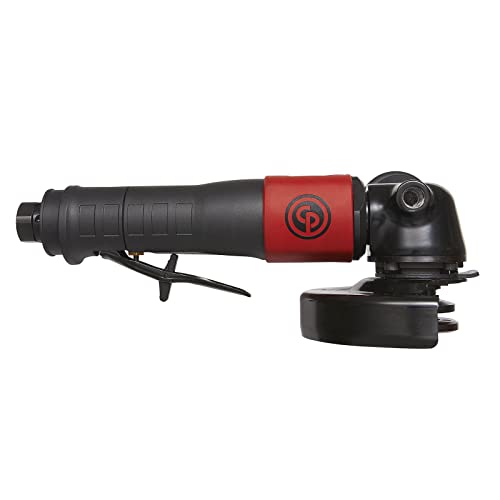
- 1.13-horsepower motor delivers 12,000 RPM.
- Lightweight 3.5-pound pneumatic design.
- Safety features include a lock-off throttle and adjustable guard.
Best For: Automotive shops with a 90-PSI compressed-air supply
Best Budget Corded Pick
SHALL 4-1/2-Inch 11000 RPM Angle Grinder

- 4-amp motor with 11,000 RPM speed
- Includes guards, discs, wrench, and spare brushes
- Lightweight body with two-position side handle
Best For: DIY garages and general metal-cutting or grinding tasks
Best Compact Pneumatic Pick
Chicago Pneumatic CP875 Right-Angle Die Grinder

- 90-degree head for confined work areas
- 22,500 RPM speed with 0.3-hp output
- Lightweight design with safety throttle and air regulator
Best For: Automotive bodywork, deburring, and precision finishing
Best Heavy-Duty Air Grinder
Ingersoll Rand 422G-A 5-Inch Angle Grinder

- 0.6-hp air motor with 5-inch wheel
- 12,000 RPM speed and 5/8-inch-11 thread
- Metal housing with reduced-vibration design
Best For: Shop-based automotive grinding and weld finishing
Best Compact Air Die Grinder
WORKPRO 90-Degree Air Die Grinder

- 20,000 RPM pneumatic motor
- 1/4-inch and 1/8-inch collets
- One-pound design for tight spaces
Best For: Automotive detail work and confined-area grinding
Best Heavy-Duty Automotive Grinder
Ingersoll Rand 345MAX 5-Inch Grinder

- 0.88 hp air motor
- 5-inch grinding wheel
- Composite housing for extended use
Best For: Vehicle repair, bodywork, and heavy material removal
Best Ergonomic Right-Angle Die Grinder
NEIKO 30060A Pistol-Grip Grinder

- 20,000 RPM listed speed
- Pistol grip for controlled handling
- Built-in regulator and paddle throttle
Best For: Controlled weld prep and grinding in compact spaces
Compact Kit Pick – Metabo HPT G12SR4 Angle Grinder
For automotive work that involves grinding, cleanup, or access in tighter areas, the Metabo HPT G12SR4 combines a compact 4-inch-class format with a 6.2-amp motor and a useful accessory kit. Its low-profile gear case and 4-pound weight make it practical for maneuvering around vehicle components.
Best For: DIY automotive users who want a lightweight corded grinder with included wheels and a carrying case.
Pros:
- Includes five grinding wheels and a hard carrying case.
- 6.2-amp motor delivers up to 12,000 RPM.
- Low-profile gear case and compact 4-pound design suit tight areas.
- Removable forward-canted handle supports right- or left-handed use.
Cons:
- Corded electric operation limits portability away from an outlet.
- Includes a one-year base warranty.
The G12SR4 is a sensible starter package for automotive grinding tasks, especially when minimizing setup costs matters. Its included accessories and maneuverable design add convenience, while the corded format is best suited to a garage or workshop.
Fast Removal Pick – DEWALT DWE4011 Angle Grinder
The DEWALT DWE4011 is a straightforward choice among angle grinders for automotive work, pairing a 7-amp, 12,000-RPM motor with a slim body. Its tool-free guard and quick-change wheel release can make common workshop adjustments faster.
Best For: Automotive DIYers and shop users who prioritize fast material removal and convenient wheel changes.
Pros:
- 7-amp AC/DC motor is rated for 12,000 RPM.
- One-Touch guard adjusts without a tool.
- Quick-Change wheel release removes wheels without a wrench.
- Two-position side handle improves control and comfort.
Cons:
- Sold as the grinder only, with fewer included accessories than some kits.
- Corded operation requires access to a power source.
With its slim ergonomic body and convenient guard and wheel-release features, the DWE4011 is well suited to repetitive garage work. It is a practical option when speed of setup and material removal matter more than a bundled accessory package.
Value Flexibility Pick – WEN 944 Angle Grinder
The WEN 944 offers a budget-friendly approach to angle grinders for automotive work, with a 7-amp motor, rubber-lined grip, and a reversible side handle. Its arbor adapter also supports grinding wheels with both 5/8- and 7/8-inch arbors.
Best For: Home mechanics seeking an adaptable corded grinder for occasional automotive grinding and cleanup.
Pros:
- 7-amp motor produces up to 11,000 RPM.
- Reversible handle accommodates left- or right-side placement.
- Arbor adapter accepts 5/8- and 7/8-inch grinding wheel arbors.
- Backed by a two-year warranty.
Cons:
- Its 11,000-RPM maximum is lower than the 12,000 RPM offered by some alternatives.
- Includes one grinding wheel rather than a larger accessory set.
- At 4.6 pounds, it is heavier than some compact models.
The WEN 944 stands out for handle flexibility, wheel compatibility, and a longer stated warranty. It makes sense for occasional garage use where adaptable handling is more important than the lightest possible design.
Pneumatic Shop Pick – Chicago Pneumatic CP7545-B Air Grinder
For automotive work in an air-equipped shop, the Chicago Pneumatic CP7545-B provides a pneumatic alternative to corded grinders. It combines a 1.13-horsepower motor, 12,000-RPM free speed, and 4.5-inch wheel capacity with a compact housing designed for maneuverability.
Best For: Automotive shops and detailers with a compressor supplying the required 90 PSI air pressure.
Pros:
- 1.13-horsepower air motor reaches 12,000 RPM.
- Compact 3.5-pound design helps with maneuverability in tight spaces.
- Lock-off throttle helps prevent accidental startups.
- Adjustable wheel guard and safety lever add control features.
Cons:
- Requires an air supply operating at 90 PSI.
- Less convenient for users without a suitable compressor.
- Includes the grinder but not a broad accessory kit.
The CP7545-B is the most shop-oriented option here, particularly for users already invested in pneumatic equipment. Its light body and automotive detailing compatibility are appealing, but compressor requirements make it less practical for a basic home garage.
Best Budget Corded Pick – SHALL 4-1/2-Inch 11000 RPM Angle Grinder
For shoppers comparing angle grinders for automotive work, the SHALL offers a compact corded option with a 4-amp motor, 500-watt maximum output, and 11,000 RPM no-load speed. Its included guards and accessories make it ready for common cutting and grinding tasks.
Best For: Home garages and DIY automotive projects involving metal cutting, grinding, and light fabrication.
Pros:
- Fast 11,000 RPM speed with a 4-amp, 500-watt motor.
- Includes separate cutting and grinding guards plus six discs.
- Lightweight 3.7-pound body with a two-position non-slip side handle.
- Includes replacement carbon brushes and a wrench.
Cons:
- Corded design requires access to an electrical outlet.
- The included 4-1/2-inch accessory size is smaller than the wheel size on some larger grinders.
This is a practical value choice when you want an automotive-ready grinder package without adding accessories separately. The lock-on/off slide switch and spindle lock add convenience, while the compact body helps reduce fatigue during extended use.
Best Compact Pneumatic Pick – Chicago Pneumatic CP875 Right-Angle Die Grinder
Among angle grinders for automotive work, the Chicago Pneumatic CP875 stands out for tight-access jobs. Its 90-degree head, 4.88-inch length, 0.99-pound weight, and 22,500 RPM free speed suit detailed grinding, deburring, polishing, and contouring.
Best For: Automotive body shops and mechanics working in confined areas or on small, detailed metal surfaces.
Pros:
- Compact right-angle design reaches confined work areas.
- High 22,500 RPM free speed and 0.3-hp output support material removal and finishing.
- Lightweight aluminum housing with a composite over-sleeve.
- Safety throttle lever and built-in air regulator support controlled operation.
Cons:
- Requires an air compressor and pneumatic setup.
- Uses a 1/4-inch collet rather than a larger grinding wheel arbor.
The CP875 is better suited to precision and access than broad surface grinding. Its lightweight, compact format can be especially useful for bodywork, deburring, and finishing where a conventional wheel grinder is difficult to position.
Best Heavy-Duty Air Grinder – Ingersoll Rand 422G-A 5-Inch Angle Grinder
For demanding angle grinders for automotive work, the Ingersoll Rand 422G-A combines a 0.6-hp air motor with a 5-inch wheel and 12,000 RPM maximum free speed. It is designed for grinding, metal finishing, weld work, and automotive repair when continuous compressor power is available.
Best For: Automotive repair shops, mechanic bodywork, and users who need a larger-wheel pneumatic grinder.
Pros:
- 0.6-hp motor and 5-inch wheel support substantial grinding work.
- 12,000 RPM maximum free speed with a 5/8-inch-11 thread.
- Ergonomic 4.14-pound design balances power and maneuverability.
- Metal housing, reduced-vibration engineering, and motor overspeed control support shop use.
Cons:
- Requires an air compressor supplying at least 90 PSI.
- Air compressor is not included.
- Heavier than the compact CP875 die grinder.
The 422G-A is the strongest fit here for larger automotive grinding and weld-finishing jobs. Its 5-inch wheel and higher horsepower offer more working capacity, but buyers must already have a suitable compressor and should account for the tool’s larger size.
Best Compact Air Die Grinder – WORKPRO 90-Degree Air Die Grinder
For angle grinders for automotive work in tight areas, the WORKPRO Air Angle Die Grinder uses a 90-degree head to improve access around components and small repair spots. Its 20,000 RPM pneumatic motor, two collets, and one-handed design suit detail grinding, deburring, polishing, and similar tasks.
Best For: Automotive detail work, deburring, polishing, and grinding in confined spaces when you have a suitable air compressor.
Pros:
- 90-degree head helps reach tight or angled areas.
- Includes both 1/4-inch and 1/8-inch collets for broader bit compatibility.
- Lightweight, one-pound body supports one-handed operation.
- Rear exhaust directs air away from the operator.
Cons:
- Requires an air compressor, which is not included.
- Air consumption is listed at 3 CFM, so compressor compatibility matters.
- The dust plug must be removed before installing the air connector.
This is a practical choice when reach and maneuverability matter more than using a larger wheel. The compact pneumatic design is especially well suited to controlled automotive cleanup and finishing work.
Best Heavy-Duty Automotive Grinder – Ingersoll Rand 345MAX 5-Inch Grinder
For demanding angle grinders for automotive work, the Ingersoll Rand 345MAX combines a 5-inch wheel with a 0.88 hp air motor and up to 12,000 RPM. Its composite housing and ergonomic design are aimed at longer vehicle repair, bodywork, and material-removal sessions.
Best For: Vehicle repair, automotive bodywork, and heavier material removal where a 5-inch wheel and air-powered performance are useful.
Pros:
- 5-inch grinding wheel supports broader surface coverage than a small die grinder.
- 0.88 hp motor is designed for high-performance material removal.
- Lightweight composite housing and ergonomic design can improve comfort over extended use.
- Built-in lubricating wick helps optimize lubrication of the angle gear set.
Cons:
- Requires an air supply for operation.
- At 3.5 pounds, it is heavier than compact die-grinder options.
- The supplied specifications identify it as a 5-inch grinder rather than a small-space detailing tool.
The 345MAX is the strongest fit here for larger automotive grinding and bodywork tasks. Its larger wheel and higher power-to-weight focus make it less about delicate access and more about productive material removal.
Best Ergonomic Right-Angle Die Grinder – NEIKO 30060A Pistol-Grip Grinder
The NEIKO 30060A is a compact option among angle grinders for automotive work, pairing a right-angle head with a pistol-style grip. Its 20,000 RPM rated speed, built-in regulator, and paddle throttle provide adjustable control for grinding, weld preparation, polishing, and sanding.
Best For: Automotive weld prep, polishing, sanding, and controlled grinding in compact spaces.
Pros:
- Right-angle design improves access in confined areas.
- Pistol grip provides a natural, controlled hold.
- Built-in regulator and paddle lever allow speed adjustment and feathering.
- Uses approximately 4 CFM of air and weighs one pound.
Cons:
- Requires an air compressor for operation.
- Its 1/4-inch collet is less versatile for accessories than a tool supplied with multiple collets.
- The supplied specifications list a 20,000 RPM speed, while the product bullet references a 25,000 RPM free speed; users should verify the operating rating.
This model stands out for handling comfort and speed control in small work areas. The pistol grip and adjustable regulator make it a sensible pick when precise, sustained hand positioning is important.
How We Picked the Best Angle Grinders for Automotive Work
We compared these tools by the jobs they can handle in a garage or professional shop, including cutting metal, grinding welds, removing corrosion, polishing, and working in confined areas. We also considered wheel or collet size, motor or air performance, speed control, guard and handle design, exhaust direction, included accessories, and expected ease of maintenance.
Electric models are evaluated for corded reliability and straightforward setup, while pneumatic models are judged by compressor requirements, maneuverability, durability, and suitability for extended shop use. Because automotive work varies widely, the list includes both general-purpose angle grinders and smaller die grinders for detail work.
Quick Comparison
| Tool type | Best suited for | Main consideration |
|---|---|---|
| 4-1/2-inch corded grinder | General cutting, grinding, and rust removal | Requires access to an outlet |
| 5-inch pneumatic angle grinder | Heavy-duty shop grinding and cutoff work | Needs a capable compressor and air hose |
| Air die grinder | Detailing, porting, deburring, and tight spaces | Uses smaller accessories and high RPM |
| Air polishing or specialty grinder | Surface finishing and specialized automotive work | Accessory compatibility varies |
Key Buying Factors for Angle Grinders for Automotive Work
Wheel Size and Task Coverage
A 4-1/2-inch grinder is a versatile choice for brackets, sheet metal, weld cleanup, and light-to-medium cutting. Five-inch air grinders provide more coverage for larger surfaces, but can be heavier and require more clearance. Die grinders use 1/4-inch or 1/8-inch shank accessories, making them better for precision work than broad surface removal.
Electric Power Versus Compressed Air
Corded electric grinders are convenient when you have a nearby outlet and do not want to size a compressor. Pneumatic tools generally run cooler and can be comfortable for busy shops, but check the tool’s required CFM and PSI against your compressor’s delivered output. Tank size alone does not tell you whether a compressor will keep up.
Speed, Control, and Accessories
High RPM helps with cutting and small abrasive accessories, but it also increases the need for proper wheel ratings and controlled handling. Confirm that discs, guards, and backing hardware are designed for the tool. Included wheels can add value, but quality and task suitability matter more than quantity.
Safety and Ergonomics
Look for a usable guard, secure side or reversible handle, manageable weight, and an exhaust direction that does not blow debris toward you. Wear eye and hearing protection, gloves appropriate to the task, and a face shield when cutting or grinding. Disconnect power or air before changing accessories.
Who Should Buy Which Angle Grinders for Automotive Work?
- Choose a 4-1/2-inch electric grinder if you want an affordable, general-purpose tool for occasional repairs, rust removal, weld cleanup, and cutting.
- Choose a 5-inch pneumatic angle grinder if you run a well-equipped shop, already own a suitable compressor, and expect longer or heavier grinding sessions.
- Choose an air die grinder for tight spaces, precision deburring, porting, small polishing accessories, and detail-oriented automotive work.
- Choose a specialty air grinder or polisher when surface finishing, detailing, or a particular accessory system is more important than general-purpose cutting.
Before buying, confirm the accessory diameter, arbor or collet size, air consumption, operating pressure, and replacement-part availability. Matching those specifications to your workspace will matter more than choosing the highest advertised RPM.