
VDIAGTOOL VD10 OBD2 Scanner review is about utility first: a compact code reader that handles the basics most drivers actually need.
If you want a simple way to read and clear engine fault codes, check readiness, and see a few live data points, it fits that job.
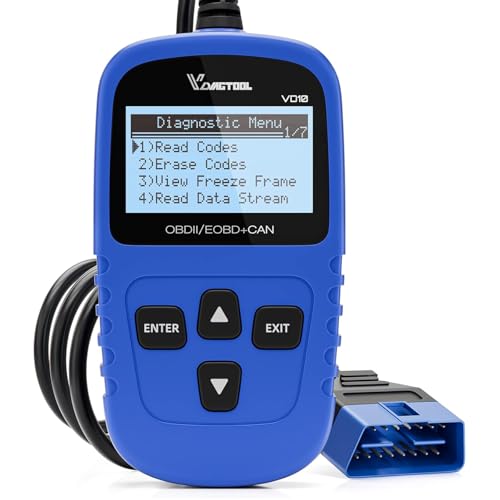
VD10 OBD2 Scanner Review Summary
The VDIAGTOOL VD10 is best for drivers, DIYers, and used-car shoppers who want a no-frills OBD2 scanner that works like a focused diagnostic companion instead of a complicated tool.
Based on the listing, it is built around quick fault-code reading, code clearing, freeze frame access, I/M readiness checks, and vehicle information retrieval, which makes it a sensible pick for routine checks and basic troubleshooting.
Verdict: Worth considering if you want a compact, easy-to-use scan tool for engine-light diagnosis and inspection prep. It is not trying to be a full professional scan platform, but it covers the core functions that matter most for everyday ownership.
Review Scorecard
| Category | Score | Why it earns that score |
|---|---|---|
| Ease of use | 9/10 | Plug-and-play operation, simple two-line LCD, and no battery or charger requirement make it approachable. |
| Core OBD2 functions | 8/10 | Reads and clears codes, shows definitions, and supports freeze frame and readiness checks. |
| Diagnostic depth | 6/10 | Good for engine-code basics, but the listing does not suggest advanced bi-directional or service-level functions. |
| Everyday practicality | 8/10 | Useful for checking a CEL, verifying monitor readiness, and viewing key live data on the road or in the driveway. |
| Compatibility | 8/10 | Claims support for all OBDII protocols and broad coverage of OBDII-compliant vehicles. |
| Display and feedback | 7/10 | The two-line LCD and built-in code database are practical, though obviously limited compared with larger-screen tools. |
| Value for casual buyers | 8/10 | Strong fit if you need a straightforward reader and do not want to pay for advanced features you may never use. |
Key Features and Specifications of VD10 OBD2 Scanner
The listing positions the VD10 as a compact car diagnostic tool aimed at quick, practical scanning.
It is designed for reading generic and manufacturer-specific trouble codes, showing definitions on the device, clearing codes after repairs, and displaying common live data such as engine RPM, intake air temperature, fuel trim, and misfire data.
It also includes freeze frame retrieval, which matters because that snapshot can help show what the vehicle was doing when the fault was triggered.
For buyers who are checking emissions readiness or preparing for an inspection, the I/M readiness feature is one of the most useful parts of the package.
The device is described as plug-and-play, with a clear two-line LCD screen, white backlight, and contrast adjustment.
The listing also says it does not need batteries or a charger, which keeps it simple to store in a glove box, center console, or tool bag.
Key listing facts:
- Reads and clears generic and manufacturer-specific OBD2 codes
- Displays built-in DTC definitions, with a database of more than 3000 codes claimed
- Shows live data from common sensors and engine systems
- Retrieves freeze frame data tied to a stored fault
- Checks I/M readiness for inspection prep
- Retrieves vehicle information such as VIN, calibration ID, and CVNs
- Supports common OBDII protocols, including CAN, ISO9141, KWP2000, J1850 PWM, and J1850 VPW
- Works with many 1996+ US vehicles, 2006+ EU vehicles, and 2009+ Asian vehicles according to the listing
- Uses a two-line LCD with backlight and contrast adjustment
That feature set makes the VD10 more of a practical first scanner than a deep-dive shop tool.
It is the kind of device you buy to answer immediate questions: is the check-engine light just a loose-gas-cap issue, what code is stored, and is the car ready for inspection after a reset?
Pros and Cons of VD10 OBD2 Scanner
Pros
- Simple setup. The plug-and-play design reduces friction for first-time users.
- Useful core functions. Code reading, code clearing, live data, freeze frame, and readiness checks cover the most common DIY needs.
- Built-in code definitions. On-screen definitions save time versus constantly looking up codes elsewhere.
- Inspection-oriented. I/M readiness support is valuable for drivers who need to know whether the car is ready for a smog or emissions test.
- Portable and self-contained. No battery or charger requirement makes it easy to keep in the car.
Cons
- Limited scope. The listing does not present advanced functions such as bidirectional control, module coding, or broad service resets.
- Small screen. A two-line LCD is functional, but it is not ideal if you want richer graphing or more data at once.
- Basic user experience by design. This is a simple code reader, so buyers expecting a tablet-style diagnostic platform may outgrow it quickly.
- Best for engine diagnostics only. The record centers on OBD2 engine-related functions, not broader systems diagnostics.
For many buyers, those limitations are acceptable because they align with the target use case.
The VD10 is not pretending to replace a professional scan tool.
It is aiming to be the thing you reach for when the check-engine light comes on and you want a fast, understandable answer.
Who Should Buy VD10 OBD2 Scanner?
The VD10 makes sense for drivers who want a first diagnostic scanner, not a complex shop-grade device.
It is a good fit if you want to read engine codes, clear them after a fix, check readiness monitors before inspection, or keep a compact tool in the car for unexpected warning lights.
It also suits used-car shoppers who want to verify vehicle information and inspect fault codes before making a purchase.
The VIN and calibration-related functions are especially useful in that context because they give you quick confirmation data without requiring a more advanced tool.
It is also a sensible choice for casual DIYers who already know they mainly need OBD2 basics.
If your repairs are usually limited to common issues like sensor faults, emissions-related checks, or verifying that a reset did what it was supposed to do, the VD10 should feel straightforward.
You should probably skip it if you need:
- Advanced ABS, airbag, transmission, or body-module diagnostics
- Bidirectional testing or service functions
- A large display for detailed graphing and multi-system analysis
- A scanner for professional or heavy-duty repair workflows
In short, buy it for simple engine-light diagnosis and inspection prep, not for full-system diagnostics.
Diagnostic Use Cases for VD10 OBD2 Scanner
Check-Engine Light Triage
When a warning light comes on, the first thing most drivers want is a readable code and a plain-language clue about what happened.
The VD10 is built for that moment.
Its code-reading and code-definition features are the core of its value, especially for people who do not want to immediately hand the car over to a shop for a simple fault.
Freeze Frame Context
Freeze frame data matters because it gives context, not just a code.
If a fault only happens intermittently, the snapshot can help narrow the cause by showing conditions present at the moment the code was set.
That is not a replacement for deeper testing, but it is useful when you are trying to separate a minor issue from a recurring one.
Readiness and Emissions Checks
I/M readiness is one of the most practical features on this kind of scanner.
If you have cleared codes, disconnected the battery, or recently completed a repair, readiness status helps you know whether the vehicle is likely to pass an inspection.
For buyers in states or regions with emissions testing, that can save a lot of unnecessary guessing.
Used-Car Verification
The listing’s vehicle information retrieval adds another layer of usefulness for used-car shopping.
Seeing VIN-related information and calibration data can help you confirm that the vehicle is responding normally to the scanner and that the ECU data looks consistent.
It is a small feature set, but it is exactly the sort of thing a cautious buyer appreciates before signing paperwork.
Alternatives to VD10 OBD2 Scanner
If you want a similarly simple reader, the Autel AutoLink series is a credible place to look.
Autel has a strong reputation in entry-level and midrange diagnostic tools, and its basic code readers are often compared with compact units like this one.
Another common alternative is the ANCEL OBD2 scanner line.
ANCEL offers a wide spread of inexpensive code readers and slightly more advanced handheld tools, so it is useful if you want to compare the VD10 against other straightforward Amazon options.
If you want a more established step up in scanning depth, the FOXWELL OBD2 scanner range is worth a look.
FOXWELL models often appeal to buyers who think they may eventually need more than a basic code reader.
For people who mainly want app-based convenience, the FIXD car diagnostic tool is another recognizable alternative.
It is a different style of product, but it competes for the same buyer who wants simple check-engine help without learning a full scan-tool interface.
The best alternative depends on whether you want the simplest handheld reader, a more upgradeable brand ecosystem, or a smartphone-connected path.
The VD10 stays competitive if your priority is a direct, self-contained tool with the essential OBD2 basics.
Is VD10 OBD2 Scanner Worth It?
Yes, if your goal is basic, dependable OBD2 troubleshooting rather than advanced diagnostics.
The VD10’s strengths are clear: it reads and clears codes, shows definitions, supports freeze frame and live data, checks readiness, and keeps the interface simple enough for everyday drivers.
It is especially worth considering for first-time buyers, drivers who want a glove-box scanner, and used-car shoppers who need quick verification tools.
If you want a compact reader that emphasizes clarity and convenience over advanced features, the VD10 is a rational buy.
If you need broader system coverage or pro-level control, look higher up the tool chain instead.