
Roof lockable aluminum cross bars are a focused fit for Subaru owners who want a cargo solution built around raised side rails.
This review covers where the design is strong, where it is limited, and who should buy it.
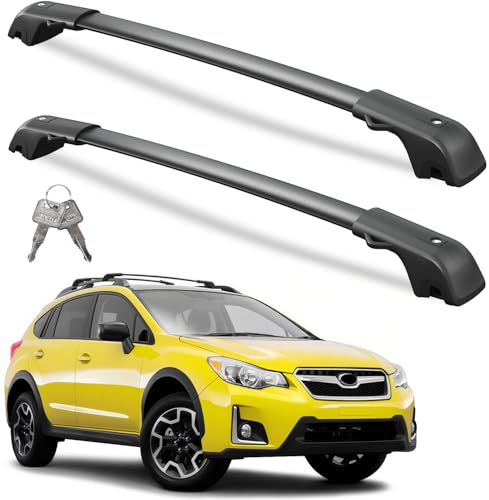
Roof Cross Bars Review Summary
Roof lockable aluminum cross bars make the most sense for drivers of the listed Subaru XV Crosstrek and Impreza model years who want a straightforward, heavy-duty cargo platform.
The listing emphasizes compatibility, a 300-pound capacity claim, metal locking hardware, and an aerodynamic aluminum profile, so the value is in practical utility rather than novelty.
Best for buyers who need model-specific fit and basic theft deterrence. It is especially appealing if your priority is carrying cargo, a canoe, kayak, bike, or roof box on raised side rails without stepping up to a more expensive premium system.
Review Scorecard
| Category | Score | Buyer assessment |
|---|---|---|
| Vehicle fit specificity | 9/10 | Built for defined Subaru model years with raised side rails, which reduces guesswork if your vehicle matches. |
| Cargo utility | 8/10 | The 300-pound claim and tie-down loops point to real carry capability for common weekend gear. |
| Security | 7/10 | The metal lock and key add a useful layer, though this is still a roof accessory, not a full anti-theft system. |
| Build confidence | 8/10 | The listing calls out 2 mm aluminum bars, anti-rust coating, and sturdy end supports. |
| Noise and efficiency | 7/10 | The aerodynamic shape should help, but roof bars still add drag and can create some wind noise. |
| Installation convenience | 7/10 | Clear labels and directional guidance should help setup, but vehicle-specific mounting always rewards patience. |
| Long-term ownership value | 8/10 | The design, corrosion resistance, and 12-month warranty suggest a sensible ownership profile for regular use. |
Key Features and Specifications of Roof Cross Bars
The most important detail is compatibility.
These cross bars are listed for Subaru XV Crosstrek model years 2013 through 2017 and Subaru Impreza model years 2012 through 2016, specifically with raised side rails.
If your vehicle does not match that setup, this is not the right product.
The bars are built from black matte powder-coated aluminum, with the listing describing an upgraded heavy-duty 2 mm thickness bar.
That matters because roof bars live outdoors, carry vibration, and are expected to handle weather exposure over time.
The end supports are described as high-hardness plastic designed to resist deformation and corrosion.
Other listed details are clearly aimed at practical use:
- Metal mechanism lock and key for added security
- Tie-down loops on the base feet
- Aerodynamic profile intended to reduce drag and wind noise
- Clear product labeling and directional installation guidance
- 12-month warranty support
The weight capacity claim is 300 pounds, which is strong on paper for a crossbar set in this class.
In real use, the effective limit is still determined by the vehicle roof, the rail system, and the load distribution.
That means the bars may be the stronger part of the system, but they do not override the car’s own limits.
Pros and Cons of Roof Cross Bars
Pros
- Very specific vehicle fit for listed Subaru model years
- Lockable design adds useful theft deterrence
- Aluminum construction and powder coating support outdoor use
- Aerodynamic shape should be friendlier than square, boxy bars
- Tie-down loops improve everyday cargo versatility
- Clear install labeling should reduce setup confusion
Cons
- Only works for raised side rails on the listed vehicles
- The 300-pound figure is a listing claim, not a substitute for checking vehicle limits
- Roof bars can still add wind noise and fuel drag
- Plastic support parts may be durable enough, but they are not metal
- Buyers outside the exact Subaru fit range need a different system
The biggest strength is not raw novelty.
It is that the product seems built for a specific use case and avoids the common mistake of being too universal to fit well.
The biggest drawback is also the same: this is only compelling if your vehicle is on the compatibility list.
Who Should Buy Roof Cross Bars?
Buy them if you drive one of the supported Subaru models and want a dependable way to carry outdoor or travel gear.
They fit the profile of a buyer who wants a practical, no-frills rack for cargo boxes, skis, bikes, kayaks, canoes, or family-trip luggage.
They also make sense if you want a lockable roof bar setup without moving into a more expensive premium brand system.
The listed features suggest a product focused on utility, corrosion resistance, and straightforward mounting rather than fancy styling.
You should skip them if:
- Your Subaru does not have raised side rails
- Your vehicle year is outside the listed range
- You want a universal rack that can move between different cars
- You need a brand with a larger accessory ecosystem or more advanced fit documentation
- You are unsure about your roof rating and do not want to verify it before buying
For the right owner, this is a logical buy.
For everyone else, compatibility is the main gatekeeper.
Roof Cross Bars Load and Fit Details
Fit Is the Real Selling Point
The product’s strongest selling point is not the materials alone.
It is the narrow fit window for Subaru XV Crosstrek and Impreza vehicles with raised side rails.
That specificity is useful because roof-rack problems usually come from poor fit, not lack of ambition in the spec sheet.
Capacity Needs Context
The 300-pound claim sounds impressive, but buyers should read it as an upper-end product claim, not a promise that every Subaru roof can safely use that full amount.
For cargo boxes, sports gear, and camping loads, the number is more than enough context to show the bars are aimed at serious everyday use.
Security and Convenience Work Together
The included metal lock and key are not the main event, but they do matter.
Roof accessories often live in public parking lots, driveways, and trailheads, so even modest theft resistance is helpful.
The tie-down loops also make the bars more useful for odd-shaped loads that need extra control.
Noise and Durability Are Balanced, Not Eliminated
The aerodynamic shape and aluminum body suggest a better ownership experience than rough, square steel bars.
Still, roof bars always trade some quiet and efficiency for utility.
Buyers should expect improvement relative to basic heavy bars, not silence.
Alternatives to Roof Cross Bars
If you need a different fit or broader support, compare this set with established roof-rack lines that are commonly sold on Amazon:
- YAKIMA roof rack cross bars
- Thule roof rack cross bars
- BrightLines roof rack cross bars
- BougeRV roof rack cross bars
Those alternatives are worth checking if you want a different price band, a wider vehicle fit range, or a brand with more roof-accessory options.
Is Roof Cross Bars Worth It?
Yes, if your Subaru is one of the listed model years and you have raised side rails.
In that case, Roof lockable aluminum cross bars look like a sensible, function-first way to add hauling capability without overcomplicating the setup.
They are most worth it for buyers who want a secure, vehicle-specific rack for weekend gear, travel cargo, or outdoor equipment.
The design choices point to practicality: aluminum construction, locking hardware, tie-down loops, and an aerodynamic profile.
They are not worth it if your vehicle fit is uncertain or your roof setup does not match the compatibility list.
For the right Subaru owner, though, this looks like a strong utility purchase rather than a generic universal rack.