
A dependable seven-pin connection keeps trailer lights, electric brakes, and auxiliary circuits working as intended. But a replacement plug, truck-side socket, and complete wiring harness solve different problems—and they are not interchangeable purchases.
These 10 options cover common RV-style seven-way blade repairs and installations. Start by identifying which side of the connection needs work, then check the wiring and mounting requirements before you buy.
Best 10 Seven Pin Trailer Connectors Picks for 2026
Sealed Replacement Plug

- IP68-rated wire-entry seal
- Brass terminals and grip hooks
- Splices into existing wiring
Best For: Replacing a trailer-side plug with a sealed wire entry
Complete Wiring Kit

- 8-foot cord and junction box
- Seven color-coded terminals
- Verify circuit functions before wiring
Best For: Replacing a trailer cord and organizing its connections
Strain-Relief Pick
Oyviny IP68 7-Way Trailer Plug

- IP68-rated entry seal
- Internal screw strain relief
- Brass terminals and grip hooks
Best For: A replacement plug needing sealing and wire retention
Straightforward RV Replacement
CURT 58141 Trailer-Side Connector

- Standard 7-way RV blade replacement
- Concealed wire terminals
- Easy-grip side hooks
Best For: Replacing a standard trailer-side RV blade plug
Best Sealed Two-Pack
Oyviny 7-Way Trailer-Side Plugs

- Two trailer-side male plugs
- IP68-rated seal with rubber grommet
- Screw-clamp wire strain relief
Best For: Two trailer-side replacements needing moisture protection
Best Vehicle-Side Replacement
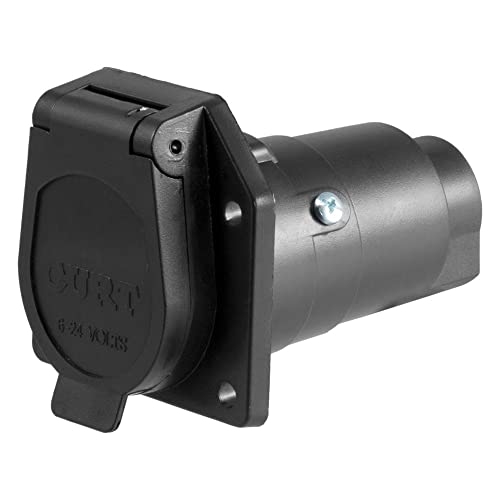
- Vehicle-side 7-way RV-blade socket
- Spring-loaded dust cover
- Concealed splice-in terminals
Best For: Replacing a tow vehicle’s 7-way RV-blade socket
Best Reinforced Plug
MECMO 7-Way Trailer-Side Connector

- Glass-filled nylon housing
- Rear rubber spacer protects wiring
- Side hooks aid grip
Best For: A single reinforced trailer-side plug replacement
Ready-to-Mount Vehicle Socket
Prewired 7-Way RV Connector Kit
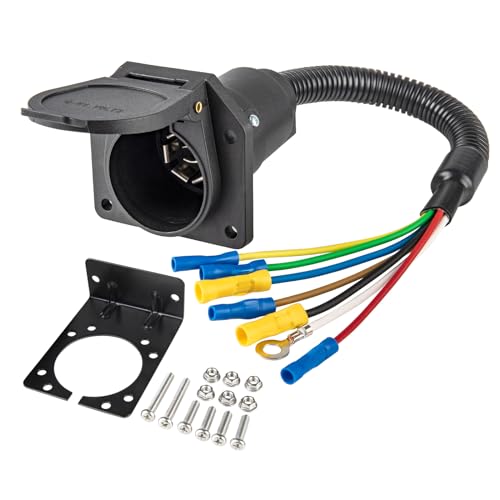
- Vehicle-side RV-style 7-way socket
- Color-coded pigtail with butt connectors
- Bracket and mounting hardware included
Best For: Vehicle-side installation with a prewired pigtail
Two-End Replacement Kit

- Vehicle socket and trailer plug included
- Glass-filled nylon and brass terminals
- Dust cover and grip hooks
Best For: Replacing both ends of a 7-way connection
Bracketed Truck-End Option
7-Pin Socket With Wiring Harness

- Vehicle-side socket and 7-wire harness
- Bracket, hardware, and instructions included
- Spring-loaded cover and tin-plated terminals
Best For: A bracketed truck-end socket replacement
Sealed Replacement Plug – WOFTD 7-Way Trailer Plug
If you need to replace the trailer-side end of your seven pin trailer connectors, this WOFTD plug is designed to splice into existing wiring. Its compression nut and rubber grommet provide an IP68-rated seal at the wire entry.
Best For: Replacing a trailer-side plug where a sealed wire entry is a priority.
Pros:
- IP68-rated sealing helps keep moisture and dust out.
- Brass terminals and a durable black plastic housing.
- Two handle hooks make the plug easier to grip.
Cons:
- Requires splicing into existing trailer wiring.
- Plug only; no cord or junction box is listed.
This is a focused replacement option if your trailer wiring is otherwise in good shape. Check wire functions as you connect the terminals rather than relying on color alone.
Unlike plug-only seven pin trailer connectors, the CheeMuii kit includes an 8-foot cord and a junction box. Its seven color-coded terminals give you a defined place to connect trailer circuits.
Best For: Replacing a trailer cord and organizing its connections in a junction box.
Pros:
- Includes an 8-foot 7-way cord and junction box.
- Color-coded wires and terminals help identify connections.
- Weatherproof cord wrap and a water- and dust-resistant junction box.
Cons:
- More components to install than a replacement plug alone.
- Manufacturer wiring conventions can vary, so the instructions and circuit functions need checking.
Choose this kit when the cord needs attention as well as the connector. The included wiring instructions matter: match each circuit by function before making the final connections.
For trailer-side seven pin trailer connectors that see wet conditions, the Oyviny plug pairs an IP68-rated compression-nut and grommet seal with an internal screw strain-relief clamp. It is designed to splice into existing trailer wiring.
Best For: A replacement plug where sealing and wire retention both matter.
Pros:
- IP68-rated wire-entry seal helps protect terminals from water and dust.
- Screw strain-relief clamp helps keep wires from pulling out.
- Brass terminals and two grip hooks.
Cons:
- Requires wiring each terminal and reassembling the plug.
- Does not include a replacement trailer cord.
The strain-relief clamp distinguishes this plug from a basic splice-in replacement. It makes sense when you want both a sealed entry and a way to secure the wires inside the connector.
The CURT 58141 is a trailer-side RV blade replacement for shoppers comparing seven pin trailer connectors. It splices into existing wiring and uses concealed terminals to help protect the connection points from dirt and rain.
Best For: Replacing a standard trailer-side 7-way RV blade plug.
Pros:
- Designed to interchange with virtually any trailer-side 7-way RV connector.
- Concealed wire terminals help shield splice-in connections.
- Two side hooks provide a better grip when plugging and unplugging.
Cons:
- Requires splicing into existing wiring.
- No IP rating is specified in the supplied product details.
This is a practical choice when you need the connector rather than a complete harness. Its weather-resistant terminal layout is useful, but it should not be confused with a specifically IP-rated sealed plug.
Best Sealed Two-Pack – Oyviny 7-Way Trailer-Side Plugs
If you need two trailer-side seven pin trailer connectors, this Oyviny pack pairs a detachable compression nut and rubber grommet with an IP68-rated seal. Each male RV-blade plug is designed to splice into existing trailer wiring.
Best For: Replacing two trailer-side plugs when moisture protection and wire retention matter.
Pros:
- Compression nut and rubber grommet help keep moisture and dust away from the terminals.
- Internal screw strain-relief clamp helps prevent wires from pulling loose.
- Brass terminals and side grip hooks support a solid connection and easier handling.
Cons:
- Requires splicing into the trailer’s existing wiring.
- Trailer-side male plug; not a replacement for a vehicle-side socket.
The two-pack is a practical choice for trailer-side repairs, especially where a sealed wire entry and strain relief are priorities. Confirm that its 3/4-inch NPT wire inlet suits your cable setup.
Best Vehicle-Side Replacement – CURT 58150 RV Blade Socket
Among seven pin trailer connectors, the CURT 58150 is the vehicle-side option here. This splice-in RV-blade socket has a spring-loaded dust cover for the contacts and concealed wire terminals for the wiring connections.
Best For: Replacing a vehicle-side 7-way RV-blade socket on an existing wiring setup.
Pros:
- Spring-loaded cover protects the connection points when the socket is not in use.
- Concealed terminals help shield splice-in connections from dirt and rain.
- Durable plastic housing will not rust or corrode.
Cons:
- Requires splicing into existing vehicle wiring.
- Vehicle-side socket; not the male plug for a trailer.
Choose this CURT socket when the tow vehicle’s connector needs replacing. Its covered contacts and sheltered terminals make sense for an exposed mounting location, provided you need a vehicle-side RV-blade connection.
Best Reinforced Plug – MECMO 7-Way Trailer-Side Connector
For a single trailer-side replacement, this MECMO model is a 7-way RV-blade male plug that splices into trailer wiring. Its glass-filled nylon body and rear rubber spacer distinguish it from more basic seven pin trailer connectors.
Best For: Replacing one trailer-side plug with a reinforced housing and easy-grip design.
Pros:
- Reinforced glass-filled nylon construction.
- Rear rubber spacer helps protect wire connections from water and dirt.
- Side grip hooks make plugging in and disconnecting easier.
Cons:
- Requires hardwiring each lead to its corresponding terminal.
- Trailer-side male plug; it will not replace a vehicle-side socket.
This is a straightforward choice if you want a sturdy replacement plug for one trailer. The rubber spacer adds protection at the wire entry, while the grip hooks help with routine hookups.
Ready-to-Mount Vehicle Socket – Prewired 7-Way RV Connector Kit
For shoppers comparing seven pin trailer connectors, this vehicle-side RV-style socket combines a prewired, color-coded pigtail with a mounting bracket and hardware. It is designed to be hardwired into an existing truck wiring setup.
Best For: Replacing or adding a vehicle-side 7-way socket when you want the bracket and wiring pigtail in one kit.
Pros:
- Includes a mounting bracket, screws, and nuts.
- Prewired 7-wire pigtail has color-coded wires and butt connectors.
- Spring-loaded cover protects the terminals when the socket is unused.
- Socket lid opens 180 degrees for access.
Cons:
- Requires hardwiring into the vehicle’s existing wiring.
- Vehicle-side socket only; no trailer-side plug is listed.
This is a practical choice if you need a complete vehicle-side mounting kit rather than a loose replacement socket. Confirm your vehicle’s wire functions before making the connections.
Two-End Replacement Kit – 7-Way Plug and Socket Pair
Unlike single-end seven pin trailer connectors, this MECMO kit supplies both a vehicle-side socket and a trailer-side plug. Both are RV-style 7-blade replacements intended to splice into existing wiring.
Best For: Replacing both mating ends of an existing 7-way trailer connection.
Pros:
- Includes both the vehicle-side receptacle and trailer-side plug.
- Glass-filled nylon housings and brass terminals.
- Vehicle socket has a spring-loaded dust cover.
- Trailer plug has side grip hooks for easier handling.
Cons:
- Both ends require wiring to their corresponding terminals.
- No mounting bracket is listed in the supplied kit details.
Choose this pair when wear or damage affects both sides of the connection. If only your truck socket needs replacement, a single vehicle-side kit may be more appropriate.
Bracketed Truck-End Option – 7-Pin Socket With Wiring Harness
This vehicle-side option covers the basics shoppers expect from seven pin trailer connectors: a 7-way socket, a color-coded wiring harness, and mounting hardware. It is intended to be hardwired into existing truck wiring.
Best For: Installing a truck-end 7-way socket with an included bracket and hardware.
Pros:
- Includes a mounting bracket, screws, nuts, and instructions.
- Color-coded 7-wire harness is supplied with butt connectors.
- Tin-plated copper terminals and a spring-loaded cover.
- Socket cover opens 180 degrees for access.
Cons:
- Installation requires connecting the harness to existing vehicle wiring.
- No trailer-side connector is listed in the package.
It is a straightforward truck-end kit if you already have a matching trailer plug. Check wire functions against your vehicle before splicing, even when the harness colors appear familiar.
How We Picked These Seven Pin Trailer Connectors
We focused on practical differences across the selected products: trailer-side versus vehicle-side fit, standalone connectors versus harness kits, weather-sealing claims, and whether mounting hardware or a matching connector is included. The list covers replacement plugs, sockets, a cord-and-junction-box kit, and a matched plug-and-socket option. Product descriptions alone cannot establish long-term durability, so inspect the specifications and your existing wiring before ordering.
Quick Comparison: Which Type Do You Need?
- Trailer-side plug: Replaces the blade-style plug on the trailer cord when its housing or contacts are damaged.
- Vehicle-side socket: Replaces the receptacle on the tow vehicle. Check its mounting pattern and how it connects to vehicle wiring.
- Cord and junction-box kit: Useful when the trailer cable needs replacement or you want accessible connections inside a junction box.
- Plug-and-socket set: Makes sense if both mating ends need replacement; verify that each end suits your installation.
Key Buying Factors for Seven Pin Trailer Connectors
Confirm the Connector and Its Location
The products listed here are described as RV-style seven-way blade connectors. Do not assume that every connector called “7-pin” mates with them; seven-pin round-pin connectors use a different contact arrangement. Also confirm whether you need the trailer’s male plug or the vehicle’s female socket. A connector sold for the wrong side will not fix the damaged end.
Check Wiring and Installation Requirements
Compare the product’s terminal markings and wiring diagram with your tow vehicle and trailer. Wire colors are not a reliable substitute for verifying circuit functions. Look for appropriate connections for ground, running lights, turn and brake lights, electric trailer brakes, and the applicable auxiliary or reverse circuit. If replacing a cord, measure the route to the junction box with enough slack for turns, without leaving cable that can drag. A splice-in plug requires sound existing wire; a socket may require a compatible bracket, fasteners, and a way to connect it to the vehicle harness.
Consider Exposure and Serviceability
For equipment stored outdoors, check how the connector seals around the cable and whether the socket has a protective cover. An IP68 claim applies to the stated product configuration, not necessarily to an open, unmated connection. Secure the cable against strain and keep terminals clean; even a sealed housing cannot compensate for loose wires or corroded contacts.
Who Should Buy Which Seven Pin Trailer Connectors?
Choose a trailer-side replacement plug if the existing cord is intact and only its end needs repair. Choose a vehicle-side socket if the truck receptacle is broken or worn. Pick the cord-and-junction-box kit when cable damage extends beyond the plug or multiple trailer circuits need reconnecting. A matched pair is convenient when both ends are being rebuilt. Before towing, test every lighting and brake function with the trailer connected.