
Reliable onboard power can make longer days on the water easier, whether you need to maintain a starter battery, recharge a portable power station, or support electronics at anchor. The best portable solar panels for boats balance useful output with low weight, weather resistance, and easy installation.
Our roundup includes compact trickle chargers, flexible marine-friendly panels, bifacial designs, and larger 200-watt options. Use the buying guide below to match panel type and output to your boat, battery system, and available mounting space.
Best 10 Portable Solar Panels for Boats Picks for 2026
Lightweight Flexible Pick

- 22–25% Maxeon cell efficiency
- 4.4-pound flexible construction
- MC4 connectors and IP67 junction box
Best For: Lightweight boat and RV installations
Battery-Maintenance Pick

- Includes an MPPT charge controller
- 360-degree adjustable mounting bracket
- Waterproof tempered-glass panel
Best For: Maintaining compatible 12V boat batteries
High-Output Flexible Pick

- 200W output with up to 25% efficiency
- 270-degree flexible fiberglass design
- ETFE surface and IP68-rated protection
Best For: Curved boat installations needing higher output
Rigid High-Efficiency Pick

- 200W output and 25% cell efficiency
- Compatible with 12V and 24V systems
- Long-term output and workmanship commitments
Best For: Roomy rigid boat installations
Best for Easy Setup
GRECELL UB200 200W Portable Solar Panel

- 200W output with up to 23.5% efficiency
- 10.14-pound foldable, flexible design
- Four connector types included
Best For: Portable boat charging where low weight and connector flexibility are priorities
Best Permanent-Style Marine Panel
Renogy 100W N-Type 16BB Solar Panel

- 25% efficiency with N-type 16BB cells
- IP67 weather protection and aluminum frame
- Long-term performance and workmanship coverage
Best For: Boat owners wanting a durable 100W panel for marine or off-grid use
Best High-Efficiency Power Station Panel
Jackery SolarSaga 200W Bifacial
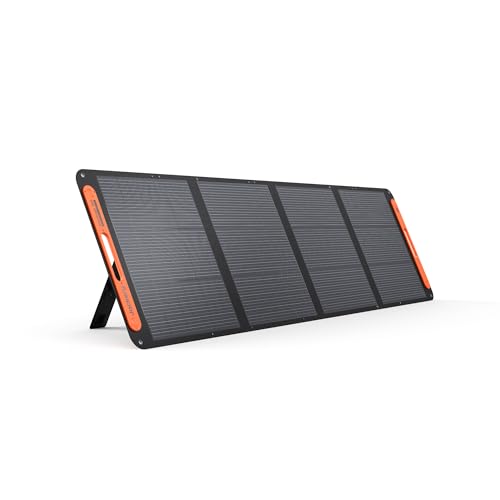
- Up to 26.7% bifacial conversion efficiency
- USB-A, USB-C, and DC8020 outputs
- IP68 protection and five-year warranty
Best For: Jackery Explorer users seeking high-output portable charging aboard
High-Efficiency Marine Panel
Renogy 200W N-Type Solar Panel
- 200W output with 25% efficient N-Type cells
- Compatible with 12V and 24V battery systems
- IP67 design with long-term warranty coverage
Best For: Higher-output boat systems with space for rigid mounting
Lightweight Bifacial Pick
Anker SOLIX PS100 100W Portable Panel

- Foldable 100W panel weighing about 6.3 pounds
- Bifacial design can add up to 10% more power
- IP68 water and dust resistance
Best For: Portable, flexible charging on boats and outdoor trips
Battery-Maintenance Solution
12W Waterproof Boat Trickle Charger

- Maintains idle 12V boat batteries
- Waterproof design with intelligent safety protection
- Includes clips, SAE cable, and suction cup
Best For: Preventing dead batteries during extended boat storage
Lightweight Flexible Pick – 100W SunPower Flexible Panel
For boat owners comparing portable solar panels for boats, this 100W SunPower panel emphasizes low weight, flexibility, and straightforward MC4 connectivity. Its 4.4-pound construction can bend up to 30 degrees, making it easier to use where deck or roof space is limited.
Best For: Boats, RVs, and campers needing a lightweight, moderately flexible 100W panel.
Pros:
- High-efficiency Maxeon monocrystalline cells rated at 22–25% efficiency.
- Lightweight 4.4-pound design with up to 30-degree flexibility.
- Includes MC4 connectors and pre-drilled mounting holes.
- IP67-protected junction box and weather-resistant construction.
Cons:
- The 45.9-by-21.9-inch size still requires substantial mounting space.
- Its 100W output is lower than the 200W panels in this roundup.
This is a practical choice when minimizing panel weight matters more than maximum output. Verify that the panel’s 12V specification and available mounting area suit your boat’s charging setup.
Battery-Maintenance Pick – 30W 12V Solar Charger Kit
This 30W kit is designed for maintaining 12V rechargeable batteries rather than supplying large amounts of onboard power. For portable solar panels for boats, its adjustable bracket, MPPT controller, and weather-resistant framed construction make it suited to small battery-maintenance setups.
Best For: Maintaining 12V boat batteries, including LiFePO4, lithium-ion, AGM, SLA, GEL, and EF batteries.
Pros:
- Includes an MPPT controller for battery charging and maintenance.
- 360-degree adjustable bracket supports ground, wall, or roof installation.
- Tempered glass and corrosion-resistant aluminum frame are waterproof and rustproof.
- LED indicators show solar connection, charging, and full-battery status.
Cons:
- 30W output is intended for maintenance rather than high-demand power use.
- At 2.04 kg, it is heavier than the flexible panel options.
Choose this kit when your priority is keeping a compatible 12V battery topped up while the boat is stored or lightly used. Its included controller and adjustable mount make it more complete than a panel-only purchase.
High-Output Flexible Pick – BougeRV Arch Pro 200W
The BougeRV Arch Pro combines 200W of output with a thin fiberglass-based flexible design. Among portable solar panels for boats, its 270-degree flexibility, bypass-diode technology, and ETFE surface make it especially interesting for curved or partially shaded mounting locations.
Best For: Boat owners needing higher output from a lightweight panel that can conform to curved surfaces.
Pros:
- 200W output with 16BB N-type cells and up to 25% conversion efficiency.
- Flexible design bends up to 270 degrees and weighs about 7.9 pounds.
- Bypass and shade-tolerant diode technology supports more stable output in partial shade.
- ETFE coating is described as scratch-resistant, self-cleaning, and sand-resistant.
Cons:
- The approximately 36V open-circuit range may not suit every power station.
- Adhesive mounting tape is sold separately.
- Actual output varies with sunlight, angle, and temperature.
This is the strongest flexible option here for maximizing rated wattage in a curved installation. Check your charge controller or power station’s voltage requirements carefully before purchase, particularly for a 12V system.
Rigid High-Efficiency Pick – Renogy 200W N-Type Panel
Renogy’s 200W N-type panel is a rigid, framed option for boat owners who have room for a conventional installation. It uses 16BB cells rated at 25% efficiency and is compatible with 12V and 24V battery systems, making it a powerful choice among portable solar panels for boats when weight and flexibility are less important.
Best For: Permanent or semi-permanent marine installations with adequate room for a rigid 200W panel.
Pros:
- 200W output with 25% cell efficiency and 16BB technology.
- Designed for 12V and 24V battery systems, including lithium, AGM, and deep-cycle batteries.
- Compactened design is described as 7.5% smaller and 11.7% lighter than previous models.
- Includes a 10-year output/material and workmanship commitment and 25-year 80% output claim.
Cons:
- At 23.4 pounds, it is substantially heavier than the flexible alternatives.
- Its rigid tempered-glass construction is less adaptable to curved boat surfaces.
- The roughly 50-by-30-inch footprint requires considerable mounting space.
This panel makes sense when your boat can accommodate a sturdy framed module and you want 200W from a high-efficiency design. Confirm the panel dimensions, voltage, and controller compatibility before planning the installation.
Best for Easy Setup – GRECELL UB200 200W Portable Solar Panel
For boat owners comparing portable solar panels for boats, the GRECELL UB200 emphasizes high output without the bulk of many 200W options. Its foldable, flexible design, multiple connectors, and included charge cable make it practical for charging compatible power stations or, with a controller, 12V marine batteries.
Best For: Boaters who want a lightweight, foldable 200W panel with broad connector compatibility.
Pros:
- 200W output with up to 23.5% monocrystalline-cell efficiency.
- Light 10.14-pound design with a compact folded size and four adjustable kickstands.
- Includes XT60, Anderson, DC7909, and aviation-style connectors.
- Flexible ETFE surface and IP65 water resistance support outdoor use.
Cons:
- Controller and alligator clips are not included for direct battery charging.
- IP65 protection is for water splashes; it should not be left in rain or submerged.
- Its large unfolded footprint may require careful placement on a boat.
The UB200 is a versatile choice when portability and connection options matter more than a rigid, permanently mounted installation. Confirm your power station or charge-controller requirements before ordering.
Best Permanent-Style Marine Panel – Renogy 100W N-Type 16BB Solar Panel
The Renogy 100W N-Type panel is a strong option for boat owners seeking portable solar panels for boats that can also suit a more fixed marine setup. Its rigid aluminum-framed construction, IP67 protection, and 25% stated efficiency favor dependable outdoor use, though it is heavier than a foldable panel.
Best For: Marine, RV, and off-grid users who prioritize durability, efficiency, and long-term installation potential.
Pros:
- 25% conversion efficiency using grade A+ N-type 16BB cells.
- IP67 protection with corrosion-resistant aluminum framing and tempered glass.
- Designed for heat performance, with a low temperature coefficient.
- Includes a 10-year material and workmanship commitment and 25-year performance guarantee at 80% output.
Cons:
- At 13 pounds, it is heavier and less convenient to move than the flexible 200W alternatives.
- Only the solar panel is listed as included, so mounting and charging accessories may be needed.
- Its rigid 34.1-by-22.8-inch form is less adaptable to irregular boat surfaces.
Choose this Renogy when rugged construction and long-term output matter more than maximum portability. Its 100W rating is best suited to modest charging needs or a multi-panel system.
Best High-Efficiency Power Station Panel – Jackery SolarSaga 200W Bifacial
For boaters already using a Jackery Explorer power station, the SolarSaga 200W is one of the more feature-rich portable solar panels for boats in this group. Its bifacial design, up to 26.7% efficiency, USB outputs, and IP68 rating provide flexible charging for compatible equipment in changing outdoor conditions.
Best For: Jackery power-station owners who want fast, high-efficiency solar charging with built-in device ports.
Pros:
- Bifacial IBC technology provides up to 26.7% conversion efficiency.
- Compatible with specified Jackery Explorer power stations, including the 1000 Plus, 2000 Pro, 2000 Plus, and 3000 Pro.
- Includes USB-A, USB-C, and DC8020 charging connections.
- IP68 water and dust resistance, a -4°F to 149°F operating range, and a five-year warranty.
Cons:
- Its 14.3-pound weight is higher than the GRECELL 200W panel.
- The charging cable is not weatherproof.
- Compatibility is centered on specified Jackery power stations rather than universal marine-battery charging.
The SolarSaga 200W makes the most sense as part of a Jackery-based onboard power system. Its high efficiency and rugged protection are appealing, but verify connector and power-station compatibility before relying on it for boat charging.
High-Efficiency Marine Panel – Renogy 200W N-Type Solar Panel
For boat owners with room for a larger fixed installation, this Renogy panel is a powerful option among portable solar panels for boats. Its 200W output, 25% cell efficiency, and compatibility with 12V and 24V battery systems suit marine and other off-grid setups, although its rigid design is better for semi-permanent mounting than frequent carrying.
Best For: Boat owners needing higher-output charging for a 12V or 24V battery system and who have adequate mounting space.
Pros:
- 200W output with 25% efficient 16BB N-Type cells.
- Designed to maintain performance in hot conditions and on cloudy days.
- IP67-rated module with tempered glass construction.
- Includes a 10-year workmanship warranty and 25-year performance guarantee at 80% output.
Cons:
- At 49.7 by 30.1 inches and 23.4 pounds, it is not especially convenient to carry.
- Its 24V operating output may require attention when pairing it with a specific charge controller or battery setup.
This is the strongest choice here for maximizing solar generation, provided your boat can accommodate a rigid panel and compatible mounting hardware. Its durability and long warranty support make it a practical long-term marine power component.
Lightweight Bifacial Pick – Anker SOLIX PS100 100W Portable Panel
The Anker SOLIX PS100 is a convenient choice for boaters who prioritize portability. This foldable 100W panel weighs about 6.3 pounds, includes a stand, and can capture light from both sides, making it one of the more practical portable solar panels for boats used in open or reflective environments.
Best For: Boaters who want a lightweight, foldable panel for flexible charging and easy transport.
Pros:
- Foldable design weighs about 6.3 pounds with the stand.
- Bifacial construction can provide up to 10% more power in suitable reflective conditions.
- 25%+ conversion efficiency using N-Type solar cells.
- IP68 water and dust resistance with an reinforced aluminum frame.
Cons:
- Its 100W rating provides substantially less output than a 200W panel.
- Dual-sided gains depend on having useful reflected light around the panel.
- The supplied voltage and cables should be matched to the boat’s charging equipment.
Choose the PS100 when simple carrying and setup matter more than maximum output. Its foldable format and water resistance are well suited to mobile use, while the bifacial design can be useful on bright decks or other reflective surfaces.
Battery-Maintenance Solution – 12W Waterproof Boat Trickle Charger
This compact 12W charger is designed for maintaining, rather than rapidly charging, a 12V boat battery. It is a practical low-power option among portable solar panels for boats when a vessel sits idle for weeks, with plug-and-play connections and built-in protection for unattended battery maintenance.
Best For: Keeping an idle 12V boat battery topped up without regularly disconnecting or starting the boat.
Pros:
- 12W trickle-charging output is intended for long-term 12V battery maintenance.
- Waterproof PET construction supports outdoor and marine use.
- Built-in protection covers overcharge, overvoltage, short circuit, and reverse charging.
- Includes SAE cable, alligator clips, suction cup, carabiner, and cigarette-lighter connection options.
Cons:
- Its 12W output is not intended for fast charging or powering larger onboard loads.
- It is designed for 12V systems, limiting compatibility with other battery voltages.
- Solar availability and cloud cover will affect its maintenance output.
For storage-season battery care, this small panel is more appropriate than a high-output system. The LED indicator and multiple connection methods simplify monitoring and installation, while the protection circuitry supports safer continuous maintenance.
How We Picked the Best Portable Solar Panels for Boats
We focused on panels and chargers that suit real marine use, including compact battery maintainers, flexible panels for curved surfaces, and portable models designed to work with power stations. We compared stated wattage, voltage compatibility, cell technology, portability, connector types, weather protection, and installation flexibility.
Output ratings are laboratory maximums, so actual charging depends on sun angle, shading, panel orientation, temperature, and the connected charge controller. A panel with a lower rating can still be the better choice if it fits your deck or battery-maintenance needs more reliably.
Quick Comparison
| Best For | Recommended Type | Typical Output Range |
|---|---|---|
| Maintaining a parked boat battery | Waterproof trickle charger | 12W–30W |
| Portable emergency charging | Foldable or flexible panel | 100W–200W |
| Permanent curved-surface mounting | Flexible monocrystalline panel | 100W–200W |
| Power stations and onboard appliances | High-output panel with compatible connectors | 200W |
Key Buying Factors for Portable Solar Panels for Boats
Wattage and Battery Needs
Choose a small 12V maintainer for preventing battery drain during storage. For meaningful daily energy, such as running lights, electronics, or a power station, look at 100W or 200W models and calculate your expected watt-hours rather than relying only on panel wattage.
Flexible Versus Rigid Construction
Flexible panels are lighter and can conform to slightly curved cabin tops or decks, but they need careful mounting and ventilation because heat can reduce performance. Rigid or foldable panels may offer easier positioning and better airflow, though they require more storage space.
Connectors, Controller, and Voltage
Confirm that the panel’s MC4 connectors or included cables match your charge controller, battery system, or power station. A suitable solar charge controller is essential for direct battery charging; MPPT controllers generally extract more energy in changing light than basic controllers.
Marine Durability and Shading
Look for waterproof construction, sealed connectors, corrosion-resistant hardware, and a design suited to outdoor exposure. Boats experience frequent partial shading from masts, rails, and equipment, so bypass diodes or anti-shading features can be valuable. Never assume a portable panel is permanently marine-rated without checking its specifications.
Who Should Buy Which Portable Solar Panels for Boats?
Choose a 12W or 30W charger if your main goal is maintaining a 12V battery while the boat is stored. Select a 100W panel for a practical balance of portability and supplemental charging. Choose a 200W flexible or portable panel when you have sufficient deck space and need faster charging or more usable daily energy. Bifacial models may help in bright, reflective surroundings, but their benefit depends on rear-side exposure and installation clearance.