
Upgrading a garage floor does not have to mean a costly renovation. The best garage floor tiles under $300 can add traction, protect the concrete, improve drainage, and create a cleaner workspace with relatively simple installation.
This roundup compares interlocking tile systems for parking areas, workshops, home gyms, and multipurpose garages. We focus on material, surface texture, drainage, coverage, installation, and everyday durability so you can choose a practical match for your space.
Best 10 Garage Floor Tiles Under 300 Picks for 2026
Best for Wet Garages
Nitro Tiles Vented Drainage Tiles

- Open-grid drainage design
- Heavy-duty polypropylene construction
- Tool-free removable installation
Best For: Wet garages, wash bays, and fluid-prone areas
Best for Heavy Rolling Loads
SnapLock GarageDeck Coin Tiles

- Over 40,000-pound rolling-load capacity
- Chemical-resistant copolymer material
- PowerLock tool-free installation
Best For: Vehicle garages and heavy rolling equipment
Best Value Large Pack
VEVOR Interlocking Garage Tiles

- 50 square feet per pack
- 0.53-inch polypropylene construction
- Waterproof textured surface
Best For: DIY garage, basement, and repair-shop flooring
Best for Garage Gyms
Baselayer Performance Series Tiles

- Odor-free rubber-like TPE
- Half-inch impact cushioning
- Built-in underside cord channels
Best For: Garage gyms and high-impact training areas
Best Drainage Pick
VEVOR Interlocking Drainage Mat

- 55 modular PP tiles for customizable coverage
- Raised 0.6-inch design helps drain water
- Slip-resistant surface for wet areas
Best For: Wet garages and drainage-focused workspaces
Best Heavy-Duty PP Tiles
Interlocking Garage Floor Tiles

- 48 polypropylene tiles rated for over 40,000-pound rolling loads
- UV coating helps resist buckling
- Tool-free snap-lock installation
Best For: Garages and shops with vehicle traffic
Best Large-Format Tiles
VEVOR Diamond Plate Garage Tiles
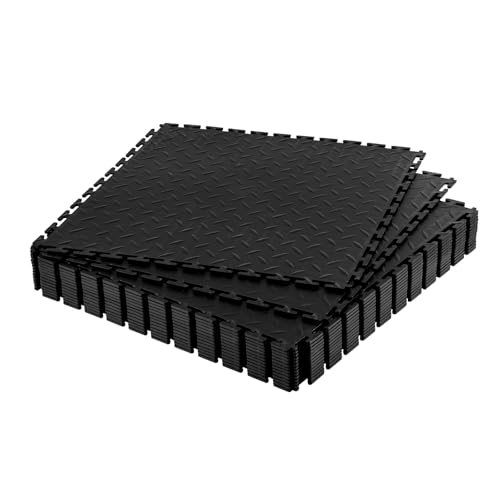
- 16 tiles cover 45.32 square feet
- Diamond-plate texture improves traction
- Supports up to 8,000 kg per square meter
Best For: Large garages and heavy-use work areas
Heavy-Duty Rubber Pick

- 100% solid, heavy-duty rubber
- 0.5-inch shock-absorbing construction
- About 14 sq. ft. per four-pack
Best For: Home gyms and equipment-heavy garages
High-Load Coverage Pick
VEVOR Interlocking Garage Tiles

- Stated 5,500-pound load capacity
- 0.53-inch polypropylene tiles
- 25-pack with tool-free assembly
Best For: Vehicle garages and repair shops
Drainage-Focused Pick

- 60-piece 12-by-12-inch tile set
- 0.65-inch raised drainage support
- Non-slip, washable polypropylene
Best For: Wet garages and indoor/outdoor utility areas
Best for Wet Garages – Nitro Tiles Vented Drainage Tiles
If you need garage floor tiles under 300 for a space exposed to water, snow, or fluid spills, Nitro Tiles Vented offer a practical drainage-focused solution. Their open-grid polypropylene design lets liquids pass through instead of pooling on top, while the 12-inch interlocking tiles install without glue or tools.
Best For: Wet garages, wash bays, garage entrances, basements, and other areas where drainage and slip resistance matter.
Pros:
- Open-grid design allows water, snow, oil drips, and vehicle fluids to drain through.
- Heavy-duty polypropylene is chemical resistant, stain resistant, and designed for vehicle traffic.
- Snap-together, removable tiles install over a flat surface without adhesives.
- Non-slip surface and compatibility with other Nitro Tiles patterns support custom layouts.
Cons:
- The vented surface may be less suitable when you want a fully solid floor.
- The 52-pack covers 52 square feet, so larger garages require additional packs.
Choose this set when drainage is more important than creating a completely sealed surface. Its modular design also makes cleaning underneath or replacing individual tiles straightforward.
Best for Heavy Rolling Loads – SnapLock GarageDeck Coin Tiles
For shoppers comparing garage floor tiles under 300, SnapLock GarageDeck tiles stand out for their stated rolling-load capacity and durable copolymer construction. The coin-top surface adds traction, while PowerLock interlocking installation avoids tools, glue, and extra help.
Best For: Garages with vehicles, rolling tool chests, and other heavy rolling equipment where a durable, easy-clean surface is useful.
Pros:
- Supports rolling loads of over 40,000 pounds according to the supplied specifications.
- Resists oil, grease, petroleum, antifreeze, and most household chemicals.
- Coin-pattern surface provides slip resistance and is easy to clean with a mop or shop vac.
- PowerLock modules snap together quickly and allow flexible color combinations.
Cons:
- The 48-pack provides 48 square feet of coverage, which may not cover a full garage.
- Square edges may require separate planning or edging for a finished perimeter.
This is a strong option when load handling, chemical resistance, and a classic coin texture are priorities. Its 0.5-inch thickness and modular installation make it well suited to a DIY garage flooring project.
Best Value Large Pack – VEVOR Interlocking Garage Tiles
VEVOR’s 50-pack is a practical contender among garage floor tiles under 300, offering 50 square feet of black polypropylene flooring with a 0.53-inch thickness. Its diamond-textured top, waterproof construction, and upgraded six-loop interlocking system are aimed at straightforward garage, basement, and repair-shop use.
Best For: DIY floor coverage in garages, basements, repair shops, warehouses, and vehicle display areas.
Pros:
- 50 tiles provide 50 square feet of coverage in one pack.
- 0.53-inch polypropylene tiles are designed to support loads up to 5,500 pounds.
- Upgraded six-loop interlocking design installs without tools, glue, or extra manpower.
- Waterproof, washable construction and a textured non-slip surface simplify maintenance.
Cons:
- The 2024 upgraded interlocking system is not compatible with products purchased before 2024.
- The 5,500-pound load specification is lower than the rolling-load rating listed for some heavier-duty alternatives.
This set makes sense when you want substantial coverage and a thick, textured tile at a practical price. Confirm compatibility before combining it with older VEVOR tiles, especially for an expansion project.
Best for Garage Gyms – Baselayer Performance Series Tiles
Although designed for training spaces, Baselayer Performance Series tiles are worth considering among garage floor tiles under 300 when cushioning and impact resistance are priorities. The 12 interlocking 19-inch TPE tiles cover 30 square feet and provide a firmer, rubber-like surface without the odor associated with foam flooring.
Best For: Garage gyms, weight areas, training spaces, and rooms where shock absorption and cord management are useful.
Pros:
- Premium TPE provides a resilient, rubber-like feel without foam and without odor.
- Half-inch cushioning is designed for heavy weights and high-impact training.
- Precision interlocking tabs create a flush, stable fit with minimal gapping.
- Underside cord channels help reduce exposed electrical cords and trip hazards.
Cons:
- One pack covers 30 square feet, less than the coverage of the other listed tile packs.
- Edges and corners are sold separately.
- This product is geared toward gym and training use rather than drainage-focused vehicle flooring.
Pick Baselayer when your garage doubles as a workout area and cushioning matters more than liquid drainage. The TPE construction, no-odor design, and cord channels make it especially suited to organized weight-training spaces.
Best Drainage Pick – VEVOR Interlocking Drainage Mat
For garage floor tiles under 300, this VEVOR drainage mat set is a practical choice when water management and traction matter as much as floor protection. The 55-piece polypropylene layout uses 12-by-12-inch interlocking tiles with a 0.6-inch thickness, creating a raised surface for wet garage areas.
Best For: Wet garages, repair areas, gardens, kitchens, and other spaces that need slip-resistant drainage.
Pros:
- 55-piece set provides a customizable modular layout.
- Thick polypropylene construction is designed for frequent vehicle traffic and heavy loads.
- Raised 15 mm design helps clear water buildup.
- Interlocking installation requires no complex assembly, and the mats can be rinsed with water.
Cons:
- The manufacturer recommends adding screws for enhanced long-term stability.
- The drainage-focused design may be less suitable if you want a smooth, solid garage floor.
This is a strong option for garages where water, mud, and slip resistance are recurring concerns. Choose it over a conventional solid tile when drainage is the primary requirement.
Best Heavy-Duty PP Tiles – Interlocking Garage Floor Tiles
Among garage floor tiles under 300, this 48-tile polypropylene set stands out for heavy rolling loads and straightforward installation. Each 12-by-12-inch tile has a brick-pattern, slip-resistant surface and a snap-lock design that installs without tools, glue, or extra help.
Best For: Garages, shop floors, and basements needing oil- and stain-resistant modular flooring.
Pros:
- Impact-resistant polypropylene is rated to withstand rolling loads over 40,000 pounds.
- UV coating and six interlocking loops are designed to help reduce buckling in sunlight.
- Brick-pattern surface provides added slip resistance.
- Resists oil, stains, and water and can be maintained with mopping or vacuuming.
Cons:
- The supplied details list a 48-tile pack but do not state the total square-foot coverage directly.
- Its 0.5-inch thickness may not provide the same cushioning as a thicker drainage mat.
This set is a sensible pick when load capacity, easy setup, and resistance to common garage messes are higher priorities than water drainage. The UV-oriented construction is also useful for areas exposed to sunlight.
Best Large-Format Tiles – VEVOR Diamond Plate Garage Tiles
For shoppers comparing garage floor tiles under 300, these large-format VEVOR tiles offer broad coverage with fewer pieces to install. The 16-piece PVC set covers 45.32 square feet, and its 20.2-by-20.2-inch diamond-plate tiles provide a slip-resistant surface for garages, warehouses, and tool rooms.
Best For: Large garage sections where fast installation, heavy-load support, and easy cleaning are important.
Pros:
- Each set covers 45.32 square feet with only 16 interlocking pieces.
- Diamond-plate texture increases friction and helps reduce shifting.
- 5 mm PVC construction resists tearing, water, and oil.
- Supports loads up to 8,000 kg per square meter and can be cleaned with a mop, cloth, or vacuum.
Cons:
- Installation requires a rubber mallet to secure the edges.
- The 0.2-inch profile is thinner than the supplied PP drainage and modular tile options.
- PVC may be less appropriate for shoppers specifically seeking polypropylene tiles.
This is the most coverage-focused option of the three, making it convenient for larger spaces. Its diamond texture and heavy-load rating suit vehicle areas, while removable individual tiles simplify maintenance.
Heavy-Duty Rubber Pick – Solid Rubber Garage Tiles
For garage floor tiles under 300, these interlocking rubber tiles are a strong choice when impact absorption and stability matter more than maximum coverage. Each four-pack covers approximately 14 square feet and uses solid, 0.5-inch-thick recycled rubber.
Best For: Home gyms, garages, workout rooms, and areas with racks, cardio machines, free weights, or power cages.
Pros:
- 100% heavy-duty rubber with no foam or fillers
- Resists tearing, indenting, and shifting under pressure
- Slip-resistant and moisture-tolerant for garages and basements
- Interlocking installation includes edge pieces for a flush finish
Cons:
- Each pack covers approximately 14 square feet, so larger spaces require multiple packs
- Hand-wash-only care may require more attention than simple rinse-clean flooring
The solid rubber construction makes this a practical pick for protecting floors beneath workout equipment. Choose it when durability, grip, and shock absorption are higher priorities than lightweight portability.
High-Load Coverage Pick – VEVOR Interlocking Garage Tiles
Among garage floor tiles under 300, this 25-pack stands out for its thick polypropylene construction and stated 5,500-pound load capacity. The 12-by-12-inch tiles use an upgraded interlocking system designed for tool-free installation.
Best For: Garages, basements, repair shops, personal warehouses, and vehicle display areas that need washable, non-slip coverage.
Pros:
- 0.53-inch thickness with a stated 5,500-pound load capacity
- Upgraded six-loop interlocking design installs without glue or tools
- Double-sided texture provides a non-slip surface and added stability
- Waterproof and washable for easier routine cleaning
Cons:
- The 2024 upgraded interlocking system is not compatible with products purchased before 2024
- Square edges may require additional planning around the perimeter of a room
This is a sensible option when load handling and straightforward installation are key buying criteria. Verify compatibility if expanding an older VEVOR tile installation.
Drainage-Focused Pick – Jocoevol Self-Draining Tiles
For garage floor tiles under 300 in spaces where water management matters, Jocoevol’s 60-piece polypropylene system adds raised drainage support beneath a non-slip surface. The 12-by-12-inch tiles assemble without glue or tools and can be rinsed clean.
Best For: Garages, patios, pool areas, bathrooms, showers, boat decks, saunas, and RV spaces where drainage and slip resistance are useful.
Pros:
- Raised 0.65-inch support pegs create space for efficient drainage
- 60 tiles provide broad coverage for the price
- Tool-free interlocking assembly with thick tabs designed to resist deformation
- UV-resistant, washable polypropylene with slip-resistant features
Cons:
- Raised drainage construction may feel less like a solid, flush floor
- Polypropylene is not the same impact-absorbing material as solid rubber
This system is best when keeping standing water away from the walking surface is a priority. Its drainage-focused design also makes it more versatile than a garage-only floor covering.
How We Picked the Best Garage Floor Tiles Under 300
We compared these tiles by looking at the factors that matter most in real garage use: construction material, thickness, interlocking design, surface traction, water management, expected load, maintenance, and installation effort. We also considered whether each option suits vehicle parking, workshops, exercise equipment, or general storage.
Coverage and pack size matter just as much as the listed price. Before ordering, measure the usable floor area and check the manufacturer’s coverage estimate. A lower-cost pack may not be the best value if you need several additional boxes to finish the installation.
Quick Comparison
- Best for wet garages: Vented or self-draining polypropylene tiles allow water to move beneath the surface and can simplify cleanup.
- Best for general garage use: Interlocking polypropylene tiles offer a practical balance of price, installation speed, and durability.
- Best for home gyms: Thick TPE or heavy-duty rubber tiles provide better cushioning and equipment support than rigid plastic.
- Best for a decorative upgrade: Diamond-plate textures create a workshop-style appearance while adding surface grip.
- Best for larger areas: Bigger tile formats can reduce the number of seams and speed installation.
Key Buying Factors for Garage Floor Tiles Under 300
Material and Load Support
Polypropylene is lightweight, moisture-resistant, and easy to clean, making it a strong choice for vehicle areas and utility spaces. Rubber and TPE are better suited to weights, exercise equipment, and standing comfort, but they can be heavier and may require more attention to odor or ventilation when new.
Drainage and Moisture Control
If snow, rain, or wash water regularly enters the garage, choose a vented or self-draining design. Raised drainage tiles help keep the walking surface above pooled water, but the underlying concrete should still have a suitable slope and an exit path for moisture.
Surface Texture and Safety
Coin, diamond-plate, and other textured finishes improve traction compared with smooth plastic. Consider how the surface feels underfoot, how easily it rolls under jacks or carts, and whether dirt will collect in the texture.
Installation and Maintenance
Interlocking tiles usually install without adhesive and can be cut around walls, posts, and cabinets. Leave room for expansion where recommended, and make sure the concrete is clean, dry, and reasonably level. Most plastic tiles can be swept or rinsed, while rubber products may benefit from a mild cleaner and thorough drying.
Who Should Buy Which Garage Floor Tiles Under 300?
Choose drainage tiles if your garage sees wet vehicles or frequent washing. Select rigid polypropylene tiles for a fast, affordable visual upgrade and everyday parking. For a home gym or workout room, prioritize thick rubber or TPE cushioning over drainage features. If appearance is a major priority, a textured diamond-plate style can provide a more finished workshop look. For mixed-use garages, compare traction, load support, and coverage first rather than choosing solely by the lowest pack price.