
Diesel exhaust can build up fast in enclosed bays, making proper ventilation a priority for safety, comfort, and compliance. The right system helps capture fumes at the source instead of just moving them around the shop.
In this roundup, we focus on shop-friendly options that can support everything from mobile exhaust capture to heavy-duty air movement and flexible fume extraction.
Best 10 Diesel Exhaust Extraction Systems for Shops Picks for 2026
Mobile High-Output Exhaust Extraction
JohnDow EV-5100 mobile exhaust extractor

- 330 CFM with 3/4 hp fan
- Discharges fumes up to 30 feet away
- Mobile base with quick-release height lock
Best For: Portable shop exhaust extraction with standard 110V power
Flexible Fume Ducting
360° articulating hose hood for extraction
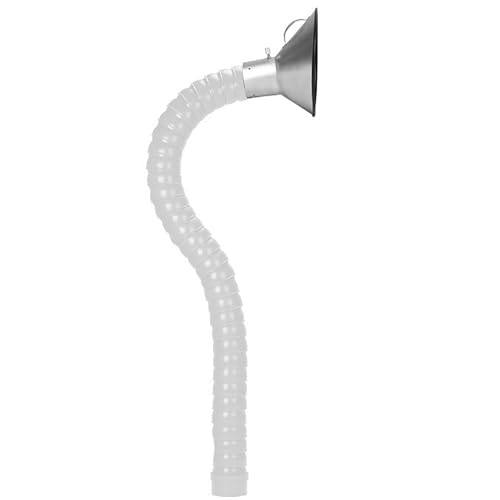
- 360° articulating arm for positioning
- Three hood modes for airflow control
- Flexible, high-temp resistant plastic hose
Best For: Adjustable capture points in shop ventilation and fume removal
Industrial Fume/Smoke Exhauster
Dayton 3AA22 high-CFM fume exhauster

- 1,100 CFM airflow with 1.5 hp motor
- Includes 9-foot inlet hose and steel nozzle
- Connects to ductwork and supports continuous duty
Best For: High-capacity industrial fume and smoke extraction
Portable Blower Ventilation
12-inch 3500 CFM blower with 33-ft duct

- 3,500 CFM airflow from 550W motor
- Includes 33-foot flexible PVC duct
- Carry handle and thermal protection
Best For: Portable ventilation and long-reach air movement in shops
Compact Bench Fume Control
Fumeclear FC-100A Low-Noise 3-Stage Extractor
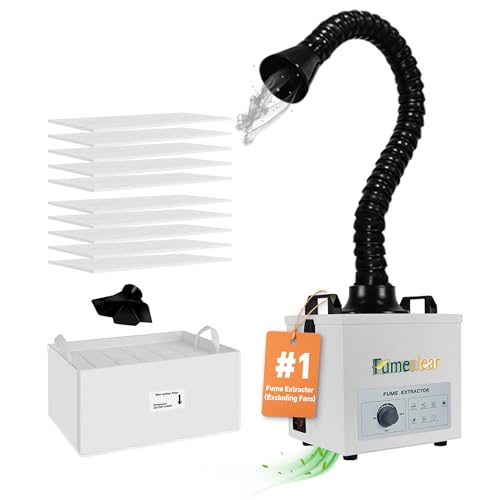
- 3-stage filtration targets 99.97% of fine particles and gases
- High iodine carbon filter is rated for about 3000 hours
- 118 CFM suction suits small, close-range workstations
Best For: Small garages and bench work needing localized fume removal
High-Volume Air Movement
VEVOR 12-Inch Portable Ventilator

- 3198 CFM airflow helps clear smoke and odors quickly
- 16.4 ft flexible duct supports intake or exhaust use
- ETL-certified steel build includes portability and safety features
Best For: Workshops and confined spaces that need portable exhaust ventilation
Local Smoke Capture Arm
2"/3" Adjustable Industrial Fume Hood

- 360° articulated arm keeps the hood positioned at the source
- Three-stage flow valve helps regulate airflow volume
- Available in 50mm and 75mm sizes for flexible installation
Best For: Local ventilation setups that need precise hood placement
Portable Hazard-Safe Extractor
10-Inch Portable Explosion-Proof Exhaust Fan

- Sealed explosion-proof motor for hazardous environments
- 1070 CFM airflow with 32 ft reinforced duct
- GFCI protection and IP44-rated housing
Best For: Shops needing portable, safety-focused fume extraction
Source-Capture Fume Arm
360° Articulated Fume Extraction Arm
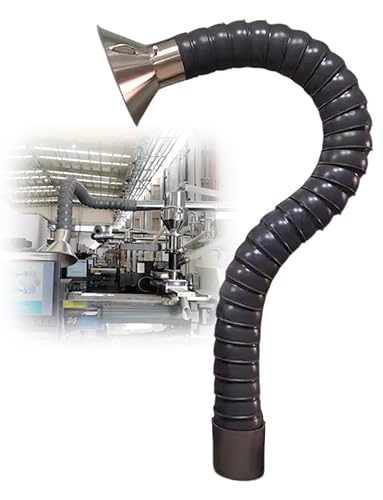
- 360° articulated arm for flexible positioning
- Adjustable stainless hood with airflow valve
- Heat- and abrasion-resistant hose structure
Best For: Fixed stations needing targeted fume capture
High-Airflow Ducted Blower
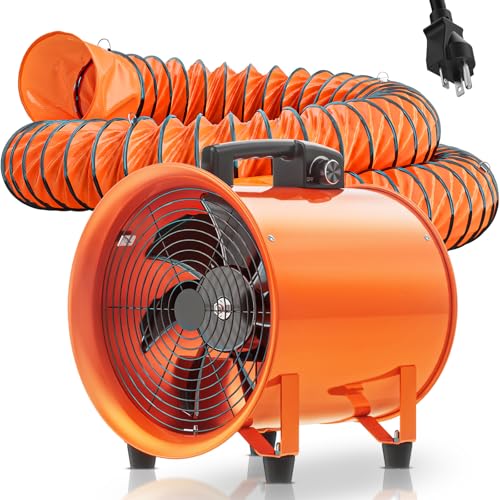
- 550W motor with up to 3243 CFM airflow
- Stepless speed control for airflow tuning
- 33 ft reinforced duct for flexible exhaust routing
Best For: Large shops needing strong portable ventilation
Mobile High-Output Exhaust Extraction – JohnDow EV-5100 mobile exhaust extractor
For diesel exhaust extraction systems for shops, the JohnDow EV-5100 is built for moving fumes away from the work area with a mobile, high-output setup. Its 3/4 hp fan delivers 330 CFM and can discharge fumes safely up to 30 feet away, making it a practical option when you need portable positioning behind a vehicle or around the bay.
Best For: Shops that need a mobile exhaust extractor with strong airflow and simple 110V operation.
Pros:
- 3/4 horsepower fan produces 330 CFM for active fume capture.
- Discharges fumes safely up to 30 feet away.
- Uses standard 110V current for straightforward shop use.
- Mobile base and spring-loaded cam lock make positioning easier.
Cons:
- Heavier unit at 150 pounds, so it is not as light as smaller portable fans.
- Designed as a single extraction unit rather than a ducted multi-point system.
This is a solid fit if you want a portable exhaust extractor that can be moved into position without complicated setup. The combination of mobile base, standard power, and long discharge range makes it a practical shop tool for everyday exhaust control.
Flexible Fume Ducting – 360° articulating hose hood for extraction
When you need diesel exhaust extraction systems for shops to include flexible capture hardware, this duct hose and adjustable hood offer a versatile way to direct fumes and debris away from the work area. The 360° articulating arm and three-position hood help you manage airflow more precisely in spaces that need adaptable ventilation.
Best For: Shops and industrial spaces that need flexible hood positioning and adjustable airflow control.
Pros:
- 360° articulating arm supports flexible positioning.
- Hood has fully closed, half-closed, and fully open modes.
- Durable plastic hose is waterproof and high-temperature resistant.
- 3:1 compression ratio helps the tubing bend and twist into shape.
Cons:
- Appears to be a ducting/accessory solution rather than a complete extraction system.
- Best suited for compatible ventilation or dust collection setups.
This is a useful add-on when you need more control over how fumes, dust, or debris are captured at the source. Its main strength is flexibility, especially in work areas where fixed-position ducting would be limiting.
Industrial Fume/Smoke Exhauster – Dayton 3AA22 high-CFM fume exhauster
For diesel exhaust extraction systems for shops that also need industrial fume handling, the Dayton 3AA22 brings a higher-capacity setup with a 1.5 hp motor and up to 1,100 CFM airflow. It is designed for non-flammable fumes and smoke from welding, brazing, or soldering, and includes a 9-foot wire-reinforced inlet hose plus a steel inlet nozzle.
Best For: Industrial shops needing strong fume and smoke extraction with ductwork connectivity.
Pros:
- Up to 1,100 CFM airflow for demanding extraction jobs.
- Includes a 9-foot inlet hose and steel inlet nozzle.
- Connects to ductwork and includes an extraction arm.
- Built for continuous-duty use in welding, brazing, and soldering environments.
Cons:
- More specialized for non-flammable fumes and smoke than general-purpose ventilation.
- At 86 dB, it is not a quiet option.
This is a strong pick when airflow capacity and industrial-duty construction matter more than compact size or low noise. Its included hose, nozzle, and ductwork support make it easier to integrate into a shop extraction layout.
Portable Blower Ventilation – 12-inch 3500 CFM blower with 33-ft duct
For diesel exhaust extraction systems for shops where portability and long duct reach matter, this 12-inch blower offers a 550W motor, 3,500 CFM airflow, and a 33-foot flexible PVC duct. It is designed for ventilation, dust, smoke, odor removal, and spot cooling, making it a versatile choice for garages, workshops, basements, and other confined areas.
Best For: Portable shop ventilation and long-run air movement with attached ducting.
Pros:
- 550W motor delivers 3,500 CFM airflow.
- Includes a 33-foot flexible PVC duct for extended reach.
- Portable design with carry handle and rubber feet for stability.
- Built-in thermal protection adds an extra safety layer during extended use.
Cons:
- Noise level is listed at 85 dB / under 93 dB, so it is not especially quiet.
- More of a ventilation blower than a purpose-built vehicle exhaust extractor.
This model makes sense if you want a versatile air mover that can push or pull air through a long duct in shop settings. Its combination of strong airflow, portability, and safety features gives it broad utility beyond exhaust removal alone.
Compact Bench Fume Control – Fumeclear FC-100A Low-Noise 3-Stage Extractor
If you’re comparing diesel exhaust extraction systems for shops, the Fumeclear FC-100A is better viewed as a compact bench fume solution than a full vehicle-exhaust unit. It fits small workstations where you need strong local suction, multi-stage filtration, and low-noise operation for smoke, dust, and odors.
Best For: Small shops, garages, and bench tasks that need localized fume removal rather than whole-bay exhaust capture.
Pros:
- 3-stage filtration is designed to capture 99.97% of harmful gases and tiny particles below 0.3 microns.
- High iodine activated carbon filter is rated for longer service life, with an expected lifespan of about 3000 hours.
- 118 CFM suction and up to 200 m³/h airflow help pull fumes and fine debris close to the hood.
- Low-noise design and included pre-filters make it practical for bench work and small work areas.
Cons:
- Not suitable for large laser engravers, according to the supplied notes.
- Not intended for full-scale diesel exhaust extraction in large shops or vehicle bays.
Overall, the FC-100A makes sense when you need focused filtration at the workbench, but it is not the right pick for high-volume diesel exhaust capture. Treat it as a specialized air-cleaning unit for small, close-range tasks.
High-Volume Air Movement – VEVOR 12-Inch Portable Ventilator
For buyers comparing diesel exhaust extraction systems for shops, this VEVOR air mover is more of a high-volume ventilation tool than a filtered capture system. It moves a large amount of air fast, which can help clear smoke and odors in warehouses, workshops, basements, and other confined spaces where exhaust needs to be pushed out.
Best For: Shops and work areas that need strong portable exhaust ventilation with ducting, not filtration.
Pros:
- 585W motor delivers 3198 CFM airflow for fast smoke and odor clearing.
- Flexible 16.4 ft PVC duct adds reach for intake or exhaust setups.
- ETL certified steel build is designed for durability and long-term use.
- Portable handle, rubber feet, IP44 rating, and overheating protection add practical jobsite convenience.
Cons:
- Does not include filtration, so it moves air rather than cleaning it.
- Single-speed operation limits fine control.
This is a strong option when your priority is brute-force air movement through ducting. It is useful for exhausting a shop area, but it should not be mistaken for a filtered diesel particulate capture system.
Local Smoke Capture Arm – 2"/3" Adjustable Industrial Fume Hood
If you’re building out diesel exhaust extraction systems for shops, this adjustable fume extractor arm is a useful local-capture accessory. It is designed to position a hood close to the source so smoke, powder, and fumes can be guided away from the work area in welding, workshop, or lab setups.
Best For: Users who need a flexible local extraction arm to add targeted capture at a workbench or station.
Pros:
- Available in 50mm and 75mm sizes, with multiple length options for different installations.
- 360° articulated arm helps the hood stay positioned without sagging or shifting.
- Removable hood includes a three-stage airflow valve for closed, half, or fully open settings.
- Reinforced plastic construction is rated for -40°C to 100°C and suited to demanding environments.
Cons:
- It is only the arm and hood assembly, so it needs a compatible extraction system behind it.
- Best suited to local ventilation rather than whole-shop exhaust removal.
This is a practical add-on when you need precise hood placement and adjustable airflow at the source. It works best as part of a larger extraction setup, especially where local smoke control matters.
Portable Hazard-Safe Extractor – 10-Inch Portable Explosion-Proof Exhaust Fan
If you need diesel exhaust extraction systems for shops that may also face fumes, damp conditions, or other high-risk air quality issues, this portable explosion-proof fan is built for aggressive removal. Its sealed 195W motor, 1070 CFM output, and included 32 ft reinforced duct make it a practical choice when you need fast airflow and flexible placement.
Best For: Shops, booths, and industrial spaces that need portable, high-velocity fume removal with extra safety features.
Pros:
- Explosion-proof sealed motor and housing are designed for hazardous environments.
- 1070 CFM output helps clear contaminated air quickly.
- 32 ft flexible duct with steel-wire reinforcement handles rough jobsite use.
- GFCI protection and IP44-rated housing add safety in damp or exposed areas.
Cons:
- Designed more for portability and extraction than ultra-quiet operation.
- At 30.8 lb, it is still a substantial unit to move around.
For shops that want a rugged, plug-and-play extraction option, this model stands out for its safety-minded design and straightforward deployment. It is especially appealing when airflow needs to be directed into confined or hard-to-reach exhaust points.
Source-Capture Fume Arm – 360° Articulated Fume Extraction Arm
For diesel exhaust extraction systems for shops that need source-level capture, this articulated arm is built to position suction close to the work zone. The 360° jointed design, adjustable stainless hood, and integrated flow-control valve make it useful when you want to manage fumes right where they are generated.
Best For: Welding bays, fabrication areas, labs, and workshops that need flexible, local exhaust capture.
Pros:
- 360° articulated arm bends and rotates to match different workstation layouts.
- Adjustable stainless steel hood helps aim extraction accurately.
- Three-level airflow valve allows closed, half, or full-open control.
- Heat- and abrasion-resistant hose is built for repeated repositioning.
Cons:
- It is an extraction arm component, not a complete fan-and-duct system.
- Best suited to fixed workstations rather than mobile cleanup.
This is a strong fit when your setup needs precise fume capture at the source instead of broad-area ventilation. The adjustable hood and locking arm are practical features for shops that regularly reposition tools or workpieces.
High-Airflow Ducted Blower – 12 Inch Utility Blower Fan
If you’re comparing diesel exhaust extraction systems for shops, this 12-inch utility blower offers the kind of airflow and ducting that works well for broad ventilation and exhaust use. With a 550W motor, up to 3243 CFM airflow, stepless speed control, and a 33 ft duct hose, it is built for moving a lot of air across basements, garages, warehouses, and workshop spaces.
Best For: Large shops and work areas that need strong portable exhaust and ventilation performance.
Pros:
- 550W motor delivers up to 3243 CFM for high-volume airflow.
- Stepless speed control makes it easier to tune airflow for the job.
- 33 ft B1-rated PVC duct includes steel-wire reinforcement for flexible setup.
- Portable frame, carry handle, and anti-slip feet improve usability and stability.
Cons:
- Bulkier ducted setup may be more than small shops need.
- It is a general-purpose blower, not a dedicated source-capture arm.
Overall, this model is a strong pick when the priority is moving exhaust air fast through a long duct run. The adjustable speed and rugged construction make it practical for shops that need flexible ventilation rather than a fixed extraction station.
How We Picked the Best Diesel Exhaust Extraction Systems for Shops
We looked for Diesel Exhaust Extraction Systems for Shops that balance airflow, reach, durability, and practical setup. Priority went to units with flexible ducting, articulated arms, portable formats, and strong fan performance that can handle real shop conditions.
We also considered how well each option fits different workspaces, since a small service bay, a welding area, and a larger diesel repair shop do not need the same solution.
Quick Comparison
Some buyers will want a mobile exhaust extractor for direct tailpipe capture, while others may need a high-CFM blower or a fume arm for localized extraction. Portable ducted fans are usually better for moving large volumes of air, while hood-and-arm systems are better for source capture close to the vehicle or workstation.
Key Buying Factors for Diesel Exhaust Extraction Systems for Shops
Airflow and Capture Strength
Look for enough CFM to match your bay size and exhaust load. Higher airflow helps in larger open areas, but source-capture systems can be more effective than raw power alone if they place the hood or nozzle close to the exhaust stream.
Reach, Flexibility, and Positioning
Long ducts, adjustable hoods, and 360-degree articulated arms make it easier to align extraction where you need it. If multiple service positions are used in the same bay, flexibility matters as much as output.
Filtration Vs. Exhausting Outdoors
Some systems filter fumes before recirculating air, while others are designed to vent outside. Choose based on your building layout, local codes, and whether you need particulate control in addition to exhaust removal.
Portability and Installation
Portable units are ideal for shops that reconfigure often or need a fast setup. Fixed arm systems can be a better long-term choice if you want reliable, repeatable extraction at a dedicated workstation.
Who Should Buy Which Diesel Exhaust Extraction Systems for Shops?
If you run a diesel repair bay and need direct tailpipe capture, choose a mobile exhaust extractor or similar source-capture setup. If your main concern is general shop air movement, a high-output blower with ducting may be the better fit.
For welding, detailing, soldering, or mixed-use workspaces, an articulated fume arm or filtered extractor offers more targeted control. In short, the best Diesel Exhaust Extraction Systems for Shops are the ones matched to your workspace, your workflow, and how close you can position the capture point to the source.