
An electric car can be quiet and easy to park, but its dash cam still needs to capture useful footage without creating avoidable battery worries. The right choice depends less on headline resolution than on where you need coverage and how you plan to power parking recording.
These 10 options range from compact front-only cameras to four-channel systems. Use the picks to narrow your shortlist, then check the power setup and features that matter for your vehicle.
Best 10 Dash Cams for Electric Cars Picks for 2026
Best for Fast Footage Transfers
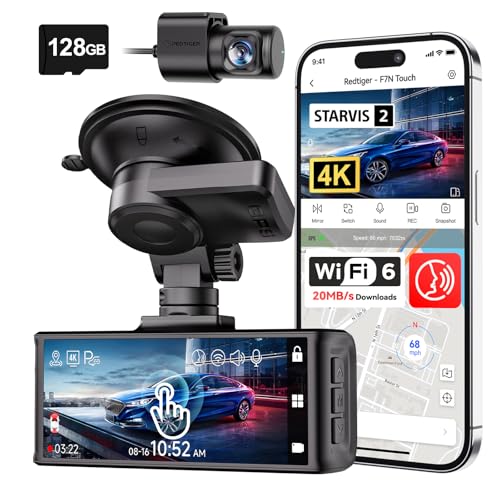
- 4K STARVIS 2 front and 1080p rear
- Wi-Fi downloads rated up to 20MB/s
- 128GB card included
Best For: Quick clip sharing with front-and-rear coverage
Best for Four-Way Coverage

- Four adjustable camera views
- GPS and 5GHz app connection
- Hardwire kit needed for parking mode
Best For: Capturing multiple directions and cabin activity
Best for Hot-Weather Three-Channel Use

- 4K front plus 1080p cabin and rear
- Supercapacitor rated 14°F–140°F
- 64GB card included; up to 512GB supported
Best For: Three-way coverage in varied temperatures
Best for Included Three-Camera Basics

- 4K front and 1080p cabin/rear
- 64GB card included
- Basic app viewing and downloads need no VIP
Best For: Straightforward three-view recording
Best Dual-View Value

- 2.5K front footage upscaled to 4K; 1080P rear
- STARVIS 2 front sensor and built-in GPS
- 128GB card included; parking mode needs hardwiring
Best For: Drivers seeking front-and-rear coverage with GPS and included storage
Best Discreet Front Camera

- Compact, screen-free front-only design
- 4K recording and 5GHz app connection
- 32GB card included; parking mode needs hardwiring
Best For: Drivers prioritizing a low-profile front camera
Best Three-Channel Coverage
TERUNSOUL 4K Front and Rear Dash Cam

- 4K front and rear plus 1080P cabin recording
- Cabin IR lights and built-in GPS
- 128GB card included; parking mode needs hardwiring
Best For: Rideshare drivers seeking front, rear, and cabin footage
Best for Night Driving
LHSYJ 4K Front and 2K Rear Dash Cam

- 4K front and 2K rear recording
- STARVIS 2 front sensor for low light
- 128GB card included
Best For: Night driving with front-and-rear coverage
Best Heavy-Duty Pick
ZMOPO D435 Four-Channel Dash Cam

- Four simultaneous 1080p views
- 128GB card included
- Parking mode and GPS need add-ons
Best For: Front, rear, and side coverage
Best Front-Only Option

- Front-facing 4K recording
- Voice control and Wi-Fi app
- Parking mode requires hardwire kit
Best For: Simple front-only recording with hands-free controls
Best for Fast Footage Transfers – REDTIGER F7N TOUCH
Among dash cams for electric cars, the REDTIGER F7N TOUCH is a practical pick if you want detailed front footage and quick access to clips. It pairs a 4K STARVIS 2 front camera with a 1080p rear camera, and includes a 128GB card.
Best For: Drivers who want front-and-rear coverage with fast app downloads and hands-free controls.
Pros:
- 4K front recording, 1080p rear recording, and HDR/WDR for challenging light.
- Voice commands, touchscreen controls, built-in GPS, and Wi-Fi transfers rated up to 20MB/s.
- Included 128GB card, loop recording, and G-sensor event locking.
Cons:
- Parking monitoring requires a separately purchased hardwire kit.
- No interior camera for cabin coverage.
The included storage makes this a convenient two-camera setup. Budget for the hardwire kit if recording while parked is a priority.
Best for Four-Way Coverage – Neideso N300
The Neideso N300 stands out among dash cams for electric cars when coverage around the vehicle matters more than a simple front-and-rear view. Its adjustable four-channel design offers multiple recording modes, including a 2K front plus three 1080p feeds.
Best For: Drivers who want to record multiple directions and the cabin during trips.
Pros:
- Four adjustable camera views with a choice of recording resolutions.
- Built-in GPS, app access over 5GHz Wi-Fi, and English voice commands.
- Infrared LEDs and WDR support low-light recording; G-sensor locks incident clips.
Cons:
- Parking mode requires a separate hardwire kit.
- No cloud storage or remote monitoring; Wi-Fi access requires a nearby phone.
Choose this model for its range of viewpoints, not for remote surveillance. It needs a wired power connection, and parked recording adds another installation step.
Best for Hot-Weather Three-Channel Use – 70mai T800E
For shoppers comparing dash cams for electric cars, the 70mai T800E combines 4K front recording with 1080p interior and rear views. Its supercapacitor is specified for temperatures from 14°F to 140°F, a useful consideration for cars parked in the heat.
Best For: Drivers who want cabin coverage alongside front-and-rear footage, particularly in varied temperatures.
Pros:
- Three-channel recording with switchable infrared on the interior camera.
- Built-in GPS, Wi-Fi 6 app transfers, and voice controls.
- 64GB card and rear camera included; supports cards up to 512GB.
Cons:
- Continuous parking monitoring needs a compatible hardwire kit.
- Does not support 4G connectivity.
This is a well-rounded choice if recording passengers matters. The included card gets you started, while a larger card may be useful for extended three-channel recording.
Best for Included Three-Camera Basics – TOOXYZ J13
The TOOXYZ J13 offers an accessible three-view setup for drivers shopping for dash cams for electric cars. It records 4K front footage alongside 1080p interior and rear video, with a 64GB card included.
Best For: Drivers who want front, cabin, and rear recording with local app access.
Pros:
- Three-channel coverage with a 170° front field of view.
- Included 64GB card, loop recording, and collision-triggered video locking.
- Wi-Fi app viewing and downloads do not require a Viidure VIP membership.
Cons:
- Parking monitoring requires a separately sold accessory.
- Some Viidure app features, including cloud uploads, require membership.
The J13 covers the core recording needs, but distinguish its free local clip functions from paid app extras before buying. Plan for the separate parking accessory if you need surveillance after switching off the car.
Best Dual-View Value – ROVE R2-4K Dual Dash Cam
Among dash cams for electric cars, the ROVE R2-4K Dual is a practical choice if you want front and rear coverage, a supplied 128GB card, and built-in GPS. Its front camera records at 2.5K and upscales footage to 4K; the rear records at 1080P.
Best For: Drivers who want two-camera coverage and GPS without buying a memory card separately.
Pros:
- Sony STARVIS 2 front sensor, HDR, and an F1.5 aperture support low-light recording.
- Built-in GPS adds route, location, and speed information to footage.
- Includes a 128GB card and offers app downloads over dual-band Wi-Fi.
Cons:
- Front footage is upscaled from 2.5K, not recorded in native 4K.
- Parking mode requires a separate hardwire kit.
The included storage and rear camera make this a well-equipped package. Choose it for broad everyday coverage rather than native 4K recording.
Best Discreet Front Camera – galphi 4K Mini Dash Cam
If you prefer dash cams for electric cars that keep the windshield uncluttered, this compact, screen-free galphi camera is worth considering. It records the road ahead in 4K, connects to a phone app over 5GHz Wi-Fi, and includes a pre-installed 32GB card.
Best For: Drivers who want an unobtrusive, front-only camera without a built-in screen.
Pros:
- Compact, screen-free design helps avoid blocking your view.
- 4K front recording with a 160-degree viewing angle.
- Pre-installed 32GB card lets you start recording without a separate card purchase.
Cons:
- Records only the front view; no rear or cabin camera is listed.
- Parking-mode time-lapse requires a separate Type-C hardwire kit.
- 32GB included storage may be limiting for frequent 4K recording.
This is the simpler option for drivers who primarily want footage of the road ahead. Plan on a larger compatible card if you want more recording capacity.
Best Three-Channel Coverage – TERUNSOUL 4K Front and Rear Dash Cam
For shoppers comparing dash cams for electric cars with cabin coverage, this three-channel model records in 4K at the front and rear and 1080P inside the vehicle. Its included 128GB card, built-in GPS, and Wi-Fi app give you several ways to record and review a trip.
Best For: Rideshare drivers or anyone who wants road-ahead, rear, and cabin footage.
Pros:
- Three cameras cover the front, rear, and cabin; cabin IR lights support recording in darkness.
- Built-in GPS records speed and location information.
- Includes a 128GB card and supports app-based video transfers over dual-band Wi-Fi 6.
Cons:
- Parking monitoring requires a separate hardwire kit.
- Three camera views create more footage to manage than a single-camera setup.
Its main advantage is the combination of high-resolution exterior views and an interior camera. It makes the most sense when cabin footage is useful, not just an extra feature.
Best for Night Driving – LHSYJ 4K Front and 2K Rear Dash Cam
Among dash cams for electric cars, this LHSYJ model is a strong choice if you want detailed front-and-rear footage, especially after dark. It records 4K in front and 2K in back, with a Sony STARVIS 2 sensor on the front camera.
Best For: Drivers who prioritize nighttime image quality and two-camera coverage.
Pros:
- 4K front and 2K rear recording with 150° and 140° views.
- Front STARVIS 2 sensor and wide apertures support low-light recording.
- Includes a 128GB card; Wi-Fi and an app make footage easier to review.
Cons:
- Parking monitoring requires a separate hardwire kit.
- No side or cabin camera for broader coverage.
The included storage makes it ready for routine recording, but budget for hardwiring if parked-car monitoring is a priority.
Best Heavy-Duty Pick – ZMOPO D435 Four-Channel Dash Cam
If coverage matters more than maximum resolution, the ZMOPO D435 stands out among dash cams for electric cars. Its four 1080p cameras record front, rear, left, and right views simultaneously, with adjustable front cameras that can also capture interior footage.
Best For: Drivers who want footage from multiple sides of their vehicle.
Pros:
- Four simultaneous 1080p views provide broader coverage than a two-camera setup.
- Includes a 128GB card and a built-in supercapacitor.
- 5GHz Wi-Fi supports app-based video downloads.
Cons:
- Parking mode needs a separately sold ACC hardwire kit.
- GPS tracking requires a separately sold GPS logger.
- Each camera records at 1080p rather than 4K.
This is the coverage-focused pick: useful for documenting activity around the car, provided you are comfortable installing multiple cameras and buying add-ons for parking mode or GPS.
Best Front-Only Option – 70mai M310 Plus 4K Dash Cam
For shoppers considering simpler dash cams for electric cars, the 70mai M310 Plus offers front-only 4K recording without a rear-camera installation. Its 140° view, Wi-Fi app, and voice controls suit drivers who want straightforward daily-use features.
Best For: Drivers who want a front-facing camera with hands-free controls.
Pros:
- 4K front recording with a 140° field of view.
- G-sensor emergency recording can lock footage from before an impact.
- Voice commands and the Wi-Fi app provide convenient access to key functions.
Cons:
- No rear or side recording is listed.
- 24-hour parking features require a separate UP03 or UP06 hardwire kit.
Choose this model for a simpler front-camera setup, not all-around coverage. Its parking features are appealing, but factor in the required hardwire kit before buying.
How We Picked the Best Dash Cams for Electric Cars
We compared the listed configurations for coverage, advertised resolution, sensor and night-vision features, connectivity, included storage, and parking-mode claims. We also weighed the practical trade-offs for EV owners: how many cameras need wiring, whether a camera can run while parked, and how easy it should be to retrieve footage. Product specifications do not establish real-world image quality or energy use, so check independent sample footage and the current listing before buying.
Quick Comparison: Which Camera Layout Fits?
Front-only models, such as the compact galphi and 70mai M310 Plus, suit drivers who want a simpler installation and primarily need a record of the road ahead. Front-and-rear options from REDTIGER and ROVE add evidence for rear-end incidents, but require a cable run to the back window. Three-channel kits add cabin coverage, which may matter for rideshare drivers or anyone who wants a view through the side windows. Four-channel or 360-degree systems offer the broadest advertised coverage, with more cameras, wiring, and footage to manage. Camera count matters more than a 4K label if an incident happens outside the frame.
Key Buying Factors for Dash Cams for Electric Cars
Parking Power and Battery Protection
Do not assume an EV’s large traction battery will directly power an aftermarket dash cam. Accessory circuits commonly depend on the vehicle’s low-voltage system, and behavior varies by model. Continuous parking recording may require a compatible hardwire kit, an external dash-cam battery, or another supported power source. Confirm the camera’s parking-mode requirements, the vehicle’s accessory-power behavior, and whether a hardwire kit provides adjustable low-voltage cutoff. Professional installation is sensible if you are unsure which circuits are appropriate.
Coverage, Night Footage, and Storage
Decide whether front, rear, cabin, or side coverage matches your parking and driving risks. Advertised 4K resolution and STARVIS 2 sensors are useful comparison points, not guarantees that plates will be legible at night; look for footage recorded in conditions like yours. More channels produce more files, so check supported card capacity, endurance-card recommendations, and how easily important clips can be saved. An included memory card is convenient, but its endurance rating may not be stated.
Installation and Daily Use
Check windshield placement rules, rear-camera cable length, hatch routing, and whether the setup could obstruct sensors or airbags. Wi-Fi can simplify downloads, but advertised 5GHz or Wi-Fi 6 support does not replace a reliable app and straightforward clip export. GPS, voice control, and a screen are useful only if they fit how you will actually use the camera.
Who Should Buy Which Dash Cams for Electric Cars?
Choose front-only for a lower-complexity driving record; front-and-rear for balanced everyday protection; three-channel if cabin activity matters; and four-channel if wider views justify extra wiring and storage. If parked-car coverage is your priority, settle the power and battery-protection plan before choosing among Dash Cams for Electric Cars. For mostly on-road recording, prioritize usable footage and an installation you can live with.