
Older vehicles may lack built-in outlets and modern USB charging, but the right car inverter can add practical power without complicated installation. These plug-in models convert your car’s 12-volt socket into AC outlets and USB charging ports for phones, laptops, small electronics, and travel accessories.
We selected 10 options across common power levels, from compact 150W units to higher-output 400W models. The best choice depends on your vehicle’s socket limits, the devices you plan to run, and how much protection you want against overloads, overheating, and low battery voltage.
Best 10 Car Inverters for Older Cars Picks for 2026
Compact Pick
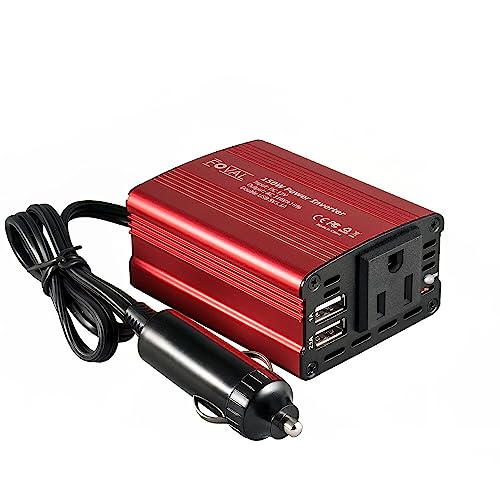
- 150W continuous AC output with 300W peak
- Dual USB charging up to 3.1A total
- Small aluminum body with quiet cooling fan
Best For: Everyday charging in older cars
Multi-Port Value
YSOLX 300W Portable Car Inverter

- Two AC outlets plus four USB-C/A ports
- Portable design weighs about 9 ounces
- Quiet cooling system for extended use
Best For: Multi-device travel and camping charging
Most Versatile
BMK 200W 7-in-1 Car Power Inverter
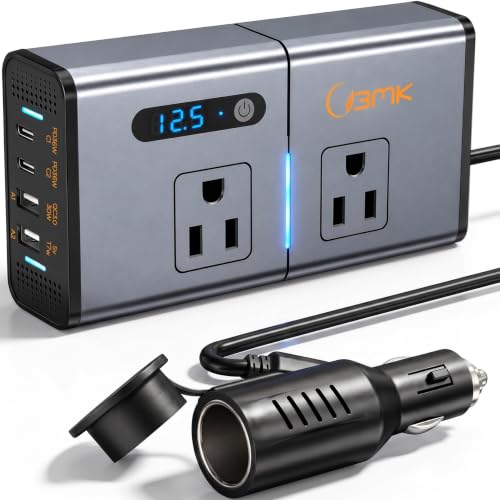
- Seven power connections, including AC, USB, and 12V
- LED input-voltage display and separate AC switch
- Dual USB-C PD ports support up to 36W each
Best For: Feature-rich charging and mobile work
Long-Warranty Pick
BESTEK 300W Car Power Inverter
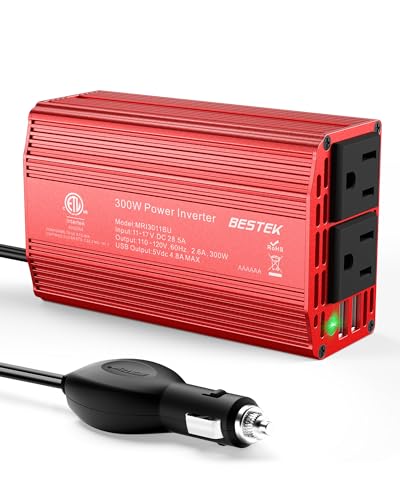
- 300W continuous and 700W instantaneous output
- Two AC outlets plus dual 4.8A USB ports
- 11–17V input range and long cigarette-lighter cable
Best For: Higher-output charging with broad compatibility
Compact Road-Trip Pick

- 150W continuous and 300W peak output
- One AC outlet plus two USB ports
- Compact design with built-in protection
Best For: Everyday electronics and lower-power travel gear
Higher-Power Charging Pick

- 400W output with two AC outlets
- 30W USB-C PD and QC 3.0 USB-A
- ETL-certified with 12-month replacement warranty
Best For: Laptops, travel appliances, and multiple devices
Multi-Port Monitoring Pick

- 300W output with dual AC outlets
- 65W USB-C supports compatible laptops
- LCD display shows vehicle battery voltage
Best For: Simultaneous charging with battery-voltage monitoring
Top Pick
BESTEK 300W Car Power Inverter

- 300W continuous and 700W peak output
- 65W USB-C PD plus two AC outlets
- ETL-certified safety features and compact design
Best For: Drivers seeking fast charging and flexible power for road trips
Best Heavy-Duty Pick
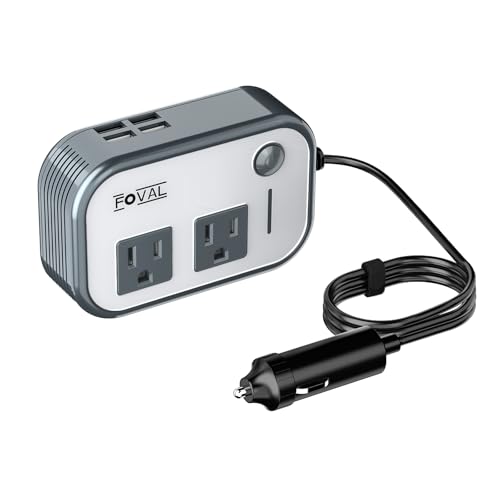
- Two AC outlets and four USB ports
- Compact, lightweight travel-friendly body
- Protection features and 24-month warranty
Best For: Passengers needing multiple charging connections in a 12V vehicle
Best Six-Port Design
PiSFAU 300W Car Power Inverter

- Six total connections, including two AC outlets
- Two USB-C and two USB-A 24W ports
- Compact body with multiple safety protections
Best For: Families and travelers who need many charging ports
Compact Pick – FOVAL 150W Car Power Inverter
For drivers comparing car inverters for older cars, the FOVAL 150W is a compact option for everyday, lower-power charging. It plugs into a standard 12V cigarette lighter socket and combines one AC outlet with two USB ports in a small aluminum housing.
Best For: Charging phones, tablets, laptops, and other modest-power electronics on commutes and road trips.
Pros:
- Provides 150W of continuous AC power, with 300W peak output.
- Two USB ports offer up to 3.1A total output for simultaneous charging.
- Compact 3.2-by-2.5-by-1.5-inch design with a quiet cooling fan.
- Includes protection against overheating, voltage issues, short circuits, overloads, and overcharging.
Cons:
- Modified sine wave output may not suit every sensitive electronic device.
- Its 150W continuous rating is not intended for high-power appliances.
The FOVAL is a practical fit when an older vehicle needs basic AC and USB charging without taking up much cabin space. Its low-to-moderate power capacity makes it best for electronics rather than heating or cooking appliances.
Multi-Port Value – YSOLX 300W Portable Car Inverter
The YSOLX 300W is a useful choice among car inverters for older cars when several devices need charging at once. It connects through a 12V cigarette lighter adapter and offers two AC outlets plus four USB-C/A charging ports in a portable body.
Best For: Road trips, camping, and passengers who need multiple charging connections for small electronics.
Pros:
- Offers two 110V AC outlets and four USB-C/A ports.
- Designed to provide up to 300W from a 12V vehicle connection.
- Compact 5.4-by-2.75-by-1.4-inch form factor weighing about 9 ounces.
- Upgraded cooling fan is intended to operate more quietly and steadily during extended use.
Cons:
- Product details list differing output figures, including 300W wattage and 200W output.
- Not suitable for high-power devices such as hair dryers or electric heaters.
- Uses modified sine wave output.
This inverter stands out for connection count and portability, but buyers should keep total load conservative and follow the stated warning about high-power equipment. It is better suited to small electronics and accessories than demanding appliances.
Most Versatile – BMK 200W 7-in-1 Car Power Inverter
For older cars with a standard 12V accessory socket, the BMK 200W adds a useful mix of AC, USB, and pass-through power. Its seven connections, voltage display, and separate AC switch make it a flexible option for road trips, commutes, and mobile work.
Best For: Drivers who want fast USB charging, multiple outputs, and visibility into vehicle input voltage.
Pros:
- Provides two AC outlets, two USB-C ports, two USB-A ports, and one pass-through 12V socket.
- USB-C PD ports deliver up to 36W each, while the QC 3.0 port delivers up to 30W.
- LED display shows real-time vehicle input voltage.
- Includes temperature-controlled cooling and protection against common electrical faults.
Cons:
- 200W total combined output limits the size of AC-powered devices.
- Modified sine wave output may not be appropriate for every sensitive device.
The BMK offers the most detailed control and charging flexibility in this group. Its display and independent AC switch are particularly helpful when managing power in an older vehicle, though total connected load still needs to remain within the 200W rating.
Long-Warranty Pick – BESTEK 300W Car Power Inverter
The BESTEK 300W is a strong candidate for car inverters for older cars when you want higher continuous output and broad vehicle compatibility. It accepts 11–17V input, connects through a 32-inch cigarette lighter lead, and provides two AC outlets plus two USB ports.
Best For: Drivers seeking a compact inverter for laptops, tablets, phones, and other moderate-power electronics with extended warranty coverage.
Pros:
- Delivers 300W continuous output and up to 700W instantaneous power.
- Includes two 110V AC outlets and dual USB ports with 4.8A total USB charging.
- 11–17V compatibility suits a range of vehicles and the 32-inch cable adds placement flexibility.
- Aluminum housing, smart cooling fan, multiple protections, and a stated five-year replacement warranty are included in the product notes.
Cons:
- At about 14.4 ounces, it is heavier than several competing compact models.
- Modified sine wave output is not ideal for every sensitive electronic device.
- Its AC output is still intended for moderate loads rather than high-power appliances.
BESTEK is the most compelling option here for buyers prioritizing output capacity, vehicle-input range, and support coverage. The compact design remains travel-friendly, while the higher rating gives more headroom for laptop and accessory charging.
Compact Road-Trip Pick – 150W Vehicle Power Inverter
For drivers comparing car inverters for older cars, this compact 150W model is a practical choice when you need modest AC power from a standard 12V outlet. It provides one 110V AC outlet, two USB ports, and a credit-card-sized design for easy storage.
Best For: Charging laptops, tablets, phones, CPAP machines, and other lower-power electronics during trips.
Pros:
- 150W continuous output with 300W peak power.
- Includes a 110V AC outlet and two USB charging ports.
- Compact, lightweight metal housing is easy to carry.
- Built-in protections help guard against overheating, overload, short circuits, and voltage issues.
Cons:
- Modified sine wave output may not suit every sensitive device.
- 150W continuous capacity is not intended for high-power appliances.
- Requires a compatible 12V vehicle outlet.
This inverter makes sense for older cars with a working 12V accessory socket and modest charging needs. Its small size and automatic fault protection are useful for keeping everyday electronics powered without adding a bulky setup.
Higher-Power Charging Pick – BESTEK 400W Car Inverter
Among car inverters for older cars, the BESTEK 400W model stands out for drivers who want more AC capacity and modern USB charging from a 12V cigarette-lighter outlet. It combines dual 110V outlets with USB-C PD and USB-A fast-charging ports.
Best For: Road trips, camping, and powering laptops, breast pumps, DVD players, bottle warmers, and several mobile devices.
Pros:
- Provides 400W of stable DC-to-AC output.
- Dual 110V AC outlets support devices in the 300W-to-400W range.
- USB-C PD 30W and USB-A QC 3.0 ports offer faster device charging.
- ETL-certified design includes a built-in 40-amp fuse and a 12-month replacement warranty.
Cons:
- It is limited to devices appropriate for a 400W inverter.
- Its 12V cigarette-lighter connection may not fit every vehicle outlet configuration.
- Users should verify their older car’s outlet and electrical-system limits before running higher loads.
This is the strongest choice here for users who need multiple ports and more AC headroom than a basic compact inverter provides. The safety features and warranty add reassurance, but high-wattage devices should still be used within the vehicle and inverter limits.
Multi-Port Monitoring Pick – 300W Car Power Inverter
This 300W model is a useful option for shoppers seeking car inverters for older cars with a 12V outlet and wanting plenty of charging connections. It includes dual AC outlets, two USB-C ports, two USB-A ports, and an LCD voltage display.
Best For: Charging a laptop, phone, and tablet at the same time while monitoring the vehicle battery voltage.
Pros:
- 300W output with dual 110V AC outlets.
- Includes 65W USB-C for compatible laptop charging, plus another USB-C and two USB-A ports.
- LCD display shows real-time car battery voltage.
- Quiet fan runs only when needed, and the unit requires no installation.
Cons:
- Modified sine wave output may not be ideal for every electronic device.
- Compatibility requires a 12V vehicle outlet.
- Not compatible with Tesla vehicles using 16V low-voltage systems.
For older vehicles with a standard 12V socket, this inverter offers a convenient balance of output and port variety. The voltage display is particularly helpful when you want visibility into the car’s electrical supply while charging several devices.
Top Pick – BESTEK 300W Car Power Inverter
For older cars with a standard 12V power socket, the BESTEK 300W inverter provides two AC outlets plus USB charging. Its compact design, long 24-inch cable, and broad 11V–17V input range make it a practical choice for road trips and everyday vehicle use.
Best For: Drivers who want a compact inverter with fast USB-C charging, two AC outlets, and support for several low-power devices.
Pros:
- Provides 300W continuous power and up to 700W peak power.
- Includes two AC outlets, 65W USB-C PD, and 18W USB-A charging.
- Features ETL certification, built-in protection, and an automatic cooling fan.
- Backed by a five-year warranty and 180-day money-back guarantee according to the supplied notes.
Cons:
- Uses a modified sine wave, so it may not suit every sensitive electronic device.
- It is intended for low- to moderate-power electronics rather than high-wattage appliances.
The BESTEK stands out among car inverters for older cars when fast device charging and flexible connectivity matter. Check the wattage requirements of your equipment before use, especially for medical or motor-driven devices.
Best Heavy-Duty Pick – FOVAL 200W Car Power Inverter
The FOVAL 200W inverter is a space-saving option for older cars equipped with a 12V socket. It combines two AC outlets with four USB ports in a lightweight body, making it useful when several passengers need to charge devices at once.
Best For: Budget-conscious drivers who prioritize multiple charging ports and a small, portable design.
Pros:
- Offers two AC sockets and four USB charging ports.
- Compact credit-card-sized design weighs about eight ounces.
- Includes protection against overload, over-temperature, voltage issues, and short circuits.
- Includes a smart cooling fan and a 24-month warranty.
Cons:
- Limited to DC 12V vehicles and is not intended for 24V systems.
- Its 180W stated usable output is less than the nominal 200W rating.
- Not suitable for high-power appliances such as hair dryers or electric heaters.
Choose the FOVAL if your main goal is charging phones, tablets, laptops, and other modest electronics from an older vehicle. Its four USB ports are especially convenient, but the modified sine wave and power limits should guide your device selection.
Best Six-Port Design – PiSFAU 300W Car Power Inverter
The PiSFAU 300W inverter gives older cars a versatile charging hub through a standard 12V socket. With two AC outlets, two USB-C ports, and two USB-A ports, it can charge multiple devices while remaining compact enough for travel.
Best For: Road trippers and families who need six charging connections in a small vehicle adapter.
Pros:
- Provides two AC outlets, two USB-C ports, and two USB-A ports.
- USB-A and USB-C ports support 24W fast charging according to the supplied notes.
- Compact design measures approximately 5.4 by 2.7 by 1.3 inches.
- Includes protection against overheating, under-voltage, over-voltage, overload, and short circuits.
Cons:
- The supplied details list 200W under wattage while also stating 300W output, so buyers should verify the applicable power limit.
- Uses a modified sine wave.
- The notes provide limited warranty detail beyond a listed warranty value of one.
The PiSFAU is appealing when port count is more important than a highly detailed power specification. Before connecting laptops or other AC equipment, confirm the inverter’s actual continuous rating and keep total device demand within that limit.
How We Picked the Best Car Inverters for Older Cars
We focused on portable 12V inverters that connect through a vehicle’s cigarette-lighter-style power socket. The lineup includes 150W, 200W, 300W, and 400W models, with a mix of AC outlets, USB-A ports, USB-C charging, voltage displays, and built-in protection features.
Because older cars can have aging wiring, less powerful alternators, and lower-rated accessory sockets, we prioritized practical output over headline wattage. We also considered portability, cooling design, charging flexibility, ease of use, and whether the inverter is better suited to short charging sessions or continuous light-duty use.
Quick Comparison
| Power range | Best suited for | Typical limitation |
|---|---|---|
| 150W | Phones, tablets, cameras, and small accessories | Limited capacity for laptops and multiple devices |
| 200W | Everyday travel charging and a laptop | Still unsuitable for high-draw appliances |
| 300W | Multiple chargers and moderate AC loads | May approach the vehicle socket’s fuse limit |
| 400W | Higher short-term capacity and several low-power devices | Requires especially careful checking of socket and wiring limits |
Key Buying Factors for Car Inverters for Older Cars
Check the Vehicle Socket Rating First
Do not assume the inverter’s advertised maximum is safe for every vehicle. Many accessory sockets are protected by a fuse in the 10A-to-15A range. At 12V, a 10A circuit supports roughly 120W before losses, while a 15A circuit supports about 180W. A 300W or 400W inverter may therefore be limited by the car’s socket, even if the inverter itself is rated higher. Check the owner’s manual or fuse label before buying.
Match Continuous Wattage to Your Devices
Use the continuous rating rather than the peak or surge number. Add the wattage of everything connected at once and leave headroom. These plug-in models are generally intended for electronics and chargers, not heaters, kettles, hair dryers, refrigerators, or other high-draw appliances.
Choose the Right Ports
AC outlets are useful for standard laptop or camera chargers, while USB-A remains convenient for older cables. USB-C Power Delivery can charge compatible phones, tablets, and some laptops more efficiently, but confirm the listed USB-C wattage. A voltage display is helpful for monitoring the vehicle’s electrical system, particularly in an older car.
Look for Essential Protections
Overload, short-circuit, overheating, and low-voltage protection are valuable safeguards. Fans can improve cooling but may add noise. Keep the inverter’s vents clear, avoid covering it, and unplug it when the engine is off unless you are deliberately monitoring battery use.
Who Should Buy Which Car Inverters for Older Cars?
Choose a 150W model if you mainly need phone, tablet, camera, or small laptop charging and want to minimize stress on an older accessory circuit.
Choose a 200W model for a balanced everyday option with several USB ports and occasional AC use. It is a sensible fit for road trips and basic work-from-car charging.
Choose a 300W model if you need multiple ports or more headroom for low-power electronics, but verify the car’s fuse rating and avoid treating the number as guaranteed usable output.
Choose a 400W model only when your vehicle’s socket and wiring can support it and you genuinely need the extra capacity. For many older cars, a lower-rated inverter used within its limits is the safer, more reliable choice.