
Finding the right scanner for a Japanese vehicle can save time, money, and a lot of guesswork. The best options read common engine codes, support the right protocols, and make it easier to understand what your car is trying to tell you.
Below, we focus on practical choices for drivers who want dependable diagnostics without paying for features they will never use.
Best 10 Car Diagnostic Scanners for Japanese Cars Picks for 2026
JDM Specialist
ANCEL JP700 JOBD Scanner for Japanese Cars

- Supports JOBD on many 2002+ Japanese imports
- Reads/clears codes with live data and I/M readiness
- Lifetime free updates and plug-and-play use
Best For: Japanese import owners who need JOBD compatibility
Budget All-Rounder
MOTOPOWER MP69033 OBD2 Scanner

- Works with most 2000+ Asian OBDII vehicles
- Reads codes, clears them, and shows live data
- Compact tool with built-in DTC lookup
Best For: Drivers wanting an affordable basic scanner for Japanese cars
Mechanic Favorite

- Reads/clears codes and graphs live data
- Includes O2 sensor and EVAP leak testing
- Supports many 2000+ Asian and 1996+ OBDII vehicles
Best For: DIYers wanting live data and emissions checks for Japanese cars
Classic Pick
ANCEL AD310 OBD II Code Reader

- Reads and clears emission-related codes fast
- Supports all OBDII protocols and many Asian vehicles
- Compact, lightweight, and easy to use
Best For: Budget-minded owners needing a simple reader for Japanese cars
Advanced Multi-System Pick
FOXWELL NT604 Elite ABS SRS Scanner

- Reads engine, ABS, SRS, and transmission codes
- Includes live data, DTC library, and AUTOVIN
- No extra software fee; latest software preloaded
Best For: Owners who want broad warning-light diagnosis on many Asian-market vehicles
Simple Code Reader Choice
VDIAGTOOL VD10 Engine Code Reader
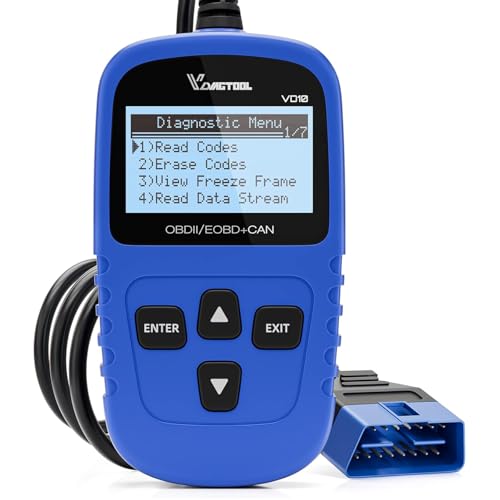
- Reads and clears engine codes with built-in definitions
- Shows live data, freeze frame, and readiness
- Plug-and-play for OBDII-compliant vehicles
Best For: DIY drivers who only need basic engine diagnostics and emissions checks
Bluetooth Smart Pick

- Live data graphing with a 2.8-inch color screen
- Includes battery and charging system testing
- Reads/clears codes and supports readiness checks
Best For: Home mechanics who want more visual diagnostics and battery system testing
Easy Entry OBD2 Pick
ANCEL AD410 for Basic Engine Checks

- Reads and clears engine-related fault codes
- Shows live data, freeze frame, and readiness status
- No app required; powered from the OBD2 port
Best For: Drivers who want a simple plug-in scanner for check engine light basics and emissions readiness.
Wireless App Pick
V011 Bluetooth Scanner for Real-Time Data
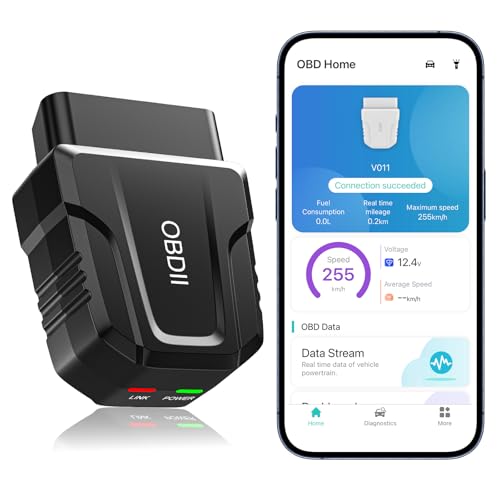
- Bluetooth 5.4 works with iOS and Android
- Shows charts, live data, VIN, and freeze frame
- Supports many Japanese brands like Toyota, Honda, Subaru, Nissan, and Lexus
Best For: Drivers who want a wireless scanner with app charts and broad vehicle support, including many Japanese brands.
Simple Plug-and-Play Choice
Autel AL319 for Everyday Code Reading
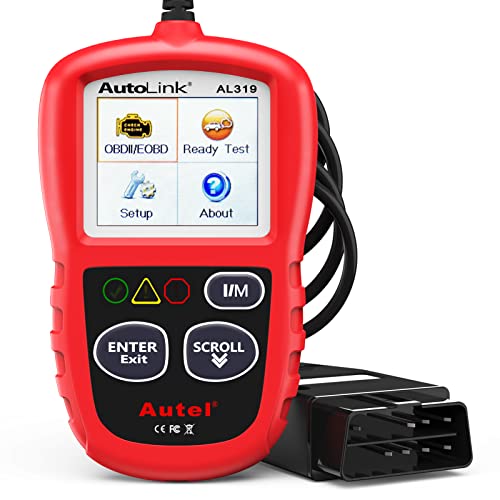
- Reads and clears DTCs with live data and freeze frame
- One-click I/M readiness for quick emissions checks
- Plug-and-play design with a color display and speaker
Best For: DIY drivers who want a straightforward plug-and-play scanner for basic engine diagnostics.
JDM Specialist – ANCEL JP700 JOBD Scanner for Japanese Cars
If you need car diagnostic scanners for japanese cars, the ANCEL JP700 stands out because it supports the JOBD protocol that many generic OBD2 readers miss on 2002+ Toyota, Nissan, Subaru, and Mazda models. It’s built for JDM owners who want faster check-engine light checks, readable live data, and a simple way to clear codes without paying for a shop visit.
Best For: Japanese import owners who need JOBD compatibility for Toyota, Nissan, Subaru, Mazda, or Honda models.
Pros:
- Supports JOBD for many Japanese import vehicles that standard scanners may not communicate with.
- Reads and clears codes, shows freeze frame, live data, and I/M readiness.
- Includes a built-in DTC library and lifetime free software updates.
- Plug-and-play design with a clear 3.5-inch screen and no batteries required.
Cons:
- Focused on Japanese vehicles rather than broad all-makes advanced diagnostics.
- Software updates require a Windows PC.
- Best fit for engine-code and emissions checks, not deeper system coverage.
The JP700 is a strong pick if your main frustration is communication problems with Japanese imports. For DIY diagnosis on supported JDM models, it offers the right protocol support and a practical feature set.
Budget All-Rounder – MOTOPOWER MP69033 OBD2 Scanner
For shoppers comparing car diagnostic scanners for japanese cars, the MOTOPOWER MP69033 is a practical universal reader that supports most 2000+ Asian OBD II vehicles along with many 1996+ domestic models. It covers the basics well, making it a useful option if you want quick check-engine light diagnostics and live data without paying for a more specialized tool.
Best For: Drivers who want an affordable basic scanner for Japanese cars and other OBDII vehicles.
Pros:
- Supports 9 protocols and works with most 2000+ Asian OBD II vehicles.
- Reads/erases codes, freeze frame, I/M readiness, vehicle info, and live data.
- Includes a built-in DTC lookup library and quick VIN/DTC buttons.
- Compact, powered by the vehicle, and available in multiple languages.
Cons:
- Does not support ABS, airbag, or oil service lights.
- Screen is smaller than some competing scanners.
- More basic than tools designed specifically for Japanese import protocols.
The MP69033 is a sensible entry-level scan tool if you mainly need reliable engine-code checks. It’s broad enough for many Japanese cars, but it stays focused on core OBD2 functions rather than advanced system coverage.
Mechanic Favorite – FOXWELL NT301 OBD2 Scanner
If you’re shopping for car diagnostic scanners for japanese cars and want a more feature-rich basic code reader, the FOXWELL NT301 is a solid choice for engine-light troubleshooting. It supports 1996+ gasoline vehicles and many 2000+ Asian models, while adding live data graphing, I/M readiness checks, and specific O2 sensor and EVAP testing that help narrow down common drivability issues.
Best For: DIYers who want a dependable scanner for Japanese cars with live data and emissions checks.
Pros:
- Reads and clears engine fault codes quickly with one-button operation.
- Supports live data graphing, O2 sensor testing, and EVAP leak checks.
- Includes I/M readiness hotkeys plus red-yellow-green status LEDs.
- Works with most 2000+ Asian vehicles and many 1996+ OBDII vehicles overall.
Cons:
- Still limited to OBDII engine functions, not ABS or airbag diagnostics.
- Compatibility varies by year, make, model, and VIN.
- Best value is for basic-to-intermediate diagnostics rather than advanced systems.
The NT301 sits in a useful middle ground: simple enough for home use, but detailed enough to help you understand live sensor behavior. For Japanese-car owners who want more than a bare-bones code reader, it’s an easy recommendation.
Classic Pick – ANCEL AD310 OBD II Code Reader
Among car diagnostic scanners for japanese cars, the ANCEL AD310 is a straightforward choice if you only want fast check-engine light help. It supports all OBDII protocols and works with many 1996+ U.S.-based, 2000+ European, and Asian vehicles, making it a simple home tool for reading and clearing emission-related trouble codes on common Japanese models.
Best For: Budget-minded owners who need a simple code reader for Japanese cars and other OBDII vehicles.
Pros:
- Reads and clears emission-related codes in seconds.
- Supports all OBDII protocols and many 2000+ Asian vehicles.
- Compact, lightweight, and powered directly from the OBDII port.
- Shows live data, freeze frame, I/M readiness, and vehicle information.
Cons:
- Only diagnoses emission-related issues.
- Does not work with OBDI vehicles.
- Lacks advanced system coverage like ABS or airbag codes.
The AD310 is best viewed as a dependable no-frills reader. If your priority is basic engine-code diagnosis on a Japanese car, it delivers the essentials without unnecessary complexity.
Advanced Multi-System Pick – FOXWELL NT604 Elite ABS SRS Scanner
If you want one of the more capable car diagnostic scanners for Japanese cars, the FOXWELL NT604 Elite is built for checking common fault areas before you head to a repair shop. It reads ABS, SRS, transmission, and engine codes, and it also adds live data, DTC lookup, and I/M readiness checks for basic maintenance decisions. Note that it is a diagnostic tool rather than a repair tool, so it helps you identify issues but not fix them.
Best For: Drivers who want a straightforward multi-system scanner for common warning lights and compatibility across many Asian, American, and European models.
Pros:
- Scans engine, ABS, SRS, and transmission systems
- Includes live data, built-in DTC library, and data playback/print features
- Plug-and-play design with latest software already installed
- Supports AUTOVIN and 60+ brands with no extra software fee
Cons:
- Does not support service functions like oil reset, ABS bleeding, or relearn
- SRS crash/collision data cannot be cleared
- Vehicle compatibility varies by make, model, and year
For shoppers comparing car diagnostic scanners for Japanese cars, this model stands out for broader system coverage without adding subscription costs. It is a practical choice if you mainly want to identify the cause of warning lights and read common fault codes.
Simple Code Reader Choice – VDIAGTOOL VD10 Engine Code Reader
The VDIAGTOOL VD10 is a compact option for car diagnostic scanners for Japanese cars when your main goal is fast engine-code checks. It reads and clears codes, shows freeze-frame data, tracks live data, and checks I/M readiness, making it useful for everyday troubleshooting and smog prep. It powers directly from the OBDII port, so it is easy to keep in the glove box.
Best For: DIY owners who want a simple, plug-and-play engine code reader for basic checks and emissions readiness.
Pros:
- Reads, clears, and defines engine fault codes on-screen
- Shows live data, freeze frame, and I/M readiness status
- Supports all OBDII protocols and many 1996+ vehicles
- Plug-and-play with no batteries or charger needed
Cons:
- Focused on engine diagnostics rather than ABS or SRS systems
- Best for OBDII-compliant vehicles only
- Two-line LCD is functional, not feature-rich
If you mainly want a basic scanner for check-engine light work, this is a sensible low-complexity pick. It is especially useful for quick code reading, readiness checks, and keeping a used-car inspection simple.
Bluetooth Smart Pick – BLCKTEC 440 OBD2 Scanner
The BLCKTEC 440 is a handy option in car diagnostic scanners for Japanese cars if you want a simple tool with extra visual feedback. It offers code reading and clearing, live data graphing, battery and charging system testing, and I/M readiness hotkeys, all on a 2.8-inch color screen. Since it powers from the vehicle’s DLC and supports broad OBD coverage, it is built for convenient at-home diagnostics.
Best For: Home mechanics who want a color-screen scanner with live data, readiness checks, and battery/charging system testing.
Pros:
- Reads and clears trouble codes with emissions readiness support
- Live data graphing helps with real-time monitoring
- Includes battery and charging system testing
- Free lifetime updates and printer compatibility
Cons:
- Requires OBD2-compatible vehicles
- More advanced than a basic code reader, but still focused on general diagnostics
- Wireless phone-based use is not the main selling point here
For shoppers who want a step up from a basic code reader without jumping into professional-level complexity, this model makes sense. Its screen, live data graphing, and system tests add useful context when diagnosing common drivability and charging issues.
Easy Entry OBD2 Pick – ANCEL AD410 for Basic Engine Checks
If you want a straightforward option among car diagnostic scanners for japanese cars, the ANCEL AD410 focuses on the basics most drivers need first: reading check engine codes, clearing engine-related faults, and showing live data without requiring an app. It supports most 1996+ OBD2 vehicles and many 2000+ Asian models, so it is a practical fit for routine engine-light troubleshooting on compatible Japanese cars.
Best For: Drivers who want a simple plug-in scanner for check engine light basics and emissions readiness.
Pros:
- Reads and clears engine-related fault codes with built-in DTC lookups
- Shows live data, freeze frame, I/M readiness, O2 sensor test, and EVAP test
- No phone app, battery, or charger required
- Supports many 2000+ Asian OBD2 vehicles, including compatible Japanese cars
Cons:
- Does not support ABS, SRS, transmission, bidirectional control, or service reset
- Engine and emission codes only, so it is not a full-system scanner
- Compatibility should still be checked before purchase
Overall, the AD410 is a sensible choice if you want clear, beginner-friendly diagnostics for basic check engine issues rather than advanced repair functions. It keeps the process simple while still giving enough data to understand what the vehicle is reporting.
Wireless App Pick – V011 Bluetooth Scanner for Real-Time Data
For shoppers comparing car diagnostic scanners for japanese cars, the V011 stands out because it pairs with iOS or Android over Bluetooth 5.4 and supports many brands including Toyota, Honda, Subaru, Nissan, and Lexus. Its app-based workflow is designed to make code reading, live data review, and diagnostic reporting easier to understand, especially if you prefer charts and phone-based diagnostics.
Best For: Drivers who want a wireless scanner with app charts and broad vehicle support, including many Japanese brands.
Pros:
- Supports reading and clearing DTCs, live data, freeze frame, VIN retrieval, and diagnostic reports
- Bluetooth 5.4 connection works with iOS and Android
- Displays data in easy-to-read charts for quick comparison
- Compatible with many makes, including Toyota, Honda, Subaru, Nissan, and Lexus
Cons:
- Requires a phone and app, unlike standalone code readers
- The car must be started and Bluetooth must be enabled before use
- Fault codes can only be cleared after the vehicle has been repaired
In practical terms, this is a good pick if you want a more visual, modern scanner experience and value wireless convenience. It is especially appealing for drivers who like reviewing data trends on a phone instead of on a small built-in screen.
Simple Plug-and-Play Choice – Autel AL319 for Everyday Code Reading
If you are looking at car diagnostic scanners for japanese cars and want a dependable, no-fuss tool, the Autel AL319 keeps things simple. It supports post-1996 OBD II vehicles, including Toyota, Nissan, and Honda examples mentioned by the manufacturer, and offers the core features most DIY users need for check engine light troubleshooting.
Best For: DIY drivers who want a straightforward plug-and-play scanner for basic engine diagnostics.
Pros:
- Reads and clears DTCs and helps identify the cause of the check engine light
- Includes live data, freeze frame, I/M readiness, and vehicle information
- Plug-and-play design with a one-click I/M readiness function
- Works with many post-1996 OBD II vehicles, including Japanese models
Cons:
- Focused on basic OBD II functions rather than advanced system diagnostics
- Does not offer app-based wireless connectivity
- Compatibility still depends on the vehicle meeting OBD II requirements
For everyday code reading, the AL319 is a practical middle-ground option: easy to use, useful for emissions checks, and backed by a clear display and simple controls. It is a solid fit if you want reliability without extra setup.
If you are shopping for Car Diagnostic Scanners for Japanese Cars, the best choice depends on how much detail you want and how much setup you are comfortable with. Some tools are simple code readers built for quick check-engine light resets, while others add live data, ABS/SRS coverage, or app-based features for deeper troubleshooting.
How We Picked the Best Car Diagnostic Scanners for Japanese Cars
We prioritized compatibility with common Japanese vehicles and JDM applications, ease of use, clear displays, useful fault-code functions, and features that offer real diagnostic value. We also looked for models that are practical for everyday owners, not just professional technicians.
Quick Comparison
Basic handheld readers are best for reading and clearing engine codes, checking readiness monitors, and confirming whether a warning light is urgent. Mid-range scanners add live data and broader system coverage, which is helpful when the issue is intermittent or not obvious. Bluetooth app scanners can be convenient if you prefer using your phone, but they depend on app quality and a stable connection.
Key Buying Factors for Car Diagnostic Scanners for Japanese Cars
Vehicle Compatibility
Make sure the scanner supports your car’s OBD2/JOBD setup and model year. Many Japanese cars sold in the U.S. since 1996 work with standard OBD2, but some JDM-focused vehicles may benefit from scanners with stronger Japanese-market support.
System Coverage
Engine-only scanners are enough for many owners, but ABS, SRS, and transmission support can be valuable if you want a broader picture of the problem.
Live Data and Freeze Frame
Live data helps you spot sensor problems and performance issues in real time. Freeze-frame data is useful for seeing what conditions triggered the fault code.
Ease of Use
Choose a tool with a readable screen, straightforward menus, and fast code retrieval if you want something for occasional use. App-based scanners can offer more detail, but they may require more setup.
Power and Practicality
Wired handheld scanners are simple and reliable. Bluetooth models are more flexible, especially if you want graphing or battery-system checks, but they rely on your phone or tablet.
Who Should Buy Which Car Diagnostic Scanners for Japanese Cars?
If you want a basic, low-cost way to clear check-engine lights, a simple handheld OBD2 reader is usually enough. If you maintain a daily driver or want better troubleshooting info, a scanner with live data is the smarter step up. For DIYers working on multiple systems, choose a model with ABS and SRS support. And if you prefer mobile tools, a Bluetooth scanner can be a good fit as long as the app is well-reviewed and easy to use.