
If you want to understand a check engine light without heading straight to the shop, the right scanner can make a big difference. The best car diagnostic scanners for beginners are simple to use, fast to read, and clear enough to help you make confident decisions.
This roundup focuses on tools that balance ease of use with practical features like code reading, live data, and readiness checks, so you can pick the right option for your budget and skill level.
Best 10 Car Diagnostic Scanners for Beginners Picks for 2026
Easy Starter Pick
ANCEL AD310 Classic OBD2 Code Reader

- Reads and clears check engine codes fast
- Shows live data, freeze frame, and readiness
- Compact tool with no battery or charger needed
Best For: Beginners who want a simple check-engine-light scanner
Feature-Rich Beginner Choice
FOXWELL NT301 Live Data OBD2 Scanner

- One-click code reading and clearing
- Live data graphing plus EVAP and O2 tests
- I/M readiness lights for smog-check prep
Best For: Beginners who want extra diagnostic features
Budget-Friendly Basic Reader
MOTOPOWER MP69033 Basic OBD2 Scanner

- Reads, erases, and looks up engine codes
- Shows live data and freeze frame info
- Compact, powered by the vehicle, and simple to use
Best For: Beginners shopping for a low-cost basic code reader
All-in-One New Driver Pick
Innova 5210 OBD2 Scanner and Battery Tester

- Reads engine codes and some ABS codes
- Includes battery testing, live data, and oil reset
- Free app adds verified fixes and repair guidance
Best For: Beginners who want diagnostics plus maintenance help
Quick Starter Pick
ANCEL AD410 OBD2 Code Reader for Engine Lights

- Reads and clears engine codes with on-screen definitions
- Includes live data, freeze frame, and I/M readiness
- No app or battery needed; plug directly into OBD2 port
Best For: Beginners who want simple check-engine-light diagnostics
App-Based Choice
V011 Bluetooth OBD2 Scanner for Phones
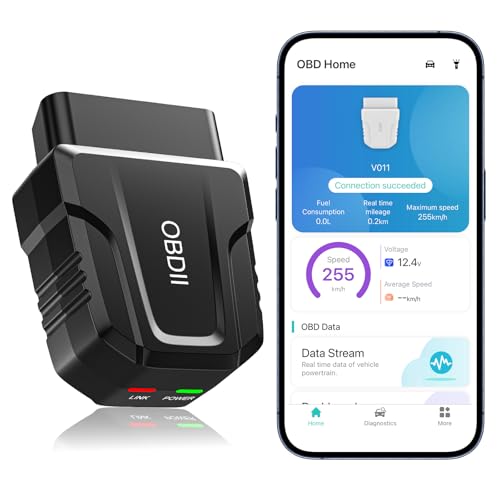
- Bluetooth 5.4 scanner for iOS and Android
- App displays data as charts and guides
- Reads codes, live data, VIN, and readiness
Best For: Phone users who want visual, guided diagnostics
Budget Basic Pick
VDIAGTOOL VD10 Plug-and-Play OBD2 Reader
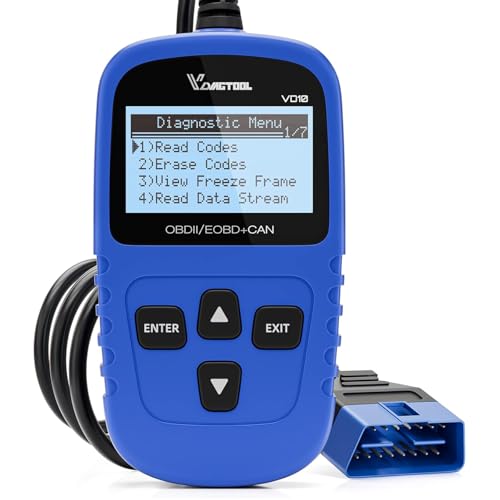
- Plug-and-play handheld scanner with no charger needed
- Reads/clears codes and shows built-in definitions
- Includes live data, freeze frame, and I/M readiness
Best For: DIYers who want a basic handheld code reader
Beginner App Scanner
Phone-Based Car Check Engine Reader

- Bluetooth scanner with iPhone and Android app support
- Explains codes in plain language and supports unlimited scans
- Tracks multiple cars and sends maintenance alerts
Best For: Beginners who want app-guided diagnostics and simple code explanations
Handheld 2-in-1 Scanner
OBD2 Scanner With Battery Tester
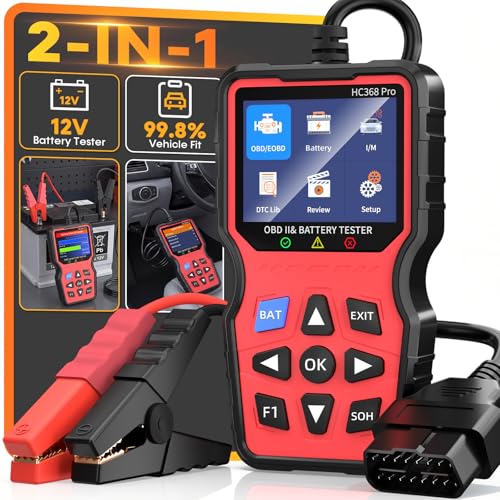
- Reads codes and tests 12V battery health in one tool
- Plug-and-play with no app, computer, or drivers needed
- 2.8-inch color screen shows DTC definitions and live data
Best For: Beginners who want a simple handheld scanner plus battery testing
Simple Plug-and-Play Reader
Autel AL319 Plug-and-Play Scanner
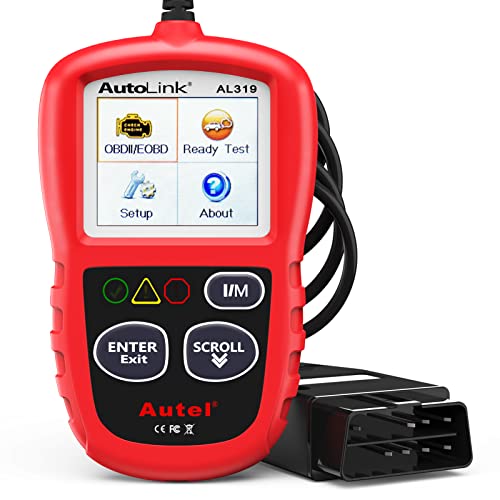
- Reads and clears codes with live data and freeze frame
- One-click I/M readiness helps with emissions checks
- Easy interface, color display, and lifetime free updates
Best For: First-time users who want a basic, reliable check engine reader
Easy Starter Pick – ANCEL AD310 Classic OBD2 Code Reader
If you want car diagnostic scanners for beginners, the ANCEL AD310 is a straightforward place to start. It reads and clears check engine codes quickly, shows live data and freeze frame info, and pulls power directly from your vehicle, so there’s no charging or setup hassle.
Best For: New drivers and DIYers who mainly want a simple check-engine-light reader.
Pros:
- Reads and clears emission-related trouble codes fast
- Shows live data, freeze frame, I/M readiness, and vehicle info
- Compact, lightweight, and easy to carry
- No batteries or charger needed
Cons:
- Only supports OBDII emission-related diagnosis
- Won’t work for OBDI vehicles
- Not meant for ABS, airbag, or non-emissions faults
For beginners who just want a dependable code reader without extra complexity, the AD310 keeps things simple and practical. Its clear screen, labeled buttons, and broad OBDII compatibility make it an easy everyday tool for basic diagnostics.
Feature-Rich Beginner Choice – FOXWELL NT301 Live Data OBD2 Scanner
The FOXWELL NT301 is a strong option if you want car diagnostic scanners for beginners but also want room to grow. It reads and clears codes, checks I/M readiness, graphs live data, and adds O2 sensor and EVAP testing, all in a plug-and-play tool with a color screen.
Best For: Beginners who want more diagnostic features without moving up to a full pro scan tool.
Pros:
- Reads and clears check engine codes with one click
- Includes live data graphing, O2 sensor, and EVAP testing
- I/M readiness lights and speaker help with smog-check prep
- No charging or subscription needed
Cons:
- Focused on OBDII engine diagnostics, not all vehicle systems
- Compatibility and functions vary by vehicle
- May be more tool than a first-time user needs for basic code reading
If you want a beginner-friendly scanner that offers more than the basics, the NT301 is a smart middle ground. It stays easy to use while adding useful live-data and testing features that help you understand what’s happening under the hood.
Budget-Friendly Basic Reader – MOTOPOWER MP69033 Basic OBD2 Scanner
For car diagnostic scanners for beginners, the MOTOPOWER MP69033 gives you the essentials at a simple, no-frills level. It reads and erases engine codes, shows freeze frame and live data, and gets power from the car, so it’s easy to plug in and use.
Best For: Budget-conscious beginners who mainly need basic check-engine-light help.
Pros:
- Reads, erases, and looks up OBD2 trouble codes
- Displays live data, freeze frame, and readiness info
- Compact body with a clear 2.8-inch LCD screen
- Supports multiple languages
Cons:
- Does not support ABS or airbag codes
- Limited to OBDII system functions
- Screen is small compared with more advanced tools
This is a practical starter scanner if you want a basic tool that still covers the main OBD2 tasks. It’s simple, portable, and easy to keep in the glove box for quick checks.
All-in-One New Driver Pick – Innova 5210 OBD2 Scanner and Battery Tester
If you’re comparing car diagnostic scanners for beginners and want a little more utility, the Innova 5210 stands out. It reads engine and some ABS codes, checks live data, tests the battery and alternator, and adds oil reset and smog-readiness functions through a free app.
Best For: Beginners who want a scanner that can also help with battery checks and maintenance resets.
Pros:
- Combines OBD2 code reading with battery testing
- Offers live data, oil reset, and I/M readiness checks
- Works with a free app that provides verified fixes and repair guidance
- Compatible with many 1996+ vehicles, with coverage checking available
Cons:
- Some features and ABS coverage vary by vehicle
- Requires app use for the full repair-guidance experience
- Compatibility should be confirmed before buying
The 5210 is a good choice if you want a beginner-friendly scanner that does more than read codes. Its added battery tester and reset features make it useful for everyday ownership, not just emergency check-engine-light moments.
Quick Starter Pick – ANCEL AD410 OBD2 Code Reader for Engine Lights
If you’re comparing car diagnostic scanners for beginners, the ANCEL AD410 is a straightforward place to start. It focuses on engine and emissions faults, shows code definitions on screen, and gives you live data, freeze frame, and I/M readiness without needing a phone app or Bluetooth setup.
Best For: New drivers and DIY owners who want a simple plug-and-play scanner for check engine light troubleshooting and basic emissions checks.
Pros:
- Reads and clears engine-related OBD2 codes with built-in DTC definitions
- Shows live data, freeze frame, O2 sensor test, EVAP test, and I/M readiness
- No app, battery, or charger required; powered directly from the OBD2 port
- 2.4-inch color screen and multilingual menus make it easy to use
Cons:
- Does not support ABS, SRS, transmission, bidirectional control, or service reset functions
- Limited to engine and emission-related codes only
- Compatibility should still be checked for your specific vehicle
For beginners who want a practical, low-fuss scanner, the AD410 keeps things focused on the most common issues. It’s a solid choice if you mainly want to understand the check engine light, confirm readiness for emissions testing, and talk to a mechanic with more confidence.
App-Based Choice – V011 Bluetooth OBD2 Scanner for Phones
The V011 is a strong pick if you want one of the more beginner-friendly car diagnostic scanners for beginners and prefer using your phone. Its Bluetooth 5.4 connection, guided app experience, and chart-based data views make it easier to understand fault codes, live readings, and emissions status without dealing with a separate screen.
Best For: Drivers who want app-based diagnostics with visual charts and guided help on iOS or Android.
Pros:
- Bluetooth 5.4 connection works with iOS and Android through the app
- Shows live data, freeze frame, readiness status, VIN, and diagnostic reports
- Charts and visual data help beginners compare readings more easily
- Includes tutorials and guides for basic check-engine-light troubleshooting
Cons:
- Requires a phone and app, unlike fully standalone scanners
- Must have the car on and Bluetooth enabled for use
- Code clearing is intended after the vehicle has been repaired
This model makes diagnostics feel more approachable if you like seeing data on a phone instead of a handheld display. It’s best for users who want a modern, visual tool for reading codes, checking readiness, and reviewing live vehicle information.
Budget Basic Pick – VDIAGTOOL VD10 Plug-and-Play OBD2 Reader
If you want a simple option among car diagnostic scanners for beginners, the VDIAGTOOL VD10 keeps the essentials front and center. It plugs straight into the OBDII port, reads and clears engine codes, shows definitions on its screen, and includes live data plus freeze frame for basic troubleshooting.
Best For: DIYers who want a no-frills handheld scanner for basic engine fault checks and emissions readiness.
Pros:
- Easy plug-and-play use with no battery or charger needed
- Reads and clears codes, including generic and manufacturer-specific DTCs
- Includes live data, freeze frame, vehicle information, and I/M readiness
- Built-in DTC lookup helps you understand codes without searching online
Cons:
- Uses a basic 2-line LCD screen instead of a full-color display
- Focuses on engine and emissions diagnostics rather than advanced system scanning
- Not designed for bidirectional controls or service functions
The VD10 is a practical choice if you just want the fundamentals in a simple handheld tool. It’s especially useful for checking the check engine light, reviewing monitor readiness, and getting quick code definitions without a complicated setup.
Beginner App Scanner – Phone-Based Car Check Engine Reader
If you’re looking for car diagnostic scanners for beginners, the FIXD Bluetooth OBD2 Scanner keeps things simple by sending code readings to your phone. It can identify thousands of issues, explain codes in plain language, and help you validate repairs without needing deep mechanical knowledge.
Best For: New drivers and DIY owners who want app-guided diagnostics and easy-to-understand explanations.
Pros:
- Reads and identifies 39,000+ issues across many vehicles
- Free app with unlimited scans and simple explanations
- Tracks scans by vehicle and supports mileage reminders
- Bluetooth connection works with iPhone and Android
Cons:
- Requires a phone app rather than a standalone screen
- Feature set may vary by vehicle make and model
This is a strong pick if you want a compact scanner that stays plugged in and focuses on clarity over complexity. It is especially practical for beginners who want quick answers, maintenance alerts, and the option to share results with a shop.
Handheld 2-in-1 Scanner – OBD2 Scanner With Battery Tester
For shoppers comparing car diagnostic scanners for beginners, this handheld OBD2 scanner stands out because it combines code reading with a built-in 12V battery tester. The color screen, built-in DTC definitions, and plug-and-play setup make it easier to use than more complicated scan tools.
Best For: Beginners who want a straightforward handheld scanner that also checks battery health.
Pros:
- 2-in-1 tool reads engine codes and tests 12V battery health
- Plug-and-play design with no apps, computers, or drivers required
- 2.8-inch HD color screen with clear text and built-in DTC definitions
- Supports live data, graphing, and full-system style diagnostic use cases
Cons:
- More features may be than some first-time users need
- Handheld format is less phone-based than app scanners
This is a practical option if you want a self-contained scanner you can keep in the glove box. It offers a good balance of ease of use and extra diagnostic depth, especially if you also want battery testing in the same tool.
Simple Plug-and-Play Reader – Autel AL319 Plug-and-Play Scanner
Among car diagnostic scanners for beginners, the Autel AL319 is a straightforward plug-and-play reader that covers the essentials without adding confusion. It can read and clear codes, show live data and freeze frame information, and uses a simple interface that suits DIY drivers.
Best For: First-time users who want a basic, dependable check engine code reader with a simple interface.
Pros:
- Reads and clears DTCs and supports live data, freeze frame, and I/M readiness
- One-click I/M readiness makes emissions checks easier
- Plug-and-play design with a TFT color display and built-in speaker
- Works with many post-1996 OBD II vehicles and includes lifetime free updates
Cons:
- No batteries are needed, but it is still a wired handheld tool
- Focuses on core OBDII functions rather than advanced app-based features
This model is a good fit if you want a no-fuss scanner that gets straight to the basics. It is especially useful for beginners who want a readable screen, simple controls, and reliable check-engine troubleshooting.
How We Picked the Best Car Diagnostic Scanners for Beginners
We looked for scanners that are easy to set up, simple to navigate, and useful for everyday troubleshooting. For Car Diagnostic Scanners for Beginners, the most important traits are clear menus, broad OBD2 compatibility, and reliable access to core functions like reading and clearing trouble codes.
We also favored models that add value without becoming confusing, such as live data, freeze frame information, I/M readiness checks, battery testing, or Bluetooth app support. Those extras can help you learn more about your vehicle without overwhelming you.
Quick Comparison: Which Type Fits Your Needs?
Basic handheld scanners are best if you want fast answers and no learning curve. Bluetooth app-based scanners are a stronger choice if you prefer using your phone and want more data visualization. Mid-tier tools with live data or reset functions are useful if you plan to do more than occasional check engine light checks.
If you mainly want to confirm a fault code, a simpler reader is usually enough. If you want to monitor engine behavior or perform light maintenance tasks, step up to a more capable model.
Key Buying Factors for Car Diagnostic Scanners for Beginners
Compatibility
Make sure the scanner supports your vehicle’s OBD2 standard. Most gasoline vehicles from 1996 onward are covered, but diesel, hybrid, and international coverage can vary by model.
Ease of Use
Look for a scanner with a clear screen, straightforward buttons, and plain-language fault descriptions. For app-based tools, check that the app is well rated and easy to connect.
Core Functions
At minimum, a beginner scanner should read and clear codes and show readiness monitors. Live data and freeze frame are helpful additions if you want better diagnostic context.
Power and Connectivity
Handheld units are simple and self-contained. Bluetooth scanners offer more features through a smartphone, but they depend on app quality and a stable connection.
Extra Features
Battery testing, oil reset, and service functions can be useful, but only if you will actually use them. Avoid paying for advanced features you do not need yet.
Who Should Buy Which Car Diagnostic Scanners for Beginners?
Choose a basic handheld reader if you are new to car maintenance and want the easiest possible experience. Pick a Bluetooth scanner if you are comfortable using an app and want more detailed information. Go with a model that includes live data or reset features if you plan to handle routine maintenance and want a little more diagnostic depth.
For most first-time buyers, the best choice is the scanner that gives you the clearest results with the fewest steps. That usually means prioritizing simplicity, compatibility, and trustworthy core functions over advanced extras.