
If you want faster, more confident electrical diagnostics, the right multimeter makes all the difference. For home garages, the best picks balance accuracy, durability, and easy-to-read measurements.
This roundup focuses on automotive multimeters for home mechanics that can handle common troubleshooting jobs without making the learning curve harder than it needs to be.
Best 10 Automotive Multimeters for Home Mechanics Picks for 2026
Premium Diagnostic Pick
Fluke 88V Deluxe Automotive Multimeter

- Pulse width, duty cycle, and Min/Max/Avg recording
- 10 meg ohm input impedance helps protect circuits
- Large display with bright backlight
Best For: Home mechanics diagnosing conventional and hybrid vehicles
Value Feature Pick
Klein Tools MM420 Auto-Ranging TRMS Multimeter

- Measures voltage, current, resistance, and more
- TRMS auto-ranging helps improve accuracy
- Lead-alert LEDs and backlit display add convenience
Best For: Home mechanics wanting a versatile everyday test meter
Compact Technician Choice

- Compact True-rms meter for field use
- Measures voltage, current, resistance, frequency, and capacitance
- CAT III 600V rating with LED backlight
Best For: Home mechanics who want a portable general-purpose meter
Automotive Problem Solver
Innova 3340 Professional Digital Multimeter
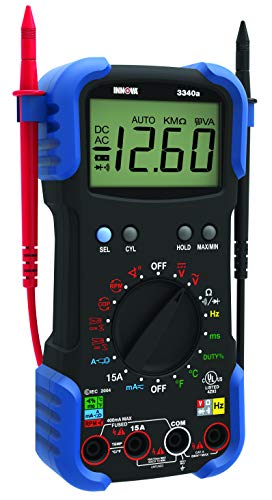
- Targets engine problems and vehicle circuits
- Includes RPM clamp and temperature probe
- Auto-ranging with overload protection
Best For: Home mechanics focused on engine and wiring diagnostics
Auto-Ranging TRMS Pick
Klein Tools MM720 Digital Multimeter
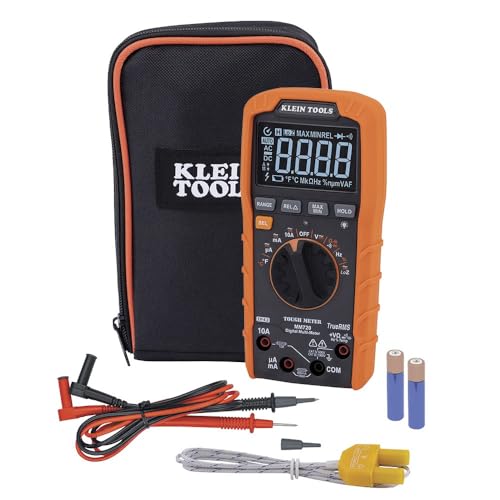
- Auto-ranging TRMS for accurate readings
- LoZ mode helps detect ghost voltages
- Up to 1000V, 10A, and 60MΩ measurements
Best For: Home mechanics needing a versatile meter with LoZ and temperature testing
Feature-Rich Pro Choice
GEARWRENCH Automotive Pro Digital Multimeter
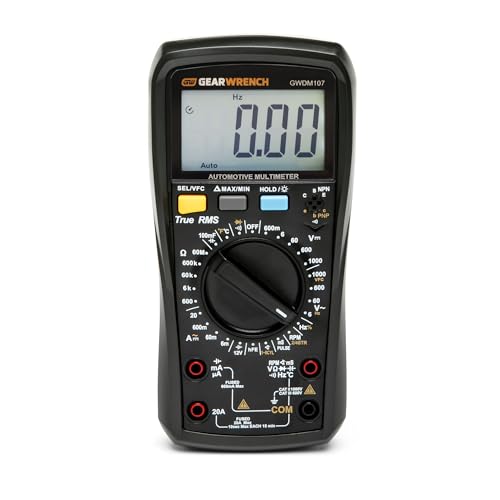
- True RMS with up to 20A current testing
- Automotive modes: RPM, dwell, pulse width, battery test
- 6000-count backlit display and included case
Best For: DIY mechanics wanting expanded automotive test functions
Reliable Safety Pick

- Up to 1000V and 10A measurements
- Includes temperature, capacitance, and frequency tests
- CAT III 600V safety rating
Best For: Home mechanics who want dependable core electrical testing
Starter-Friendly Auto-Ranging Meter
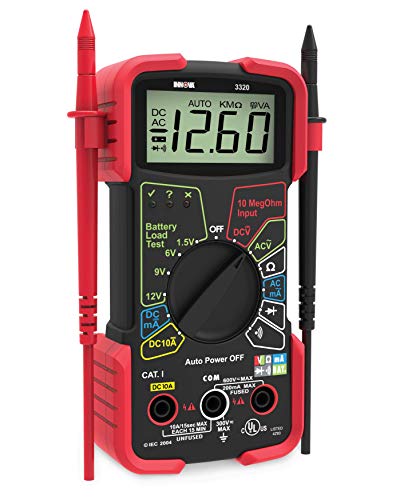
- Auto-ranging simplifies everyday testing
- Large display with battery-status LEDs
- UL certified with 10 MegOhm input impedance
Best For: Home mechanics needing a simple, safe meter for basic electrical checks
Feature-Packed True RMS Pick

- True RMS and auto-ranging for broader testing
- Measures current, voltage, resistance, capacitance, temperature
- Backlit LCD with data hold and kickstand
Best For: DIYers needing a versatile meter for automotive and home electrical troubleshooting
Updated Safety-Focused Meter
- True RMS with auto-ranging for versatile use
- Measures current, voltage, resistance, frequency, and temperature
- Backlit LCD plus double ceramic fuse protection
Best For: Home mechanics wanting a broad, safety-focused multimeter for garage and house use
Premium Diagnostic Pick – Fluke 88V Deluxe Automotive Multimeter
If you want automotive multimeters for home mechanics that can handle tougher diagnostic work, the Fluke 88V stands out with the measurement functions and accuracy needed for conventional and hybrid vehicles. Its 10 meg ohm input impedance helps protect computer circuits, while the large display and bright backlight make it easier to read in a garage.
Best For: Home mechanics who want a serious diagnostic meter for conventional and hybrid vehicle troubleshooting.
Pros:
- Measures pulse width, duty cycle, and Min/Max/Avg for deeper troubleshooting
- 10 meg ohm input impedance helps avoid damage to computer circuits
- Large display with bright backlight improves visibility
- Built for troubleshooting problems on conventional and hybrid vehicles
Cons:
- More meter than a casual user may need for simple checks
- Heavier than compact pocket-style multimeters at 3 pounds
For home mechanics who regularly diagnose vehicle electrical issues, this model offers the kind of function set that supports careful, repeatable testing. It is a strong choice when you want a feature-rich meter rather than a basic do-it-all tool.
Value Feature Pick – Klein Tools MM420 Auto-Ranging TRMS Multimeter
For home mechanics comparing automotive multimeters for home mechanics, the Klein Tools MM420 brings a useful mix of voltage, current, resistance, and test functions in an auto-ranging TRMS meter. It also adds lead-alert protection and a backlit display, which are helpful when you are working in a dim garage or checking lead placement quickly.
Best For: Home mechanics who want a versatile, safety-minded meter with lots of everyday test functions.
Pros:
- Measures AC/DC voltage up to 600V, 10A AC/DC current, and 50MΩ resistance
- Includes continuity, temperature, capacitance, frequency/duty cycle, and diode test
- TRMS and auto-ranging support accurate readings
- Backlit display and lead-alert LEDs improve usability
Cons:
- Designed for residential, business, HVAC, and light-industrial environments rather than heavy-duty automotive specialization
- Some accessories like the magnetic hanger are optional
This is a practical choice if you want one meter that covers a wide range of basic electrical checks without overcomplicating the process. Its feature set makes it easy to recommend for general garage use.
Compact Technician Choice – Fluke 115 True-RMS Multimeter
If you need automotive multimeters for home mechanics that are simple to carry and quick to read, the Fluke 115 is a compact True-rms digital multimeter built for field technicians. It covers voltage, current, resistance, continuity, frequency, and capacitance, and the large white LED backlight helps in poorly lit work areas.
Best For: Home mechanics who want a compact, field-ready meter for standard electrical troubleshooting.
Pros:
- Compact True-rms design suits field-style troubleshooting
- Measures voltage, current, resistance, continuity, frequency, and capacitance
- Min/Max/Average helps capture signal fluctuations
- CAT III 600V safety rating and LED backlight add practicality
Cons:
- Less automotive-specific than dedicated engine diagnostic meters
- No included vehicle-focused accessories such as RPM clamps or temperature probes
The Fluke 115 is a strong fit if you want a dependable, compact meter for general electrical checks around the garage. It is especially appealing when portability and straightforward readings matter more than advanced automotive-specific testing.
Automotive Problem Solver – Innova 3340 Professional Digital Multimeter
Among automotive multimeters for home mechanics, the Innova 3340 is built to pinpoint engine problems with tests aimed directly at vehicle systems. It can check alternator diodes, duty cycle, solenoids, breaker points, wiring, and switches, and it includes an inductive RPM clamp plus a temperature probe for more vehicle-focused troubleshooting.
Best For: Home mechanics who want an automotive-focused meter with useful engine diagnostic extras.
Pros:
- Designed to pinpoint engine problems and test key automotive components
- Includes temperature probe, inductive RPM clamp, and carrying case
- Auto-ranging, auto shut-off, and overload protection add convenience
- 10 megohm input impedance helps protect the vehicle ECU
Cons:
- Measures up to 15 amps, so it is not aimed at heavier current testing
- Less universal for non-automotive electrical work than some general-purpose meters
This is a smart pick if your main focus is vehicle troubleshooting rather than mixed-use electrical work. The included accessories make it especially appealing for home garages where engine diagnostics are the priority.
Auto-Ranging TRMS Pick – Klein Tools MM720 Digital Multimeter
If you want automotive multimeters for home mechanics that can also handle general electrical troubleshooting, the Klein Tools MM720 is a very flexible option. Its auto-ranging TRMS design helps with accurate readings, while the LoZ mode is useful for spotting ghost or stray voltages during diagnostics.
Best For: Home mechanics who want a versatile meter with low impedance mode, temperature checks, and broad measurement coverage.
Pros:
- Measures AC/DC voltage up to 1000V, 10A AC/DC current, and 60MΩ resistance
- Includes continuity, temperature, capacitance, frequency/duty cycle, diode test, and LoZ
- Auto-ranging and TRMS help deliver more precise readings
- Reverse-contrast LCD, kickstand, and optional magnetic hanger improve usability
Cons:
- Only supports up to 10A current, which may limit some higher-draw tasks
- Magnetic hanger is optional, not included
This is a strong all-around meter if you want practical diagnostic features without giving up readability or safety-focused extras. The LoZ function is the standout for cleaner voltage troubleshooting.
Feature-Rich Pro Choice – GEARWRENCH Automotive Pro Digital Multimeter
For automotive multimeters for home mechanics who want lots of diagnostic functions in one tool, the GEARWRENCH Automotive Pro Digital Multimeter is the most feature-packed option here. It combines True RMS measurement with automotive-focused tests like dwell time, RPM, pulse width, and battery testing.
Best For: DIY mechanics who want a pro-style multimeter with expanded automotive test functions and a large display.
Pros:
- True RMS meter measures AC/DC voltage up to 1000V and current up to 20A
- Automotive functions include dwell time, pulse width, RPM, battery test, and duty cycle
- 6000-count backlit display improves visibility in low light
- Includes carrying case, CAT III/CAT IV leads, thermocouple, and batteries
Cons:
- More functions may be more than casual users need
- Bulkier kit than a basic meter because of the included case and accessories
This is the best match if your garage work goes beyond basic voltage checks and you want a meter built around automotive diagnostics. The extra modes make it especially useful for more involved troubleshooting.
Reliable Safety Pick – Fluke 17B+ Digital Multimeter
The Fluke 17B+ is a straightforward choice among automotive multimeters for home mechanics who value trusted safety ratings and core testing functions. It covers the essential measurements you need for electrical diagnosis, including voltage, current, resistance, continuity, capacitance, frequency, and temperature.
Best For: Home mechanics who want a dependable meter for core electrical checks and temperature testing.
Pros:
- Measures AC/DC voltage up to 1000V and current up to 10A
- Includes resistance, continuity, diode, capacitance, frequency, and temperature testing
- CAT III 600V safety rating suits common residential and shop use
- Comes with TL75 test leads and a K-type thermocouple
Cons:
- Current measurement tops out at 10A
- Lacks some advanced automotive-specific modes found on feature-heavy meters
If you want a simple, trusted meter for everyday troubleshooting, the Fluke 17B+ keeps the focus on the essentials. It is a practical pick when safety rating and reliable core functions matter more than extra specialty features.
Starter-Friendly Auto-Ranging Meter – INNOVA 3320
If you want automotive multimeters for home mechanics that keep things simple, the INNOVA 3320 is built around auto-ranging and an easy-to-read display. It is aimed at safely checking common electrical issues in cars and household circuits without forcing you to manually dial in ranges.
Best For: Home mechanics who want a straightforward multimeter for battery checks, voltage testing, and basic troubleshooting.
Pros:
- Auto-ranging removes the guesswork when measuring.
- Large digital display and color-coded LEDs make battery status checks easy.
- UL certified and designed for safe use on automotive and household electrical problems.
- 10 MegOhm input impedance helps protect vehicle electronics like the ECU.
Cons:
- More basic than advanced meters with features like True RMS or temperature measurement.
- Focused on straightforward troubleshooting rather than deeper diagnostic functions.
For common garage and driveway tasks, this meter keeps the learning curve low while still covering the essentials. It is a practical pick if you mainly need safe, reliable voltage and resistance checks.
Feature-Packed True RMS Pick – AstroAI 6000 Counts
For automotive multimeters for home mechanics who want more test functions in one tool, this AstroAI model covers a lot of ground. It measures AC/DC current and voltage, resistance, continuity, capacitance, frequency, duty cycle, diode, and temperature, while also adding True RMS and auto-ranging for more capable troubleshooting.
Best For: DIYers who want a versatile multimeter for both vehicle and household electrical troubleshooting.
Pros:
- Measures a wide range of electrical values, including temperature.
- True RMS and auto-ranging add more confidence for AC current and voltage readings.
- Large backlit LCD, data hold, kickstand, and auto shut-off improve everyday use.
- Double ceramic fuse protection is designed to help guard against overloads.
Cons:
- More features may be more than a casual user needs.
- Requires checking the manual to get the most from its functions.
This is a strong all-rounder if you want one meter that can handle a broader range of troubleshooting jobs. It feels best suited to users who expect to test more than just voltage and continuity.
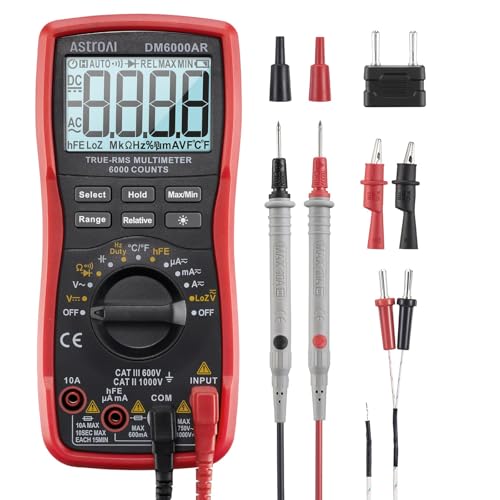
Updated Safety-Focused Meter – AstroAI DM6000AR
This AstroAI meter fits well among automotive multimeters for home mechanics if you want a modern, safety-minded tester with broad core measurements. It supports AC/DC current and voltage, resistance, continuity, capacitance, frequency, duty cycle, diode, and temperature, plus True RMS and auto-ranging for more flexible diagnostics.
Best For: Home mechanics who want a general-purpose multimeter with broad measurements and safety-focused fuse protection.
Pros:
- True RMS and auto-ranging support more accurate everyday testing.
- Wide measurement range covers current, voltage, resistance, capacitance, and temperature.
- Large backlit LCD, data hold, kickstand, and auto shut-off make it convenient.
- Double ceramic fuse protection is designed for more secure operation.
Cons:
- Uses corded electric power instead of battery-powered operation.
- Like other feature-rich meters, it may be more than needed for basic checks.
If you want a practical do-it-all meter for garage and household troubleshooting, this one covers the essentials plus extra measurement modes. The updated fuse ratings and True RMS support make it a sensible choice for users who value safety and versatility.
How We Picked the Best Automotive Multimeters for Home Mechanics
We looked for Automotive Multimeters for Home Mechanics that offer the most useful mix of measurement range, safety features, auto-ranging convenience, and day-to-day usability. We also favored models with strong reputations for reliability, clear displays, and features that actually help in a garage, not just on paper.
Because home users need practical tools, we gave extra weight to ease of use, probe quality, and versatility for both vehicle and general electrical troubleshooting.
Quick Comparison
For advanced diagnostics and professional-grade precision, premium models like the Fluke options stand out. For a strong all-around balance of capability and value, Klein, Innova, and GEARWRENCH models are compelling. If you want an affordable starter meter for basic testing, AstroAI and entry-level Innova choices can cover common checks without a big investment.
Key Buying Factors for Automotive Multimeters for Home Mechanics
Measurement Needs
Make sure the meter can handle the basics you use most: DC voltage, resistance, continuity, and current. If you plan to troubleshoot sensors, charging systems, or ignition-related issues, look for added functions such as frequency, duty cycle, and min/max capture.
Auto-Ranging and Readability
Auto-ranging is a major convenience for home mechanics because it reduces setup mistakes and speeds up testing. A backlit display, large digits, and a clear selector dial also make a big difference when you are working in a dim garage.
Safety and Input Protection
Choose a meter with proper category ratings and solid input protection. This matters even more if you will also use it around household circuits or hybrid vehicle systems.
Low Impedance and True RMS
Low impedance helps filter out ghost voltage in some troubleshooting situations, while True RMS improves accuracy on non-sinusoidal signals. These are especially useful if you want a more capable meter for modern vehicles and mixed-use electrical work.
Durability and Probes
Rubberized housings, decent lead quality, and a sturdy case can improve long-term value. For garage use, the best Automotive Multimeters for Home Mechanics are the ones that feel reliable every time you pick them up.
Who Should Buy Which Automotive Multimeters for Home Mechanics?
If you are a serious DIYer or plan to work on newer vehicles, choose a feature-rich meter with stronger protection and better diagnostic functions. If you mostly handle battery checks, fuse tests, and simple continuity work, a simpler auto-ranging model is often enough. Budget shoppers should prioritize accuracy and usability first, then add specialized features only if they truly match the jobs you do most.
In short, buy the most capable meter that fits your skill level and the repairs you actually perform. That approach gives you better results now and room to grow later.