
Portable solar panels can keep navigation devices, phones, lights, coolers, and power stations charged when you are away from shore power. The right setup depends on your boat’s available space, daily energy needs, weather exposure, and connector compatibility.
We’ve gathered 10 portable options ranging from lightweight folding panels to higher-output systems, so you can match charging performance with portability and onboard storage.
Best 10 Portable Solar Panels for Boating Picks for 2026
Marine-Ready Folding Kit
Go Power 130W Portable Solar Panel

- Folding 130W panel with adjustable legs
- Includes controller, clamps, and multiple connectors
- Weather-resistant kit with nylon carrying case
Best For: Boaters wanting a complete battery-charging kit
High-Capacity Splash-Resistant Pick
RENOGY REGO 200W Foldable Panel

- 200W output with stated 23.5% efficiency
- Built-in 45W USB-C PD and dual USB-A ports
- IP65 splash resistance and foldable magnetic design
Best For: Boaters charging devices and compatible power stations
Lightweight Flexible Panel
ExpertPower 100W SunPower Panel

- Only 4.4 pounds for easy handling
- Flexible up to 30 degrees for adaptable placement
- 22–25% stated efficiency with MC4 connectors
Best For: Boaters needing a light, flexible 100W panel
Compact High-Efficiency Option
Renogy 200W Foldable Solar Panel
- 25% efficiency with 16BB N-Type cells
- 13.9-pound folding design with multiple angle settings
- USB-C, USB-A, and MC4 outputs
Best For: Boaters using power stations who want 200W in a compact package
Best Compact Pick
SOKIOVOLA 100W Foldable Solar Panel
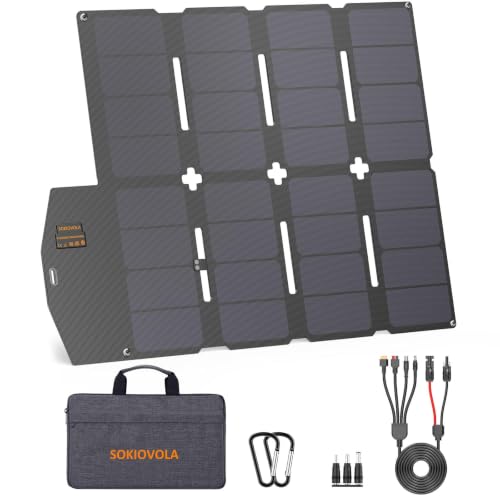
- Lightweight 4.6-pound design
- Compact folded size for easy storage
- IP68 rating and multi-connector cable
Best For: Small boats and compact power stations
Best High-Output Pick
GRECELL UB200 200W Portable Solar Panel

- 200W monocrystalline solar output
- Four connectors and mounting options
- Supports larger power stations and 12V systems
Best For: Larger boats and higher-capacity charging setups
Best Warranty Pick
RENOGY REGO 100W Foldable Solar Panel
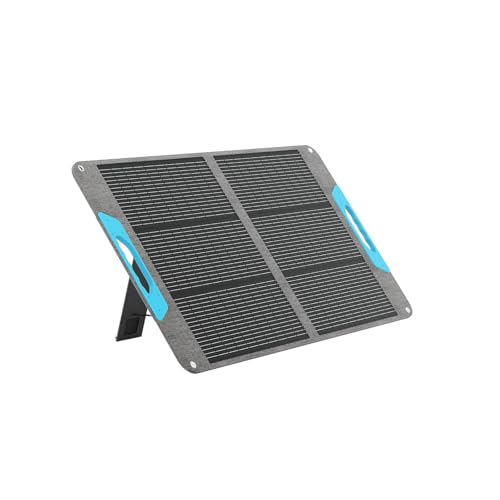
- Direct USB-C and USB-A charging
- 23.5% stated conversion efficiency
- Long 12-year output warranty
Best For: USB charging and securely mounted marine setups
High-Capacity Pick

- 450W output and 25% stated efficiency
- IP68 protection for rain, spray, and dust
- Designed for compatible 40–60V power stations
Best For: High-capacity power stations and extended outdoor trips
Universal Kit Pick

- 400W output with 23.4% stated efficiency
- Foldable design with adjustable kickstands
- 40V MC4 connectivity for compatible stations
Best For: General outdoor charging and foldable boat-side setups
Compact Compatibility Pick

- Folded size is about 21 by 23 inches
- 25.5% stated efficiency and IP68 protection
- Includes a 5-in-1 connector cable
Best For: Smaller boat setups and short outdoor trips
Marine-Ready Folding Kit – Go Power 130W Portable Solar Panel
For boat owners seeking portable solar panels for boating, the Go Power GP-PSK-130 offers a practical folding design with adjustable legs and multiple connection options. Its 130-watt output is suited to maintaining compatible AGM or lithium battery systems during trips and off-grid stays.
Best For: Boaters who want a complete, adjustable kit with battery connection accessories and a protective carrying case.
Pros:
- Folding 130W design stores and transports more easily than a fixed panel.
- Adjustable legs help position the panel toward available sunlight.
- Includes Anderson-style, SAE, XLR, ring-terminal, and battery-clamp connections.
- Weather-resistant construction and a heavy-duty nylon case support outdoor use.
Cons:
- At 28.7 pounds, it is heavier than the flexible and smaller folding options here.
- The included 10-amp controller may be limiting for larger battery setups.
This is the most kit-oriented choice in the group, especially when convenient battery hookups matter. Its weight is the main trade-off, but the included controller, legs, clamps, and case make it a ready-to-use option for marine and off-grid charging.
High-Capacity Splash-Resistant Pick – RENOGY REGO 200W Foldable Panel
The RENOGY REGO 200W is a strong option among portable solar panels for boating when higher output and direct device charging are priorities. Its foldable format, IP65 water resistance, MC4 output, and built-in USB-C and USB-A ports support flexible use around a boat, campsite, or power station.
Best For: Boaters needing 200 watts of rated power plus convenient charging for phones, tablets, laptops, GPS units, and cameras.
Pros:
- 200W output and 23.5% stated conversion efficiency provide substantial charging capacity.
- USB-C PD 45W and dual USB-A ports can charge three devices at once.
- Foldable magnetic design includes buckles, Velcro straps, and four mounting holes.
- IP65 water resistance helps handle splashes during outdoor use.
Cons:
- A solar charge controller is not included for direct connection to a 12V battery system.
- MC4 output cables are provided, while the separate 4-in-1 adapter is sold separately.
- IP65 protection is for splashes; prolonged soaking and heavy rain should be avoided.
Choose this panel if your boating setup benefits from higher rated output and onboard USB charging. Confirm your power station or battery voltage, current, and connector requirements before buying, since adapters and a controller may be needed.
Lightweight Flexible Panel – ExpertPower 100W SunPower Panel
For boaters prioritizing low weight and adaptable placement, this 100W flexible panel is one of the more convenient portable solar panels for boating. It weighs 4.4 pounds, can flex up to 30 degrees, and uses MC4 connectors for connection to compatible solar generators or charging equipment.
Best For: Boat owners who need a lightweight panel that can conform to slightly curved surfaces or fit efficiently in limited storage space.
Pros:
- At 4.4 pounds, it is exceptionally light for transport and handling.
- Flexible construction bends up to 30 degrees for more adaptable placement.
- High-efficiency Maxeon monocrystalline cells are rated at 22–25% efficiency.
- MC4 connectors and pre-drilled mounting holes simplify installation.
Cons:
- The 100W rating provides less capacity than the two 200W alternatives.
- It is a bare panel rather than a complete kit with a controller or battery clamps.
- The listed warranty is one year.
This is the best fit when portability and flexible mounting matter more than maximum wattage. Its long, thin profile may work well on a boat, but check the available mounting area and make sure your charge controller or power station is compatible with the MC4 output.
Compact High-Efficiency Option – Renogy 200W Foldable Solar Panel
The Renogy 200W portable panel combines a 25% efficiency rating with a compact folding format, making it a capable choice among portable solar panels for boating. It includes kickstands, USB outputs, reinforced grommets, and MC4 output for compatible power stations or a suitable charging setup.
Best For: Boaters who want 200W of rated solar capacity in a relatively lightweight, backpack-sized folding panel with multiple positioning angles.
Pros:
- 16BB N-Type cells and a stated 25% efficiency rating support strong power collection.
- Weighs 13.9 pounds and folds to approximately 23.72 by 22.99 by 1.97 inches.
- Four kickstands provide 40°, 50°, and 60° positioning options.
- USB-C PD 45W and dual USB-A ports support direct charging for three devices.
Cons:
- The MC4-only output may require a separately purchased adapter for some power stations.
- A charge controller is not listed as included for direct 12V battery charging.
- It is heavier than the 100W flexible panel.
This model balances output, portability, and positioning flexibility well for boat trips. It is particularly appealing for power-station users, but verify connector and electrical requirements before relying on it for a marine battery system.
Best Compact Pick – SOKIOVOLA 100W Foldable Solar Panel
For boaters who prioritize easy storage and broad power-station compatibility, the SOKIOVOLA 100W is a practical choice among portable solar panels for boating. Its compact folded size, 4.6-pound weight, MC4 connection, and included adapters make it convenient to carry between trips.
Best For: Small boats and boaters using compact power stations who want a lightweight, weather-resistant panel.
Pros:
- Folds to a compact 14.69-by-8.67-inch footprint and weighs 4.6 pounds.
- Includes a 4-in-1 cable supporting XT60, DC5521, DC7909, and Anderson connections.
- ETFE construction and an IP68 dustproof and waterproof rating support outdoor use.
- Includes a carry bag, mounting buckles, and a 12-month warranty.
Cons:
- Its 100W output is better suited to smaller power stations than high-capacity systems.
- Actual charging can be limited by a power station’s maximum solar-input rating.
This panel stands out when portability and connector flexibility matter more than maximum wattage. Check your power station’s input limits and connector requirements before buying.
Best High-Output Pick – GRECELL UB200 200W Portable Solar Panel
The GRECELL UB200 is a strong option for boaters who need more charging capacity from portable solar panels for boating. Its 200W rating, monocrystalline cells, flexible ETFE construction, and compatibility with 12V battery systems make it suitable for larger off-grid setups.
Best For: Larger boats, RV-style marine setups, and users charging higher-capacity power stations or 12V batteries.
Pros:
- Provides up to 200W of rated power with conversion efficiency up to 23.5%.
- Includes four adjustable kickstands and reinforced mounting holes for flexible positioning.
- Supports multiple connections, including XT60, Anderson, DC7909, and aviation connectors.
- Can support series or parallel connections and includes an auto-reconnection function.
Cons:
- At about 10.1 pounds, it is heavier than the 100W alternatives.
- Its IP65 rating is water-resistant, but the panel should not be placed in rain or submerged.
- A charge controller and alligator clips are not included for direct 12V battery charging.
Choose the UB200 when higher output outweighs the extra bulk. For marine use, position it away from standing water and pair it with the appropriate controller when charging a boat battery.
Best Warranty Pick – RENOGY REGO 100W Foldable Solar Panel
The RENOGY REGO 100W offers a well-supported option for boaters seeking portable solar panels for boating with direct USB charging. Grade A cells, ETFE material, mounting holes, and a long output warranty make it useful for keeping smaller electronics and compatible power stations supplied.
Best For: Boaters who value direct USB-C and USB-A charging, secure mounting options, and extended warranty coverage.
Pros:
- Offers up to 23.5% conversion efficiency using Grade A solar cells.
- Includes one USB-C PD port rated up to 45W and two USB-A ports.
- Four mounting holes, buckles, Velcro straps, and magnets support convenient setup.
- Includes a 2-year materials-and-workmanship warranty and a 12-year output warranty.
Cons:
- Only MC4 output cables are included; the Renogy 4-in-1 adapter cable is sold separately.
- The IP65 rating is intended for splashes, not prolonged soaking or heavy rain.
- A compatible solar charge controller is required for 12V battery systems and is not included.
The REGO is especially convenient if you want to charge USB devices without adding a separate adapter. Confirm that your power station accepts the panel’s MC4 output, and plan for additional equipment if charging a boat battery.
High-Capacity Pick – ZOUPW 450W N-Type 16BB Panel
For boaters who need substantial charging capacity, the ZOUPW 450W is a high-output option among portable solar panels for boating. Its N-Type 16BB cells, 25% stated efficiency, reinforced fiberglass construction, and IP68 protection suit larger power stations and changing outdoor conditions.
Best For: Charging compatible 2kWh-plus power stations on extended boating trips, RV-style setups, or emergency deployments.
Pros:
- 450W output with 25% stated conversion efficiency.
- IP68-rated construction with ETFE coating and sealed lamination for rain, spray, and dust exposure.
- Includes a 4-in-1 connector cable, extension cable, ground stakes, and storage bag.
- Four adjustable kickstands and a 29.5-pound fiberglass structure support outdoor setup.
Cons:
- Designed for power stations accepting 40–60V input; it is not suitable for low-voltage units below 30V.
- At 29.5 pounds, it is less convenient to move than smaller panels.
- The manufacturer advises against long-term fixed, series, or parallel connections.
This panel makes the most sense when your power station can accept its voltage range and you value maximum portable output. Confirm the station’s input specifications before taking it aboard.
Universal Kit Pick – 400W Foldable Solar Charger
This 400W foldable charger offers a straightforward option for boaters comparing portable solar panels for boating. It combines 23.4% stated conversion efficiency, a 40V output, MC4 connectivity, adjustable kickstands, and an ETFE-laminated surface for outdoor charging.
Best For: Boaters who want a foldable 400W panel for compatible portable power stations, RV use, camping, or backup charging.
Pros:
- 400W maximum power with 23.4% stated conversion efficiency.
- Foldable design with adjustable kickstands for easier transport and positioning.
- Uses MC4 connectors and is described as compatible with most portable power stations.
- ETFE lamination is dustproof and resistant to high temperatures and outdoor weather.
Cons:
- The supplied details do not specify the panel’s folded dimensions or weight.
- Compatibility still depends on the receiving power station’s input requirements.
- Only the solar panel is listed among the included components.
Its combination of foldability, 40V output, and common MC4 connectivity makes it a practical general-purpose choice. Check your power station’s voltage and connector requirements before purchase.
Compact Compatibility Pick – SOKIOVOLA 200W Foldable Panel
The SOKIOVOLA 200W panel is a more manageable choice for boaters who prioritize portability and broad connector support. Its foldable format, 25.5% stated efficiency, ETFE coating, and included 5-in-1 cable make it useful for a range of compatible power stations.
Best For: Day trips, smaller onboard power setups, and boaters who need a foldable panel compatible with several generator brands.
Pros:
- Folded size of approximately 21 by 23 inches and a magnetic carry handle.
- 200W output with up to 25.5% stated conversion efficiency.
- IP68 waterproof and dustproof construction with ETFE coating.
- Includes MC4-to-5-in-1 connections for XT60, DC5521, DC7909, DC8020, and Anderson inputs.
Cons:
- At 11.57 pounds in the feature description, it may still feel heavy for long-distance carrying.
- Actual charging may be limited by the power station’s maximum solar input.
- The listed warranty is 12 months, shorter than some competing coverage periods.
This is the most portable-oriented option in the group while retaining useful connector flexibility. Verify both the connector and maximum solar input of your power station to avoid leaving available panel capacity unused.
How We Picked the Best Portable Solar Panels for Boating
We focused on panel wattage, portability, charging compatibility, weather resistance, connector standards, and practical use on boats. The selection includes 100W, 130W, 200W, 400W, and 450W models, along with rigid-folding and flexible designs. We also considered features such as monocrystalline or N-type cells, MC4 connectors, waterproof ratings, carrying convenience, and compatibility with popular power stations.
Actual output varies with sunlight angle, shade, temperature, cable length, and the connected battery or power station. Treat the advertised wattage as a maximum rating rather than a guaranteed continuous output.
Quick Comparison
| Power range | Best suited to | Main advantage | Potential limitation |
|---|---|---|---|
| 100W | Phones, lights, small electronics | Lightweight and easy to store | Slower charging for large batteries |
| 130W | General day trips and small RV-style systems | Useful balance of output and portability | May need careful placement in limited sun |
| 200W | Power stations, refrigerators, and multiple devices | More practical daily charging capacity | Larger footprint and added weight |
| 400–450W | High-demand onboard or off-grid setups | Fastest potential recharge rates | Requires more deck space and stronger handling |
Key Buying Factors for Portable Solar Panels for Boating
Output and Daily Energy Needs
Estimate the watt-hours your devices consume each day. A 100W panel may suit phones, GPS units, radios, and LED lighting, while 200W or more is better for larger power stations, coolers, pumps, or extended trips. Higher wattage is especially valuable when clouds, wake shading, or imperfect panel angles reduce production.
Size, Weight, and Storage
Measure the space where you plan to deploy and store the panel. Folding panels are convenient for cabins and lockers, while flexible models can be easier to position but may require careful installation and handling. Confirm the packed dimensions before buying.
Marine Exposure and Durability
Look for waterproof construction, sealed connectors, corrosion-resistant hardware, and a clear plan for securing the panel against wind and movement. IP ratings describe water and dust resistance, but they do not make every product suitable for permanent saltwater exposure. Rinse and dry equipment as recommended by the manufacturer.
Connectors and Power-Station Compatibility
MC4 connectors are common, but your battery or power station may use a different input plug, voltage range, or maximum solar wattage. Check open-circuit voltage, operating voltage, amperage limits, adapter requirements, and whether the system supports parallel panels.
Placement and Charging Control
Even partial shade can significantly reduce output. Position panels where they receive unobstructed sunlight, and use the appropriate charge controller or the power station’s built-in controller. Avoid trip hazards and keep cables away from sharp edges, standing water, and moving equipment.
Who Should Buy Which Portable Solar Panels for Boating?
- Choose a 100W panel if you mainly need to maintain phones, lights, cameras, GPS units, or a small battery.
- Choose a 130W panel for a balanced option that adds useful charging capacity without the bulk of larger systems.
- Choose a 200W panel if you regularly recharge a portable power station or run several small devices during multi-day trips.
- Choose a 400W or 450W panel if fast recharging and higher-energy appliances matter more than compact storage and easy deployment.
- Choose a flexible model when low weight and adaptable placement are priorities; choose a folding model when portability, built-in support, and simple setup matter most.
For boating, the best choice is not necessarily the highest-wattage panel. Match output to your battery system, verify connector and voltage compatibility, and prioritize a panel you can safely deploy, secure, and store on every trip.