
Choosing the right sander can make automotive paint preparation faster, smoother, and more consistent. The best tool depends on your compressor capacity, preferred pad size, dust-control setup, and whether you are removing material or refining a finish.
This roundup compares 10 orbital sanders for automotive work across cordless, corded, pneumatic, full-size, and mini formats, so you can match the tool to your shop and project.
Best 10 Orbital Sanders for Automotive Work Picks for 2026
Best Cordless Pick

- Brushless motor with 8,000–12,000 OPM control
- Low-profile design for close surface access
- Tool-only package with dust bag included
Best For: Cordless automotive sanding for DEWALT battery owners
Best 6-Inch Air Option
PROSHI 6-Inch Random Orbit Air Sander
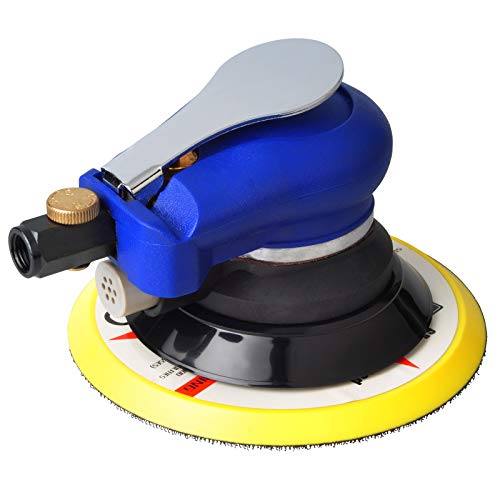
- 6-inch hook-and-loop sanding face
- Built-in regulator for adjustable speed
- Includes 1/4 NPT connector and wrench
Best For: Air-powered sanding and polishing in equipped garages
Best Accessory Bundle
ZFE 5/6-Inch Pneumatic Palm Sander

- Includes 5- and 6-inch backing plates
- Comes with abrasives and polishing accessories
- Lightweight design with dust bag and tube
Best For: DIY users wanting a versatile pneumatic starter kit
Best Corded Value
DEWALT Variable-Speed 5-Inch Sander

- 3-amp motor with 8,000–12,000 OPM range
- Counterweight design helps reduce vibration
- Dust bag and dust-collector compatibility
Best For: Continuous sanding in a corded garage workshop
Heavy-Duty Air Choice
AirVANTAGE Industrial Random Orbital Sander

- 0.28 HP motor with 12,000 RPM speed
- Low-profile, non-vacuum design
- Comfort Grips help reduce hand fatigue
Best For: Heavy-duty pneumatic automotive sanding
Versatile Corded Pick
SKIL 5-Inch Random Orbital Sander

- 2.8-amp motor reaches 13,000 OPM
- Variable speed control for different materials
- Cyclonic dust box simplifies cleanup
Best For: Corded DIY sanding and surface preparation
Professional Pneumatic Pick
3M 20317 Random Orbital Sander
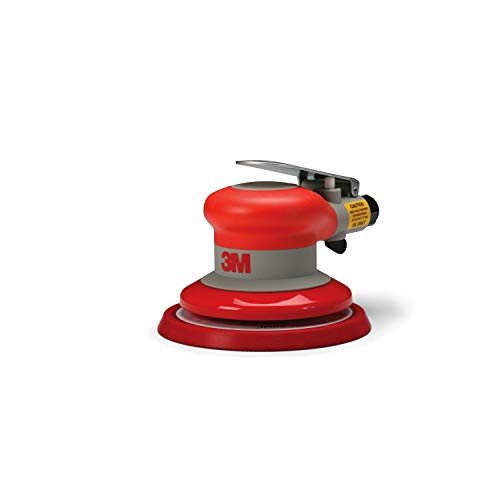
- 0.28 HP motor for sanding and finishing
- Precision-balanced for smooth operation
- Durable aluminum and composite construction
Best For: Professional pneumatic sanding and finishing
Versatile Spot-Work Kit
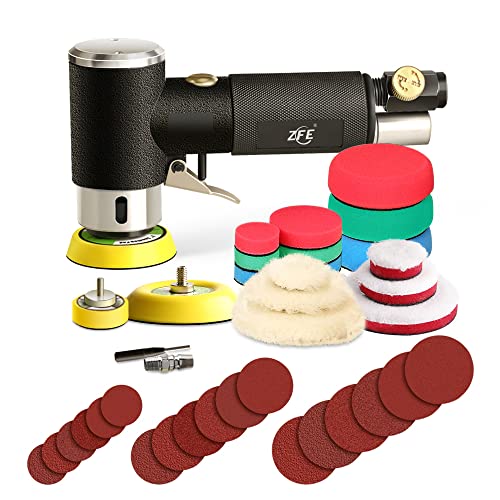
- Three backing-plate sizes for focused work
- Includes pads, sandpapers, and accessories
- 15,000 RPM pneumatic operation
Best For: Small automotive repairs, rust spots, and detailing
Professional Palm-Sanding Pick
3M Elite 3-Inch Pneumatic Sander

- Durable aluminum and composite construction
- Integrated wrist support for added comfort
- Includes a 3M Stikit disc pad
Best For: Industrial users sanding metal and composites
Large-Panel Comfort Choice
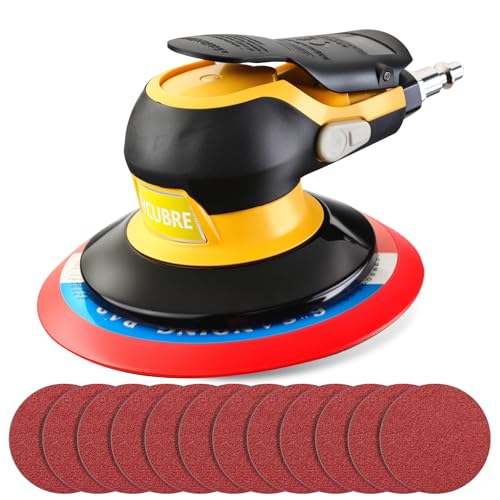
- Supports 5- and 6-inch sanding pads
- Adjustable speed and up to 13,000 RPM
- Noise-reduction, lightweight ergonomic design
Best For: Auto-body panels and extended sanding sessions
Best Cordless Pick – DEWALT 20V MAX Orbital Sander
DEWALT 20V MAX Orbital Sander, Tool Only (DCW210B) | Brushless motor, dust collection
Check Price On AmazonFor automotive work where cord-free mobility matters, the DEWALT DCW210B is a practical choice among orbital sanders for automotive work. Its brushless motor, variable 8,000–12,000 OPM control, low-profile design, and 5-inch hook-and-loop pad suit controlled sanding across vehicle surfaces. The tool is sold without a battery or charger.
Best For: Mobile automotive sanding when you already own DEWALT 20V MAX batteries.
Pros:
- Brushless motor balances runtime and efficiency.
- Variable speed from 8,000 to 12,000 OPM helps match the application.
- Low-profile body and textured rubber grip support controlled, comfortable sanding.
- Dust bag and compatible dust-collection options help manage debris.
Cons:
- Tool-only package requires a compatible battery and charger.
- Dust collectors and the universal hose connector are sold separately.
The DCW210B stands out for cordless convenience and close surface access. It is most compelling for DEWALT users who want a portable automotive sanding setup rather than a complete, ready-to-run kit.
Best 6-Inch Air Option – PROSHI 6-Inch Random Orbit Air Sander
The PROSHI 6-inch pneumatic sander is a straightforward option for automotive users with shop-air equipment. Its built-in regulator lets you adjust working speed for sanding, polishing, or waxing, while the hook-and-loop face supports quick abrasive changes.
Best For: Air-equipped garages handling sanding, polishing, and waxing on larger surfaces.
Pros:
- 6-inch pad covers more area per pass than a 5-inch sander.
- Built-in regulator allows adjustable working speed.
- Suitable for metal, plastic, rubber, stone, and other materials.
- Includes a 1/4 NPT quick connector and wrench.
Cons:
- Requires a compressed-air setup.
- Maximum speed is listed at 10,000 rpm, below the 12,000 OPM maximum of the DEWALT models.
Choose the PROSHI when a 6-inch footprint and pneumatic operation fit your workspace. The included connector helps with setup, but the product notes do not specify an onboard dust-collection system.
Best Accessory Bundle – ZFE 5/6-Inch Pneumatic Palm Sander
For shoppers wanting more than the bare tool, this ZFE pneumatic palm sander includes 5- and 6-inch backing plates, abrasives, polishing pads, and cleaning accessories. Its 10,000-rpm integrated regulator and compact 1.5-pound design make it suited to varied automotive sanding and paint-surface work.
Best For: DIY automotive projects that need sanding, polishing, and starter accessories in one package.
Pros:
- Includes both 5-inch and 6-inch backing plates.
- Bundle provides 24 sandpapers, polishing pads, microfiber cloths, and cleaning accessories.
- Lightweight palm design is intended for comfortable handling.
- Includes a dust bag and 1-meter vacuum tube.
Cons:
- Requires pneumatic power.
- Maximum speed is listed at 10,000 rpm.
- The accessory-heavy bundle may be more than needed for buyers who already have abrasives.
The ZFE is a flexible starter package for users who want to tackle rough grinding, paint work, polishing, and metal cleanup. Its two pad sizes and included supplies add versatility, though an air source remains necessary.
Best Corded Value – DEWALT Variable-Speed 5-Inch Sander
DEWALT Random Orbit Sander, Variable Speed, 5-Inch (DWE6423), Power Source Corded Electric
Check Price On AmazonThe corded DEWALT DWE6423 offers consistent power for shop-based automotive sanding. Its 3-amp motor provides 8,000–12,000 OPM variable speed, while the separate counterweight, shorter height, rubber overmold, and dust-sealed switch support controlled and comfortable use.
Best For: Garage users who prefer continuous corded power and do not need cordless mobility.
Pros:
- 3-amp motor delivers variable speed from 8,000 to 12,000 OPM.
- Separate counterweight design helps reduce vibration.
- Shorter body helps bring the operator closer to the workpiece.
- Dust bag and compatible DEWALT dust collectors support debris management.
Cons:
- Corded design limits mobility compared with the cordless DEWALT.
- Dust collectors and the universal hose connector are sold separately.
- At 3.4 pounds, it is heavier than the listed cordless model.
The DWE6423 is a sensible workshop choice when uninterrupted corded operation matters more than portability. Its variable speed and vibration-reduction features make it a well-rounded option for repeat sanding tasks.
Heavy-Duty Air Choice – AirVANTAGE Industrial Random Orbital Sander
For demanding automotive work, the AirVANTAGE is an air-powered orbital sander built for extended operation and aggressive material removal. Its 12,000 RPM motor, low-profile design, and 3/16-inch orbit emphasize control while sanding panels and other surfaces.
Best For: Heavy-duty automotive sanding where pneumatic power, maneuverability, and a more aggressive cut are priorities.
Pros:
- Industrial-grade construction is designed for long operating hours and heavy-duty use.
- Powerful 0.28 HP motor reaches 12,000 RPM.
- Low-profile, non-vacuum design supports control and maneuverability.
- Comfort Grips help absorb vibration and reduce hand fatigue.
Cons:
- Requires an air supply rather than operating from a standard electrical outlet.
- Non-vacuum configuration does not provide integrated dust collection.
- The 3/16-inch orbit favors aggressive cutting, which may be less suited to delicate finishing.
This is a strong fit for users with suitable compressed-air equipment who want a low-profile pneumatic sander for sustained automotive prep work. Its aggressive orbit and industrial construction are more focused on productivity than all-purpose convenience.
Versatile Corded Pick – SKIL 5-Inch Random Orbital Sander
SKIL 5” Random Orbital Sander with Cyclonic Dust Box & 3pc Sanding Sheet - SR211601, Multicolor
Check Price On AmazonThe SKIL SR211601 is a corded option for orbital sanders for automotive work when variable speed, compact handling, and onboard dust collection matter. Its 2.8-amp motor reaches 13,000 orbits per minute and includes a cyclone-style dust box for simpler cleanup.
Best For: DIY automotive sanding and general surface preparation where corded convenience and adjustable control are useful.
Pros:
- 2.8-amp motor delivers up to 13,000 orbits per minute.
- Variable speed control helps adapt power to different materials.
- Cyclonic dust box is transparent and easy to empty.
- Compact design, soft rubber grip, and reduced vibration support longer sessions.
Cons:
- Corded 120-volt operation limits mobility compared with cordless or pneumatic tools.
- Included sanding sheets are limited to three pieces.
- Its dust box is a collection container rather than a vacuum-based extraction system.
For garage users who want an approachable electric sander, the SKIL combines speed control and a compact form with basic dust management. It is a practical general-purpose choice, especially where access to a 120-volt outlet is convenient.
Professional Pneumatic Pick – 3M 20317 Random Orbital Sander
The 3M 20317 is a professional-oriented pneumatic option for orbital sanders for automotive work. Its 0.28 HP motor, precision-balanced operation, low-profile body, and included Stikit pad are designed for controlled sanding and finishing with adhesive-backed discs.
Best For: Professional or workshop users who need a durable air-powered sander for extended sanding and finishing applications.
Pros:
- 0.28 HP motor provides power for sanding and finishing.
- Precision-balanced motor supports smooth operation and control.
- Aluminum body and composite cover are designed for durability.
- Includes a 3M Stikit disc pad for adhesive-backed sanding discs.
Cons:
- Requires pneumatic equipment and is not powered electrically.
- Non-vacuum design does not include integrated dust extraction.
- Listed for industrial or occupational use rather than consumer sale or use.
The 3M stands out when smooth pneumatic operation and workshop durability take precedence over consumer-oriented features. Its Stikit pad also makes it particularly relevant for users already working within the 3M adhesive-disc system.
Versatile Spot-Work Kit – Mini 1/2/3-Inch Air Sander
For targeted automotive refinishing, this mini pneumatic tool is a flexible choice among orbital sanders for automotive work. It supports 1-, 2-, and 3-inch backing plates and includes polishing pads and sandpapers, making it suited to small repair areas, rust spots, and detailing tasks.
Best For: Spot sanding, rust removal, deburring, and automotive polishing where a compact tool and multiple pad sizes are useful.
Pros:
- Includes 15 buffing pads, 18 sandpapers, and three backing plates.
- 15,000 RPM operation with an eccentric double-rotation design for a smooth, uniform polishing effect.
- Compact 2.3-pound design intended for focused sanding and detailing work.
Cons:
- Requires an air supply rather than operating independently as an electric sander.
- Its small disc sizes are better suited to spot work than large panels.
This is a practical all-in-one option for smaller automotive jobs. Its included accessories add versatility, while the compact format helps with controlled work in tight areas.
Professional Palm-Sanding Pick – 3M Elite 3-Inch Pneumatic Sander
The 3M Elite 28494 is a compact pneumatic option for orbital sanders for automotive work, particularly when low vibration, wrist support, and adhesive-disc convenience matter. Its 3-inch pad and 3/16-inch orbit are suited to controlled sanding on metal and composite surfaces.
Best For: Professional or industrial users who want a durable, ergonomic 3-inch palm sander for repeated pneumatic sanding.
Pros:
- Aluminum body and composite cover are designed to reduce housing damage and downtime.
- Integrated wrist support improves comfort and leverage during use.
- Includes a 3M Stikit disc pad for adhesive-backed sanding discs.
- Air-powered design supports extended continual use.
Cons:
- Listed for industrial/occupational use only and not for consumer sale or use.
- Its 10,000 RPM speed is lower than some compact air sanders in this roundup.
Choose this model when ergonomics and build durability take priority over included accessories or maximum speed. The 3-inch format offers control for smaller sanding areas, while the Stikit pad simplifies disc attachment.
Large-Panel Comfort Choice – Low-Noise 6-Inch DA Sander
This 6-inch DA sander is a strong fit for orbital sanders for automotive work when you need broader coverage and adjustable control. Its lightweight design, 5 mm eccentric orbit, and noise-reduction technology are aimed at auto-body tasks and longer sanding sessions.
Best For: Auto-body panels and general DIY sanding where a 5- or 6-inch pad, adjustable speed, and reduced operating noise are helpful.
Pros:
- 5- and 6-inch pad compatibility covers larger sanding areas than mini models.
- Adjustable speed switch helps adapt sanding to different materials.
- Runs at up to 13,000 RPM and includes noise-reduction technology.
- Lightweight ergonomic design helps reduce fatigue during extended use.
Cons:
- Recommended for use with a 15-gallon-or-larger air compressor.
- Only the DA sander is listed as an included component, with no accessory kit specified.
For bodywork covering broader surfaces, this model offers a more productive pad size than compact spot sanders. Make sure your compressor meets the stated recommendation before choosing it for regular shop use.
How We Picked the Best Orbital Sanders for Automotive Work
We focused on the specifications that matter most in bodywork and refinishing: orbit size, pad diameter, power source, speed control, vibration, air requirements, dust collection, and overall versatility. The selection includes tools for stripping and feathering panels, smoothing filler and primer, detail sanding, and polishing-related tasks. We also considered whether each format suits a home garage, mobile repair setup, or high-volume professional shop.
Because pneumatic sanders can perform differently depending on compressor output and air-line setup, buyers should treat stated air requirements as a starting point and verify compatibility before purchasing.
Quick Comparison
| Type | Best suited for | Main advantage | Watch out for |
|---|---|---|---|
| Cordless | Mobile repairs and light-to-medium prep | No hose or outlet required | Battery runtime and added weight |
| Corded electric | Garage work and consistent sessions | Simple, steady power | Power cord management |
| 5- or 6-inch pneumatic | Panel sanding and professional bodywork | Strong continuous performance | Needs a capable compressor |
| Mini pneumatic | Edges, tight areas, and spot repairs | Compact control | Smaller coverage area |
Key Buying Factors for Automotive Sanders
Orbit Size and Pad Diameter
A 5- or 6-inch sander covers panels efficiently, while a smaller 1- to 3-inch tool is easier to control around edges, contours, and localized repairs. A larger orbit generally removes material faster; a smaller orbit is often preferable for final smoothing.
Power Source and Air Demand
Cordless models are convenient where portability matters, and corded tools avoid battery changes during longer jobs. Pneumatic models are common in professional shops, but they require an air compressor with enough continuous CFM at the rated pressure. Undersized air systems can cause speed loss and inconsistent results.
Speed, Vibration, and Control
Variable speed helps you adapt to paint removal, filler shaping, primer leveling, and finish sanding. Low vibration and a comfortable palm grip reduce fatigue and make it easier to maintain even pressure. Let the abrasive do the work rather than forcing the tool into the panel.
Dust Collection and Abrasives
For electric sanders, a usable dust box or vacuum connection can improve visibility and reduce cleanup. Non-vacuum pneumatic models may need a separate extraction strategy and appropriate respiratory protection. Confirm the backing-pad diameter, hole pattern, attachment style, and compatible grit system before buying.
Who Should Buy Which Orbital Sanders for Automotive Work?
Choose a cordless sander if portability and quick spot repairs matter more than maximum runtime. A corded electric model is a practical choice for a home garage with reliable power and occasional projects. For frequent panel work, a 5- or 6-inch pneumatic sander is usually the better fit when your compressor can sustain it. Select a mini pneumatic model for tight areas, trim, edges, and detail correction rather than as your only full-panel tool.
Whichever format you choose, pair it with quality automotive abrasives, use the correct pressure and pad, and wear eye, hearing, and respiratory protection. For most buyers, the best orbital sander is the one that matches both the job’s surface area and the equipment already available in the shop.