
The best reciprocating saws for home mechanics make quick work of exhaust repairs, pipe cutting, demolition, pruning, and other tough jobs around the garage. The right model depends on whether you prioritize portability, cutting power, battery compatibility, or low upfront cost.
We’ve gathered 10 cordless and corded options spanning major tool platforms, budget-friendly kits, and high-output saws. Use the guide below to match the saw’s power, stroke, runtime, and included accessories to your typical projects.
Best 10 Reciprocating Saws for Home Mechanics Picks for 2026
Best Compact Cordless Pick
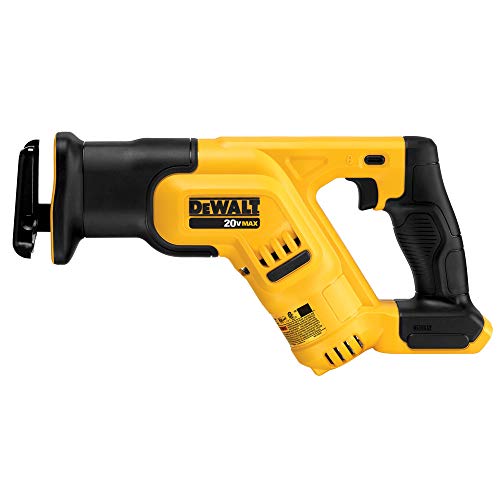
- 14-inch compact design for confined spaces
- Four-position clamp supports flush cuts
- Bare tool with variable speed and LED
Best For: DEWALT 20V MAX users working in tight or dim areas
Best Starter Kit Pick

- Includes battery, charger, and blade
- Tool-free blade changes
- Pivoting shoe and variable-speed trigger
Best For: Occasional DIY users wanting a ready-to-use cordless kit
Best Heavy-Duty Corded Pick
DEWALT 12-Amp Reciprocating Saw

- 12-amp motor for heavy-duty applications
- Four-position clamp supports flush cutting
- Corded power with variable speed to 2,900 SPM
Best For: Demanding renovation and cutting tasks near AC power
Best Lightweight Pick
BLACK+DECKER 20V MAX Cordless Reciprocating Saw
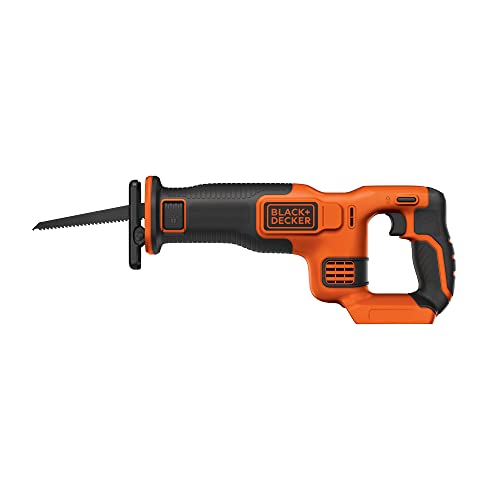
- Compact 4-pound cordless design
- Variable speed up to 3,000 spm
- Battery not included
Best For: Light-to-medium home repairs and tight-space cutting
Best Corded Value
Skil 7.5-Amp Variable Speed Reciprocating Saw
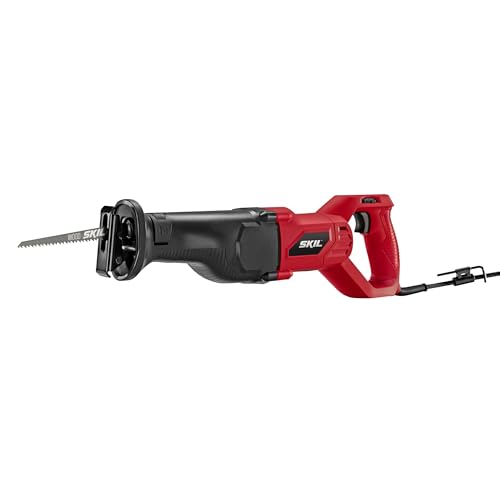
- Powerful 7.5-amp corded motor
- Metal gear housing for ruggedness
- Counterbalance and pivoting foot
Best For: Workshop cutting with steady access to an outlet
Best Ready-to-Use Kit
SEESII Cordless Reciprocating Saw Kit

- Two 4.0Ah batteries and fast charger
- Brushless motor up to 3,500 rpm
- Six blades plus safety accessories
Best For: New users wanting a complete cordless cutting kit
Best Platform Pick
RYOBI ONE+ 18V Reciprocating Saw

- 3,400 SPM variable-speed operation
- Lightweight 3.8-pound bare tool
- Compatible with the Ryobi ONE+ 18V platform
Best For: Ryobi owners needing a compact home-mechanic saw
Best Complete Kit
SOARFLY 21V Brushless Reciprocating Saw

- Brushless motor rated to 3,500 SPM
- Two 4.0Ah batteries and eight blades included
- Case, charger, goggles, and gloves included
Best For: First-time buyers wanting a fully equipped cordless kit
Best Compact Cordless Pick – Compact DEWALT 20V MAX Saw
For home mechanics seeking reciprocating saws for home mechanics, the DEWALT DCS387B emphasizes maneuverability. Its 14-inch length, compact build, variable-speed trigger, and LED light make it practical for cuts in confined or dim work areas. Note that this listing is a bare tool, so a compatible battery is required.
Best For: Battery-platform users who need a compact saw for tight spaces, flush cuts, and controlled cutting.
Pros:
- Compact 14-inch design fits between studs and in confined areas.
- Four-position blade clamp supports flush cutting and tool-free blade changes.
- Variable speed from 0–2,900 SPM, pivoting shoe, and LED improve control and visibility.
Cons:
- Bare-tool configuration does not include a battery or charger.
- Its listed surface recommendation is wood, so blade selection matters for other materials.
The DCS387B is a sensible choice when access and portability matter more than having a complete starter kit. Existing DEWALT 20V MAX owners can get the most value from its battery compatibility.
Best Corded Versatility Pick – GALAX PRO 6.0-Amp Reciprocating Saw
The GALAX PRO is a practical corded option for home mechanics who want steady power without managing batteries. Its 6.0-amp motor reaches up to 3,000 SPM and is specified for wood, metal, PVC, and cast iron, making it suitable for varied repair and renovation tasks.
Best For: DIY users who need an included-blade kit for plumbing repairs, demolition, and mixed-material cutting near an outlet.
Pros:
- 6.0-amp motor delivers up to 3,000 SPM for consistent corded cutting.
- Supplied with two wood blades and three metal blades.
- Tool-free chuck, pivoting shoe, soft grip, and lock-on button support easier operation.
- Heat-dissipation and cooldown features are designed for extended use.
Cons:
- Corded operation limits mobility and requires access to AC power.
- At 17.32 inches long, it is less compact than the shortest cordless options.
For a home workshop, the GALAX PRO offers broad material coverage and useful accessories in one package. Its cord is the main trade-off, but it avoids battery downtime during longer jobs.
Best Starter Kit Pick – BLACK+DECKER 20V MAX Saw Kit
The BLACK+DECKER BDCR20C is a convenient entry point for home mechanics comparing reciprocating saws for home mechanics because it includes the saw, a 20V MAX lithium-ion battery, charger, and blade. Its cordless format, pivoting shoe, and variable-speed trigger suit general cutting and repair work without requiring a separate battery purchase.
Best For: DIY users who want a ready-to-use cordless kit for basic wood-cutting and household projects.
Pros:
- Includes a 20V MAX battery and charger.
- Tool-free blade changes simplify setup.
- Pivoting shoe and variable-speed trigger support cutting control.
Cons:
- Only one reciprocating blade is listed as included.
- The supplied details recommend it for wood rather than specifying broad multi-material capability.
- International versions may have different fit, labeling, instructions, or terms.
This kit makes the most sense when convenience and a complete cordless setup are priorities. It is a straightforward choice for occasional DIY work, particularly where wood cutting is the main task.
Best Heavy-Duty Corded Pick – DEWALT 12-Amp Reciprocating Saw
For demanding jobs, the DEWALT DWE305 brings a 12-amp motor and 1-1/8-inch stroke to the reciprocating saws for home mechanics category. Its corded design provides continuous AC power, while the four-position clamp and variable-speed trigger add flexibility for flush cuts and controlled material removal.
Best For: Home mechanics and renovators handling heavier cutting tasks where maximum portability is less important than corded power.
Pros:
- 12-amp motor is designed for heavy-duty applications.
- Four-position blade clamp enables flush cutting and added versatility.
- Lever-action clamp allows keyless blade changes.
- Variable speed up to 2,900 SPM and a 1-1/8-inch stroke support fast cutting.
Cons:
- At 8 pounds, it is substantially heavier than compact cordless models.
- Corded operation requires an AC outlet and limits reach.
- Only the saw and manual are listed as included.
The DWE305 is a strong fit for users who regularly expect demanding work and do not need cordless mobility. Its weight and cord are worthwhile trade-offs when sustained power and cutting versatility come first.
Best Lightweight Pick – BLACK+DECKER 20V MAX Cordless Reciprocating Saw
BLACK+DECKER 20V MAX* POWERCONNECT 7/8 in. Cordless Reciprocating Saw (BDCR20B)
Check Price On AmazonFor home mechanics who need portability, the BLACK+DECKER BDCR20B is a compact cordless option for reciprocating saws for home mechanics. Its variable-speed trigger, pivoting shoe, and tool-free blade change make it practical for cutting wood, nails, drywall, plastic, and other common materials. The battery is not included.
Best For: Light-to-medium home repairs where maneuverability and cordless convenience matter.
Pros:
- Compact, lightweight 4-pound design is easy to control.
- Variable-speed trigger delivers up to 3,000 strokes per minute.
- Tool-free blade changes, pivoting shoe, and electric brake improve convenience and control.
Cons:
- Battery and charger are not included.
- Less suited to users who need a corded tool for uninterrupted heavy-duty work.
This is a sensible choice for occasional cutting and teardown tasks, especially if you already own compatible 20V MAX POWERCONNECT batteries. Its approachable size helps reduce fatigue during overhead or tight-space work.
Best Corded Value – Skil 7.5-Amp Variable Speed Reciprocating Saw
The Skil 9206-02 provides steady corded power for home mechanics who prefer not to manage batteries. Its 7.5-amp motor, variable-speed operation, metal gear housing, and pivoting foot make it a capable option among reciprocating saws for home mechanics tackling demanding cutting jobs.
Best For: Garage and workshop users who have reliable access to a power outlet and want consistent cutting power.
Pros:
- 7.5-amp motor provides ample power for cutting tasks.
- Heavy-duty metal gear housing supports durability.
- Counterbalance helps control vibration, while the pivoting foot adds stability.
Cons:
- At 7.1 pounds, it is heavier than the cordless alternatives here.
- Corded operation limits mobility around a vehicle or job site.
- Only a wood-cutting blade is listed as included.
Choose this model when uninterrupted runtime matters more than portability. The combination of corded power, vibration control, and a stable pivoting foot suits sustained workshop use.
Best Ready-to-Use Kit – SEESII Cordless Reciprocating Saw Kit
The SEESII cordless kit is a convenient package for home mechanics starting from scratch. It includes two 4.0Ah batteries, a fast charger, six blades, and safety accessories, while its brushless motor, LED work light, and tool-free blade change add practical features to the reciprocating saws for home mechanics category.
Best For: Buyers who want a complete cordless setup for cutting wood, plastic, and metal.
Pros:
- Includes two 4.0Ah batteries, fast charger, six blades, storage box, gloves, and safety glasses.
- Brushless motor offers variable speed up to 3,500 rpm.
- LED work light, lock button, and tool-free blade changes improve usability.
Cons:
- The listed weight is 3.48 kg, so it may not feel as light as the marketing description suggests.
- Its larger accessory kit may be more than occasional users need.
This kit stands out for convenience rather than bare-tool simplicity. With batteries, blades, and a charger included, it can get a new user cutting quickly across several materials and work areas.
Best Platform Pick – RYOBI ONE+ 18V Reciprocating Saw
For home mechanics already using Ryobi’s battery platform, this compact 18V reciprocating saw is a practical choice for general cutting work. Its variable-speed trigger and 3,400 SPM output provide useful control for projects involving wood, metal, plastic, and other surfaces.
Best For: Home mechanics who already own compatible Ryobi ONE+ batteries and want a lightweight bare tool.
Pros:
- Variable speed up to 3,400 strokes per minute.
- 1-inch stroke length supports general-purpose cutting.
- Relatively light 3.8-pound tool-only design.
- Uses the widely available 18V Ryobi ONE+ battery system.
Cons:
- Battery and charger are not included.
- Only one blade is listed among the included components.
- Warranty coverage is listed as 30 days.
The PCL515B makes the most sense when you already have Ryobi batteries in the workshop. Buyers starting from scratch should factor in the additional battery and charger cost.
Best Complete Kit – SOARFLY 21V Brushless Reciprocating Saw
This SOARFLY model is aimed at home mechanics who want a ready-to-use cordless kit rather than a bare tool. It combines a brushless motor rated at up to 3,500 SPM with two 21V 4.0Ah batteries, multiple blades, and carrying accessories for varied cutting jobs.
Best For: Buyers who want batteries, blades, safety gear, and a case included in one package.
Pros:
- Brushless motor delivers up to 3,500 strokes per minute.
- Includes two 21V 4.0Ah lithium-ion batteries and a charger.
- Comes with eight blades for wood, metal, and other materials.
- Includes safety goggles, gloves, and a portable carrying case.
Cons:
- Listed weight is 4.27 kg, considerably heavier than compact bare-tool options.
- Battery platform compatibility with other tools is not specified.
- Maximum cutting depths vary by material and may limit heavier applications.
Its extensive accessory package gives this saw strong value for a first-time buyer. The heavier listed weight is worth considering if you expect prolonged overhead or tight-space work.
Best Budget Starter Kit – 20V Cordless Reciprocating Saw
For home mechanics seeking cordless flexibility at a straightforward entry point, this 20V reciprocating saw offers variable speed from 0 to 3,500 SPM. It is designed for cutting wood, metal, PVC pipe, trees, and other materials, with tool-free blade changes for convenient project work.
Best For: DIY users who want a cordless saw with batteries, a charger, and basic blades included.
Pros:
- 0–3,500 SPM variable-speed operation.
- Cordless design supports work away from outlets.
- Tool-free blade change simplifies setup between materials.
- Includes two batteries, a charger, and four blades.
Cons:
- The product details are inconsistent about battery quantity: the listing says two batteries, while specifications mention one included 9V battery.
- Only four blades are included.
- Battery capacity and runtime are not specified.
This is a flexible starter option for occasional home projects, especially when included batteries matter. Verify the actual battery configuration before purchasing because the supplied specifications conflict.
How We Picked These Reciprocating Saws for Home Mechanics
We focused on practical features that matter in a home garage or workshop: power source, motor output, variable-speed control, stroke length, blade-changing convenience, ergonomics, and included accessories. The selection includes compact cordless tools for work in tight spaces, corded models for sustained cutting, and complete kits for shoppers who need batteries and a charger.
Because these tools serve different jobs, specifications should be viewed in context. A high SPM rating can improve speed through suitable materials, while a longer stroke may remove more material per cycle. Neither metric alone determines overall performance.
Quick Comparison
- Best for cordless platform owners: DEWALT, BLACK+DECKER, and RYOBI tool-only models can be economical if you already own compatible batteries.
- Best for continuous shop work: Corded DEWALT, Skil, and GALAX PRO saws avoid battery swaps and charging interruptions.
- Best for a ready-to-use kit: The SEESII and other bundled cordless options include batteries, chargers, and blades.
- Best for tight spaces: Compact designs such as the DEWALT DCS387B are easier to maneuver around vehicle components.
Key Buying Factors for Reciprocating Saws for Home Mechanics
Corded or Cordless Power
Cordless saws are easier to position under a vehicle or away from an outlet, but runtime depends on battery capacity, material, and cutting pressure. Corded models are a strong choice for long demolition sessions or a permanent workshop where an extension cord is practical.
Speed and Control
Variable-speed triggers help you start cuts cleanly, reduce vibration, and adapt to wood, plastic, thin metal, or thicker stock. High maximum SPM can be useful, but controlled low-speed operation is often more important for automotive work.
Stroke Length and Blade Compatibility
A longer stroke can cut aggressively, while a shorter stroke may feel more manageable in confined areas. Check that the tool uses standard reciprocating-saw blades and look for a tool-free clamp so blades can be changed quickly. Use blades rated for the material being cut.
Comfort, Safety, and Included Equipment
Look for a balanced grip, a secure shoe, manageable vibration, and an accessible trigger. A kit with batteries, charger, and multiple blades may offer better value than a cheaper bare tool, especially for first-time buyers. Always wear eye and hearing protection and secure the workpiece before cutting.
Who Should Buy Which Reciprocating Saws for Home Mechanics?
Choose a compact cordless DEWALT if you work around vehicles frequently and already use the DEWALT 20V MAX system. Choose a RYOBI or BLACK+DECKER model when you want an affordable addition to an existing battery platform.
Choose a corded DEWALT or Skil for frequent garage work where maximum sustained power matters more than portability. Choose GALAX PRO if you want a basic corded option at a budget-oriented price.
Choose a bundled cordless saw from SEESII or one of the included battery-and-charger kits if you do not own compatible batteries. These packages are convenient for occasional repairs, light demolition, and general home maintenance, though established tool platforms may offer broader long-term accessory support.