
Finding the right automotive oscilloscope can make difficult electrical faults easier to see, measure, and verify. The best choice depends on the signals you need to test, your preferred workflow, and how much diagnostic capability you want beyond a basic multimeter.
This roundup compares 10 options ranging from compact handheld instruments to higher-channel PC-based tools, with practical guidance for choosing a scope that fits your garage and skill level.
Best 10 Automotive Oscilloscopes for Home Mechanics Picks for 2026
Versatile Handheld Pick
3-in-1 Automotive Oscilloscope

- Dual-channel scope with multimeter and signal generator
- Up to 50MHz bandwidth in high-speed mode
- Portable battery-powered design with included leads
Best For: Home mechanics wanting multiple test tools in one handheld unit
Automotive Diagnostic Kit
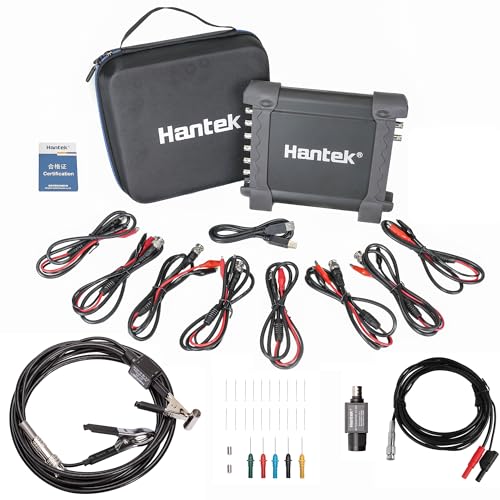
- More than 80 automotive diagnostic functions
- Eight channels with 20 automatic measurements
- Windows PC software and signal-generation support
Best For: PC-based vehicle diagnostics and multi-signal testing
Large Touchscreen Choice

- Seven-inch touchscreen with two channels
- 1GSa/s sampling and 100MHz bandwidth
- Stores screenshots and waveform data onboard
Best For: Users wanting a readable standalone scope with waveform-analysis tools
PC Diagnostic Workhorse

- Four channels with 70MHz bandwidth
- More than 80 automotive diagnostic presets
- USB device combines scope, meter, and generator
Best For: Windows users performing detailed multi-channel vehicle diagnostics
Best All-in-One Pick
FNIRSI 2C53P 3-in-1 Oscilloscope

- 50 MHz bandwidth and 250 MS/s sampling
- Built-in multimeter and DDS generator
- FFT, X-Y mode, and touchscreen controls
Best For: Home mechanics wanting one versatile diagnostic tool
Best Budget Portable Pick
FNIRSI DSO152 Handheld Oscilloscope

- 200 kHz bandwidth and 2.5 MS/s sampling
- Lightweight 10.2-ounce handheld design
- One-key AUTO and three trigger modes
Best For: DIY users handling basic waveform checks
Best Equipped Field Kit
Upgraded FNIRSI 2C53P Oscilloscope

- Two-channel 50 MHz scope with 250 MS/s sampling
- 19,999-count multimeter and 10 MHz DDS generator
- Case, two probes, FFT, and Lissajous display
Best For: Portable automotive testing with a broad toolset
Best Large-Screen Pick
FNIRSI 1013D 100MHz Oscilloscope

- Dual-channel 100MHz bandwidth and 1GSa/s sampling
- 7-inch touchscreen with cursor measurements
- Stores up to 1,000 screenshots and waveform sets
Best For: Home mechanics wanting a large display and extensive waveform storage
Best All-in-One Meter
BSIDE O9 Oscilloscope Multimeter
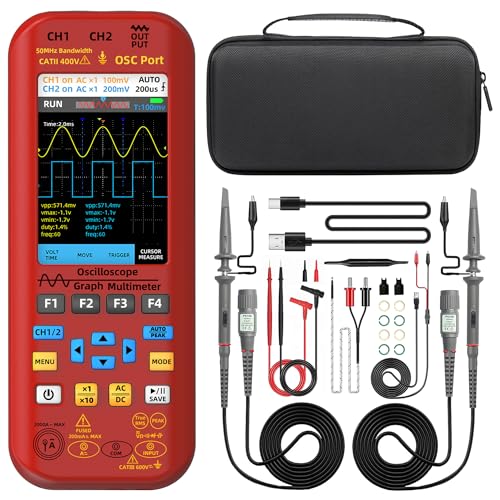
- Two-channel 50MHz scope with 250MSa/s sampling
- 20,000-count multimeter with temperature and capacitance functions
- DDS generator and flexible AC measurement support
Best For: DIY users seeking one handheld tool for scope and multimeter work
Best Compact Budget Option

- Lightweight 10MHz handheld oscilloscope
- One-key AUTO setup and waveform saving
- DDS generator outputs 13 waveform types up to 50kHz
Best For: Beginners needing a portable scope for basic diagnostics
Versatile Handheld Pick – 3-in-1 Automotive Oscilloscope
For home mechanics who want automotive oscilloscopes for home mechanics with several testing functions in one portable tool, the ZT-703S combines a dual-channel oscilloscope, 25,000-count multimeter, and signal generator. Its automatic waveform recognition and switchable speed modes make it adaptable for varied bench and vehicle-electronics work.
Best For: Home mechanics needing a portable all-in-one tester for waveform, electrical, and signal-generation tasks.
Pros:
- Combines dual-channel oscilloscope, multimeter, and signal generator functions.
- High-speed mode reaches 280MSa/s and up to 50MHz bandwidth.
- 25,000-count multimeter measures resistance, capacitance, continuity, diodes, and current.
- Battery-powered handheld design includes probes, test leads, and a carrying bag.
Cons:
- High-speed mode uses more power.
- Multiple functions make reading the manual important for setup and troubleshooting.
This is a strong choice when space and portability matter more than a large display. The integrated meter and signal generator broaden its usefulness beyond basic waveform viewing.
Automotive Diagnostic Kit – Hantek 1008C 8-Channel Scope
The Hantek 1008C+ kit is aimed at mechanics who want automotive oscilloscopes for home mechanics with dedicated vehicle-diagnostic features. Its eight channels, more than 80 automotive diagnostic functions, and included accessories support tests involving ignition, sensors, buses, actuators, starting, and charging.
Best For: PC-based automotive diagnostics and users who need multiple channels for vehicle-system testing.
Pros:
- Provides more than 80 automotive diagnostic functions.
- Eight analog channels support simultaneous signal monitoring.
- Includes a programmable signal generator for simulating crankshaft and camshaft signals.
- Offers 12-bit resolution, 20 automatic measurements, and USB 2.0 PC connectivity.
Cons:
- Requires a Windows PC and USB connection.
- Its virtual-scope format is less standalone than a handheld instrument.
This kit is especially compelling for a home garage with a Windows laptop and more advanced diagnostic goals. The included probes and automotive presets can reduce the need to assemble a separate testing setup.
Large Touchscreen Choice – FNIRSI 1013D Plus 100MHz
For mechanics who value a clear standalone display, the FNIRSI 1013D Plus is one of the more approachable automotive oscilloscopes for home mechanics. It pairs a seven-inch touchscreen with two channels, 1GSa/s sampling, 100MHz bandwidth, onboard storage, and waveform-analysis tools.
Best For: Home users who prefer touchscreen operation, a large display, and convenient waveform capture.
Pros:
- Seven-inch, 800 × 480 touchscreen supports gesture and cursor measurements.
- Two channels, 1GSa/s sampling rate, and 100MHz bandwidth provide broad measurement capability.
- Stores up to 1,000 screenshots and 1,000 waveform data sets.
- Includes Lissajous display, FFT viewing, and a 6,000mAh battery rated for four hours of use.
Cons:
- Two channels may be limiting for tests requiring more simultaneous inputs.
- The product weighs 2.31 pounds, making it less compact than smaller handheld units.
The large touchscreen and storage features make this a practical bench or garage instrument for reviewing signals without relying on a computer. Its built-in protection module is specified for continuous voltage up to 400V, but proper automotive measurement practices still matter.
PC Diagnostic Workhorse – Hantek 6074BE 4-Channel
Hantek 6074BE Digital Oscilloscope 70MHz 1GSa/s 4CH USB Virtual Oscilloscope Diagnostic Tool
Check Price On AmazonThe Hantek 6074BE suits home mechanics looking for automotive oscilloscopes for home mechanics that connect directly to a Windows computer. It combines a four-channel, 70MHz oscilloscope with automotive diagnostic presets, automatic measurements, a multimeter, and a waveform generator.
Best For: Windows-based users who want broad automotive test coverage and multiple instruments in one USB-connected device.
Pros:
- Four channels with 1GSa/s real-time sampling and 70MHz bandwidth.
- Preset diagnostics cover more than 80 ignition, sensor, engine, starting, and charging checks.
- Provides more than 20 automatic measurements, PASS/FAIL checking, waveform recording, and replay.
- Combines oscilloscope, multimeter, DMM, and waveform-generator functions.
Cons:
- Requires a Windows computer and USB connection.
- It is corded and does not function as a standalone battery-powered scope.
This model is a good fit for a garage already equipped with a compatible Windows laptop or desktop. Its preset automotive tests and recording features can make repeated diagnostic checks more organized.
Best All-in-One Pick – FNIRSI 2C53P 3-in-1 Oscilloscope
For home mechanics comparing automotive oscilloscopes for home mechanics, the FNIRSI 2C53P is a versatile choice when you want scope, multimeter, and signal-generator functions in one handheld instrument. Its 50 MHz bandwidth, 250 MS/s sampling rate, two channels, and automotive-friendly analysis features cover a broad range of diagnostic tasks.
Best For: Home mechanics who want one compact tool for waveform testing, electrical measurements, and signal generation.
Pros:
- Combines a two-channel oscilloscope, 19,999-count multimeter, and DDS generator.
- Provides 50 MHz bandwidth, 250 MS/s sampling, FFT analysis, and X-Y mode.
- Uses a 4.3-inch IPS touchscreen and a 4,000 mAh battery with about four hours of runtime.
Cons:
- The compact screen and handheld format may be less convenient for extended bench work.
- Its approximately four-hour battery life requires regular recharging during longer sessions.
The 2C53P stands out when flexibility matters more than having a dedicated bench oscilloscope. The built-in multimeter and signal generator can reduce the number of tools needed for troubleshooting, while one-key AUTO and waveform export simplify routine measurements.
Best Budget Portable Pick – FNIRSI DSO152 Handheld Oscilloscope
For straightforward automotive oscilloscopes for home mechanics, the FNIRSI DSO152 focuses on portability and simple waveform checks. Its 200 kHz bandwidth, 2.5 MS/s real-time sampling, automatic setup, and compact finished design make it approachable for basic maintenance and troubleshooting work.
Best For: DIY users who need a lightweight oscilloscope for basic automotive and electronics measurements.
Pros:
- Small 10.2-ounce design is easy to carry and use in tight work areas.
- One-key AUTO quickly configures parameters and displays measured waveforms.
- Includes full auto, normal, and single trigger modes plus a rechargeable battery.
Cons:
- The 200 kHz bandwidth and 2.5 MS/s sampling rate are more limited than higher-end models.
- Its 2.8-inch, 320×240 display provides less viewing space for complex waveforms.
- The included 1,000 mAh battery is rated for about four hours of continuous use.
The DSO152 is a practical entry point for occasional waveform checks rather than an advanced analysis platform. Its automatic controls and ready-to-use construction help reduce setup time, but users working with more demanding or higher-frequency signals may prefer a broader-bandwidth instrument.
Best Equipped Field Kit – Upgraded FNIRSI 2C53P Oscilloscope
Among automotive oscilloscopes for home mechanics, this upgraded FNIRSI 2C53P is suited to users who want a more complete portable test setup. It combines a two-channel, 50 MHz oscilloscope with a high-precision multimeter and 10 MHz DDS signal generator, while adding cursor measurements, Lissajous display, screenshot capability, and a carrying case.
Best For: DIY mechanics and field technicians who need broad testing functions in a portable kit.
Pros:
- Combines a 250 MS/s oscilloscope, 19,999-count multimeter, and DDS generator.
- Supports FFT, Lissajous display, cursor measurements, screenshots, and ±400 V input protection.
- Includes two P6100 probes, a rugged carrying case, and a 4,000 mAh battery rated for up to four hours.
Cons:
- The many functions may be more than needed for simple voltage or continuity checks.
- Continuous operation is limited to up to about four hours per charge.
This version is a strong choice when an organized, field-ready package matters. Its accessory bundle and expanded display tools add convenience for diagnosing and documenting signals, while the integrated multimeter and generator help reduce the need for separate equipment.
Best Large-Screen Pick – FNIRSI 1013D 100MHz Oscilloscope
For home mechanics who want a dedicated display and broad signal visibility, the FNIRSI 1013D is a capable choice among automotive oscilloscopes for home mechanics. Its dual channels, 100MHz bandwidth, 1GSa/s sampling rate, and 7-inch touchscreen make it practical for examining both periodic analog and aperiodic digital signals.
Best For: Home mechanics who prioritize a large touchscreen, dual-channel testing, and waveform storage.
Pros:
- 100MHz bandwidth across two channels with a 1GSa/s sampling rate.
- 7-inch, 800×480 touchscreen supports gesture and cursor measurements.
- Built-in protection tolerates continuous voltage up to 400V.
- Stores up to 1,000 screenshots and 1,000 waveform data sets.
Cons:
- Its 2.16-pound size is less compact than smaller handheld models.
- Battery life is listed at about four hours.
The 1013D stands out when screen space and detailed waveform handling matter more than minimum size. Lissajous and FFT views add useful analysis tools, while the rechargeable battery supports portable use.
Best All-in-One Meter – BSIDE O9 Oscilloscope Multimeter
The BSIDE O9 combines a two-channel oscilloscope with a 20,000-count multimeter, making it a versatile option for automotive oscilloscopes for home mechanics. Along with 50MHz bandwidth and 250MSa/s sampling, it measures voltage, current, resistance, capacitance, temperature, diodes, and continuity.
Best For: DIY users who want oscilloscope functions and broad multimeter coverage in one handheld tool.
Pros:
- Combines a two-channel, 50MHz oscilloscope with a 20,000-count multimeter.
- Includes a DDS generator with six listed waveform types and output up to 2MHz.
- Measures temperature, capacitance, diode function, continuity, and flexible AC current up to 2,000A.
- Features a 3.98-inch color display, 5,000mAh battery, and protective silicone case.
Cons:
- The flexible AC clamp wire is not included.
- Its 50MHz bandwidth is lower than the dedicated 100MHz model in this roundup.
Choose the O9 when reducing the number of tools on your bench is a priority. Its integrated meter functions and signal generator broaden its usefulness for automotive and general electrical troubleshooting, though clamp-current measurements require a separate compatible wire.
Best Compact Budget Option – FNIRSI DSO-510 Handheld Scope
The FNIRSI DSO-510 is a small, straightforward option for home mechanics who need basic signal viewing and waveform generation. With 10MHz bandwidth, 48MS/s sampling, one-key auto setup, and a 400V measurement rating, it offers a compact entry point among automotive oscilloscopes for home mechanics.
Best For: Beginners and DIY users who value portability, simple controls, and a built-in signal generator.
Pros:
- Compact 14.1-ounce design measures about 3.8 by 2.68 by 0.75 inches.
- One-key AUTO function helps optimize measurement parameters.
- DDS generator outputs 13 waveform types up to 50kHz.
- Supports waveform scaling, movement, image saving, and exporting.
Cons:
- 10MHz bandwidth and 48MS/s sampling are more limited than the other listed models.
- The 2.8-inch, 320×240 display provides less viewing area.
- Its battery is smaller at 1,000mAh.
The DSO-510 makes the most sense for occasional diagnostics and learning rather than demanding, high-bandwidth analysis. Its light weight, USB-C charging, automatic setup, and signal-generator functions keep it convenient for mobile work.
How We Picked These Automotive Oscilloscopes for Home Mechanics
We focused on features that matter during real vehicle diagnosis: bandwidth, sampling rate, channel count, waveform visibility, portability, input protection, and useful extras such as multimeter or signal-generator functions. We also considered whether each format suits garage work, including handheld models for testing at the vehicle and USB scopes for detailed analysis on a computer.
Because specifications and included accessories can vary by seller or bundle, verify the exact listing before buying. Pay particular attention to probes, software support, battery capacity, and stated input-voltage limits.
Quick Comparison
| Type | Best For | Main Advantage |
|---|---|---|
| Handheld combination scope | General DIY diagnostics | Portable testing plus multimeter functions |
| Two-channel touchscreen scope | Sensor and actuator checks | Clear standalone waveform viewing |
| Four- or eight-channel USB scope | Advanced troubleshooting | Comparing several signals at once |
| Entry-level compact scope | Basic signal checks | Low cost and simple operation |
Key Buying Factors for Automotive Oscilloscopes for Home Mechanics
Bandwidth and Sampling Rate
For common automotive work, a scope with roughly 20MHz to 100MHz bandwidth offers useful headroom for ignition, injector, sensor, communication, and actuator signals. Lower-bandwidth models can still help with slow sensor outputs and basic continuity or pulse checks, but they may not capture fast transients accurately. A higher sampling rate improves the detail visible in short events; compare the rate with the number of active channels, since some devices reduce performance when channels are used together.
Channels and Display Format
Two channels are often enough for comparing a sensor signal with a reference, power supply, or control pulse. Four or more channels are more helpful for timing relationships and complex fault tracing. A built-in screen is convenient beside the vehicle, while a USB model can provide a larger display, saved waveforms, and computer-based analysis.
Safety and Automotive Compatibility
Never assume a high bandwidth rating means the instrument is safe for every automotive circuit. Check maximum input voltage, grounding arrangements, probe ratings, and whether differential or isolated measurement is supported. Use suitable back-probing methods and avoid connecting a grounded USB oscilloscope where it could create an unintended short.
Useful Extras
Integrated multimeter functions reduce the number of tools needed for everyday checks. A signal generator can help test circuits, but it is not a substitute for a proper automotive simulator. Look for adjustable timebase and voltage controls, trigger modes, waveform storage, rechargeable power, and clear menus.
Who Should Buy Which Automotive Oscilloscopes for Home Mechanics?
Choose a compact entry-level handheld model if you mainly troubleshoot slow-changing sensor outputs, switch signals, and basic power issues. A two-channel touchscreen unit is a better all-around choice for home mechanics who want a self-contained scope with a readable display and room to compare signals.
Consider a handheld oscilloscope-multimeter combination if portability and fewer separate tools matter most. For advanced DIY diagnosis, a four- or eight-channel USB model is worth considering when you need to correlate multiple signals or save detailed captures on a computer. Match the scope’s protection and probes to the circuits you plan to test before making a final decision.