
Choosing the right fuel pump matters just as much as choosing the right tune. The best high flow fuel pumps for Ford Mustang models need to match your engine, year range, and power target without creating fitment headaches.
Below, we focus on proven options for daily drivers, street builds, and more serious performance setups so you can pick a pump that supports your Mustang with confidence.
Best 10 High Flow Fuel Pumps for Ford Mustang Picks for 2026
Stealth 340 In-Tank Upgrade
Aeromotive 83-97 Mustang Fuel Assembly
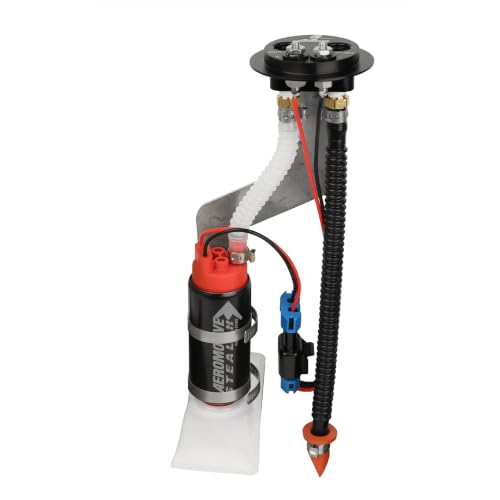
- 340 LPH in-tank pump for high-horsepower builds
- Billet hanger with ORB-06 outlet and return ports
- Designed for 83-97 Mustang EFI or carbureted systems
Best For: 83-97 Mustang builds needing a complete high-flow hanger assembly
Simple Pump Swap
Walbro GSS340 Mustang Fuel Pump

- Pump-only upgrade for Ford Mustang applications
- Tank-mount electric design with metal construction
- Gerotor style for a performance-oriented replacement
Best For: Drivers who need a pump-only Mustang replacement
450LPH E85 Upgrade
Hellcat-Style Mustang Replacement Pump

- 450LPH replacement for 1986-1997 Mustang applications
- Includes hoses, clamps, seal, and strainer extension
- Backed by a lifetime warranty
Best For: 1986-1997 Mustangs needing a high-capacity replacement pump
2005-2009 Direct Replacement
KAX Mustang Left-Side Fuel Pump

- Direct replacement for 2005-2009 Mustang 4.0/4.6L
- Includes pump, seal ring, and strainer
- Built for quieter operation and ethanol tolerance
Best For: 2005-2009 Mustang owners replacing the left-side fuel pump assembly
Classic High-Flow Upgrade
255LPH In-Tank Pump for 1985-1997 Mustang

- 255LPH test flow at 45-95 PSI
- Fits many 1985-1997 Mustang engine options
- Vehicle-specific tank-mount replacement pump
Best For: Older Mustang owners wanting a direct-fit high-flow replacement
Modern Fuel Module Choice
Torchbeam FG1557 Fuel Pump Assembly for 2011-2014 Mustang

- Direct replacement for 2011-2014 Mustang 3.7L/5.0L
- Includes seal ring, strainer, and instruction components
- Reinforced materials with a built-in turbo pump
Best For: Late-model Mustang owners needing a complete fuel pump module
Performance Replacement Pick
BBK 255 LPH Direct-Fit Mustang Pump Kit

- 255 LPH direct-fit in-tank pump kit
- Includes hardware, connectors, gaskets, and strainer
- OEM-style aftermarket performance replacement
Best For: Buyers wanting a performance-focused direct-fit pump kit
OE-Style Replacement Pump Assembly
Mustang 1985-1993 Fuel Pump Assembly

- Fits Mustang 1985-1993 2.3L/3.8L/5.0L
- OE-style replacement for quiet operation
- Tank-mount electric assembly with 1-year warranty
Best For: Classic Mustang owners wanting a direct-fit OE-style replacement
Mid-90s Mustang Replacement Assembly

- Fits 1994-1997 Mustang V6 and V8 models
- Includes pump, seal ring, strainer, and clips
- Covers OE numbers F4ZZ9A407B and F8PZ9A407GB
Best For: Mid-90s Mustang owners seeking a complete replacement assembly
Stealth 340 In-Tank Upgrade – Aeromotive 83-97 Mustang Fuel Assembly
If you want a serious high flow fuel pumps for Ford Mustang solution for an 83-97 chassis, this Aeromotive Stealth 340 assembly is built for street and performance use. It combines a 340 LPH in-tank pump with a billet hanger, ORB ports, and an improved return setup, so it suits builds that need strong fuel delivery with cleaner plumbing and better control.
Best For: 83-97 Mustang owners building a high-horsepower EFI or carbureted setup that needs a complete in-tank assembly.
Pros:
- 340 LPH pump supports high-horsepower gasoline and E85 applications.
- Billet hanger fits the stock tank opening and uses ORB-06 outlet and return ports.
- Extended high-flow return with anti-siphon design helps reduce aeration and cavitation.
- Compatible with both EFI and carbureted systems on 83-97 Mustang platforms.
Cons:
- Vehicle-specific fit limits use to the listed Mustang years and tank setup.
- More pump than a basic replacement if you only need stock-level fueling.
- Installation is more involved than a pump-only swap because it is a full hanger assembly.
This is the option to look at when you want a complete performance fuel system component rather than just a replacement pump. The billet construction and high-flow return design make it especially relevant for demanding builds that still need dependable fitment.
Simple Pump Swap – Walbro GSS340 Mustang Fuel Pump
For shoppers comparing high flow fuel pumps for Ford Mustang applications, the Walbro GSS340 is the straightforward pump-only option. It is a vehicle-specific, tank-mount electric fuel pump for Ford Mustang use, making it a practical choice when you want the pump itself without a full assembly.
Best For: Mustang owners who want a direct pump-only performance replacement and already have the needed hanger or module.
Pros:
- Pump-only design keeps the upgrade focused and simple.
- Vehicle-specific fit for Ford Mustang applications.
- Tank-mount electric configuration suits in-tank replacement setups.
- Gerotor style and metal body point to a performance-oriented design.
Cons:
- Does not include a hanger, module, or installation kit.
- Fuel-line connection is limited to the listed NPT and hose-barb style fittings.
- Best when you only need a pump, not a full fuel system refresh.
This is a good fit if you already know your fuel system layout and just need the pump itself. It is less comprehensive than a full assembly, but that can be an advantage for a targeted replacement.
450LPH E85 Upgrade – Hellcat-Style Mustang Replacement Pump
If your build needs more capacity from high flow fuel pumps for Ford Mustang use, this 450LPH Hellcat-style replacement is aimed at 1986-1997 platforms that demand extreme fuel delivery. It is designed to fit the factory Ford fuel hanger dimensions and includes an installation kit with hoses, clamps, a seal, and a strainer extension for a more complete swap.
Best For: 1986-1997 Mustang owners upgrading to a high-flow E85-capable replacement pump with installation hardware included.
Pros:
- 450LPH output targets extreme fuel delivery needs.
- Designed for 1986-1997 Mustang LX, V6, and Cobra fitment.
- Includes submersible rubber and corrugated PTFE hoses plus a tank seal.
- Backed by a lifetime warranty.
Cons:
- Only applies to the listed Mustang years and trim/platform fitments.
- Replacement-part design means it is not a full fuel pump assembly.
- Installation kit helps, but the swap still requires fuel-system work.
This is a strong pick when you want a higher-capacity replacement with the hardware needed to complete the job. The combination of 450LPH flow, E85 upgrade positioning, and included install parts makes it especially practical for aggressive builds.
2005-2009 Direct Replacement – KAX Mustang Left-Side Fuel Pump
For later-model high flow fuel pumps for Ford Mustang shoppers, this KAX assembly is a direct replacement for the left side of the saddle tank on 2005-2009 Mustang 4.0/4.6L models. It is built as a complete electric fuel pump assembly with a seal ring and strainer, making it a practical choice when the goal is restoring reliable fuel delivery with a vehicle-specific fit.
Best For: 2005-2009 Mustang owners replacing the primary left-side saddle-tank fuel pump assembly.
Pros:
- Direct replacement for 2005-2009 Mustang 4.0/4.6L left-side pump applications.
- Includes a fuel pump, seal ring, and strainer.
- Designed with ethanol tolerance and quieter operation in mind.
- Wide OEM part-number cross-reference supports fitment matching.
Cons:
- Vehicle-specific to the listed 2005-2009 Mustang applications.
- Intended as a replacement assembly, not a performance kit with upgraded hardware.
- Only covers the primary pump for the left side of the saddle tank.
This is the most practical option if you are replacing a failed factory-style assembly on the later Mustang platform. It focuses on direct fitment and complete-module convenience rather than maximum aftermarket flow numbers.
Classic High-Flow Upgrade – 255LPH In-Tank Pump for 1985-1997 Mustang
If you’re shopping for high flow fuel pumps for Ford Mustang, this 255LPH in-tank replacement is aimed at older Fox-body and SN95-era cars that need a direct-fit fuel delivery upgrade. It’s a vehicle-specific, tank-mount pump with a gerotor design and 255LPH test flow at 45-95 PSI, with final pressure set by the regulator.
Best For: Owners of 1985-1997 Mustangs looking for a direct replacement or mild performance fuel delivery upgrade.
Pros:
- 255LPH test flow supports stronger fuel delivery than a basic stock-style replacement.
- Fits a wide range of Mustang engines, including 2.3L, 3.8L, 5.0L, 5.8L, and 4.6L applications listed.
- Vehicle-specific, tank-mount design with barb connections for a replacement-style install.
- Includes a 1-year warranty.
Cons:
- Final fuel pressure is regulator-controlled, so results depend on the rest of the system.
- Fitment is limited to the listed model years and engine combinations.
This is a straightforward choice if you want a higher-flow replacement for an older Mustang and prefer a pump built around the original tank-mounted format. The broad fitment list makes it especially useful for common Mustang swap and refresh jobs.
Modern Fuel Module Choice – Torchbeam FG1557 Fuel Pump Assembly for 2011-2014 Mustang
For high flow fuel pumps for Ford Mustang in newer applications, this Torchbeam fuel pump assembly is a direct replacement for 2011-2014 Mustang 3.7L and 5.0L models. It comes as a complete fuel pump module assembly with a seal ring and strainer included, and it’s designed to improve fuel delivery efficiency with reinforced materials and a built-in turbo pump.
Best For: 2011-2014 Mustang owners who want a complete replacement fuel pump module with included hardware.
Pros:
- Direct replacement for FG1557 and several related OE part numbers.
- Includes key related parts: fuel pump, strainer, seal ring, and instruction components listed.
- Uses reinforced materials and improved components for better fuel delivery efficiency.
- Built-in new technology turbo pump is described as producing stable fuel pressure and less noise.
Cons:
- Fitment is limited to 2011-2014 Mustang 3.7L/5.0L applications listed.
- This is a module assembly, so it may be more involved than a simple pump-only swap.
This Torchbeam unit is a practical pick if you want a complete module rather than sourcing individual pieces. Its included strainer and seal ring make it a cleaner replacement path for late-model Mustang fuel system service.
Performance Replacement Pick – BBK 255 LPH Direct-Fit Mustang Pump Kit
BBK 1607 255 LPH Direct Fit Replacement High Flow In-Tank Fuel Pump Kit for Ford Mustang
Check Price On AmazonIf you want high flow fuel pumps for Ford Mustang with a more performance-focused aftermarket angle, this BBK 255 LPH direct-fit in-tank kit is built as an OEM-style replacement or upgrade. It’s designed to increase fuel delivery and includes the hardware, connectors, gaskets, and new strainer needed where applicable.
Best For: Mustang owners who want an American-designed, direct-fit high-flow pump kit with included installation parts.
Pros:
- 255 LPH flow rating is positioned for upgraded fuel delivery.
- Direct-fit, OEM-style replacement approach simplifies the swap.
- Kit includes all required hardware, connectors, gaskets, and a strainer where applicable.
- Built by BBK, an American-designed and built aftermarket performance brand.
Cons:
- Notes list the compatible vehicle type as truck, so buyers should verify Mustang fitment carefully.
- Fuel type is listed as ethanol, which may matter depending on your setup.
This BBK kit makes sense if your priority is a direct-fit performance replacement with the install parts bundled in. It’s the most clearly upgrade-oriented option here, but fitment verification is important before buying.
OE-Style Replacement Pump Assembly – Mustang 1985-1993 Fuel Pump Assembly
If you’re shopping for high flow fuel pumps for Ford Mustang in an OE-style replacement format, this SYKRSS assembly is aimed at late Fox-body cars from 1985-1993. It’s built as a tank-mount electric fuel pump assembly for gasoline applications and is designed to meet or exceed OE specifications for fit, function, and quiet operation.
Best For: Owners of 1985-1993 Mustang 2.3L, 3.8L, or 5.0L models who want a direct-fit replacement assembly with OE-style performance.
Pros:
- Compatible with Mustang 1985-1993 2.3L and 5.0L, plus 1985-1986 3.8L applications
- OE-replacement part numbers listed, including E5ZZ9A407A and E5ZZ9A407B
- Designed for quiet operation and long-lasting durability
- Aims to maximize fuel pressure and flow for efficient fuel delivery
Cons:
- Fitment is specific, so vehicle details should be double-checked before ordering
- Assembly-style replacement may not suit buyers wanting a pump-core-only repair
This is a practical choice if you want a complete replacement assembly that stays close to stock specifications. Its main strength is straightforward compatibility for the classic Mustang range it covers.
Performance Pump Core Kit – 140-160 LPH Intank Core
For shoppers comparing high flow fuel pumps for Ford Mustang, this intank pump core is a performance-oriented replacement rather than a full assembly. It’s rated at 140-160 LPH, fits inside the fuel tank, and is intended to restore factory fuel delivery when the original internal motor is worn.
Best For: Mustang and other Ford owners who need a pump-core-only replacement with a 140-160 LPH flow rating and are comfortable with a more involved install.
Pros:
- Rated at 140-160 liters per hour for consistent fuel delivery
- Fits 1999-2004 Mustang and other Ford applications listed in the notes
- Includes a strainer, rubber tube, metal clamp, and connector harness
- Designed to restore pressure output and address internal flow instability
Cons:
- Pump core only; plastic housing is not included
- May require physical modification to the original hanger on some models
- Professional installation is mandatory according to the notes
This is the right type of option if you’re repairing the internals of an existing module instead of replacing the whole assembly. The higher-flow rating and included installation pieces make it appealing for targeted fuel system restoration.
Mid-90s Mustang Replacement Assembly – 1994-1997 Fuel Pump
Among high flow fuel pumps for Ford Mustang, this A-Premium assembly is aimed at mid-1990s Mustangs and covers several engine combinations from 1994-1997. It is a tank-mount electric fuel pump assembly with OE-referenced part numbers and comes as a complete package with the pump, seal ring, strainer, and clips.
Best For: Owners of 1994-1997 Mustang V6 or V8 models who want a complete replacement assembly with broad engine coverage.
Pros:
- Compatible with 1994-1997 Mustang V6 3.8L and multiple V8 trims
- Includes the fuel pump assembly, seal ring, strainer, and two clips
- OE-equivalent part numbers listed, including F4ZZ9A407B and F8PZ9A407GB
- Backed by a one-year unlimited-mileage warranty
Cons:
- Fitment is limited to specific 1994-1997 Mustang configurations
- Installation and related labor costs are not covered by the warranty
This assembly makes sense if you want a complete, model-specific replacement for a mid-90s Mustang fuel system. The included hardware and listed OE references make it a straightforward maintenance pick.
How We Picked the Best High Flow Fuel Pumps for Ford Mustang
We focused on fitment accuracy, flow capacity, OEM-style compatibility, installation simplicity, and real-world use cases across multiple Mustang generations. Because fuel system needs vary widely, we favored pumps that make sense for both mildly modified cars and higher-output builds.
We also looked for clear application ranges, included install hardware where possible, and options that suit common engine combinations such as 2.3L, 3.8L, 4.6L, 5.0L, 5.4L, and 5.8L Mustang platforms.
Quick Comparison
For stock or lightly modified Mustangs, a direct-fit replacement is usually the simplest choice. For supercharged, cammed, or E85-capable builds, higher-flow assemblies and upgraded in-tank solutions are more appropriate. If you want a balance of value and performance, midrange 255 LPH options remain a popular sweet spot.
Key Buying Factors for High Flow Fuel Pumps for Ford Mustang
Flow Rate and Horsepower Goals
Match pump flow to your actual fueling demand. A pump that is too small can cause lean conditions, while an oversized pump may add cost without benefit. Think about future mods, not just current specs.
Fitment by Generation
Mustang fuel system layouts changed significantly across 1985-1993, 1994-1997, 2005-2009, and 2011-2014 models. Always confirm whether the pump is a direct-fit assembly, an in-tank module, or a core-style replacement that may require additional parts.
Included Hardware and Installation Complexity
Some High Flow Fuel Pumps for Ford Mustang come with a hanger, strainer, seal ring, or installation kit, which can save time and reduce guesswork. Others are bare pumps intended for custom use or rebuilding an existing module.
Fuel Type and Street Use
If your Mustang sees regular street duty, prioritize stable operation, noise control, and OEM-like reliability. For aggressive performance setups, confirm compatibility with your fuel system, regulator, and injectors before upgrading.
Who Should Buy Which High Flow Fuel Pumps for Ford Mustang?
Choose a direct replacement if you want a straightforward fix for a daily-driven Mustang. Pick a 255 LPH pump if you have bolt-ons and want extra headroom. Move to a 340 LPH or 450 LPH setup if you are planning forced induction, higher boost, or significant future power gains.
If you are unsure, start with your Mustang’s year, engine, and horsepower target. That combination usually points you to the safest and most cost-effective option.